




Mastercard is moving deeper into stablecoin infrastructure, adding Ripple’s RLUSD to a broader settlement expansion that will allow issuers and acquirers to settle card transactions through regulated digital assets alongside traditional fiat rails.
The payments giant said Wednesday that it plans to expand its settlement capabilities with intraday, weekend and holiday settlement options, as well as on-chain card settlement using regulated stablecoins. The move is designed to give Mastercard partners more flexibility in how and when they settle transactions across its global payments network, with particular relevance for cross-border payments, treasury operations and payouts.
Ripple Scores Mastercard Settlement Role
For Ripple, the key development is the inclusion of RLUSD among the stablecoins Mastercard plans to support. According to the announcement, Mastercard will enable settlement using Circle’s USDC, Paxos-issued stablecoins including PYUSD, USDG and USDP, Ripple’s RLUSD and SoFi’s SoFiUSD. These assets will be supported across a range of blockchain networks, including Arbitrum, Base, Canton, Ethereum, Polygon, Solana, Tempo and the XRP Ledger.
The announcement places RLUSD inside one of the most closely watched institutional use cases for stablecoins: settlement. Rather than positioning stablecoins primarily as trading instruments or exchange liquidity tools, Mastercard is framing them as part of the back-end financial infrastructure that can support faster money movement between issuers, acquirers and merchants.
“The next phase of stablecoin adoption is about real-world utility, especially in settlement, where timing and liquidity matter most,” said Raj Dhamodharan, executive vice president for Blockchain and Digital Assets at Mastercard. “By introducing intraday and weekend on settlement options across our global network, we’re expanding how partners manage liquidity and operate in an always-on digital economy while maintaining the trust, resilience and safeguards they expect from Mastercard.”
Mastercard said the stablecoin settlement option will sit alongside existing processes, rather than replace them. The company described the expansion as a “network-level enhancement” intended to preserve existing security standards, fraud safeguards and dispute processes while adding digital asset-based settlement as another choice for partners.
Initial support is expected from ARQ, formerly known as DolarApp, CBW Bank, Cross River, Lead Bank and Nuvei, with early focus on the United States and Latin America. Mastercard said further expansion is planned through 2026, subject to regulation, with additional regions, partners and regulated stablecoins expected over time.
Ripple framed the inclusion of RLUSD as validation for regulated stablecoins built for institutional payment flows. Jack McDonald, Ripple’s senior vice president of stablecoins, said Mastercard’s move into on-chain settlement marks “a landmark validation that blockchain technology is ready for the world’s most critical payment infrastructure.”
“RLUSD’s inclusion in Mastercard’s global settlement network reflects growing demand for trusted, regulated stablecoins built for real-world financial use cases on public blockchains like the XRP Ledger,” McDonald added. “We’re excited to support the next evolution of faster, more flexible, always-on settlement.”
Other stablecoin issuers and banking partners echoed that view, focusing on liquidity management and the limits of traditional settlement windows. Circle’s chief commercial officer Kash Razzaghi said demand is growing for infrastructure that can operate beyond banking hours, while Cross River’s Luca Cosentino said stablecoins have emerged as “a powerful tool” for faster and more transparent settlement.
At press time, XRP traded at $1.24.
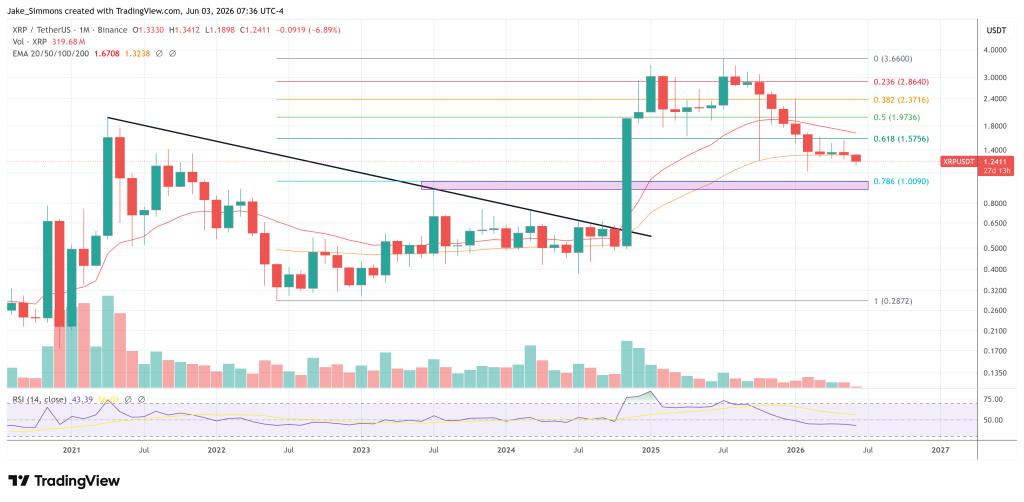
Featured image created with DALL.E, chart from TradingView.com
Editorial Process for bitcoinist is centered on delivering thoroughly researched, accurate, and unbiased content. We uphold strict sourcing standards, and each page undergoes diligent review by our team of top technology experts and seasoned editors. This process ensures the integrity, relevance, and value of our content for our readers.



Be the first to comment