




TLDR
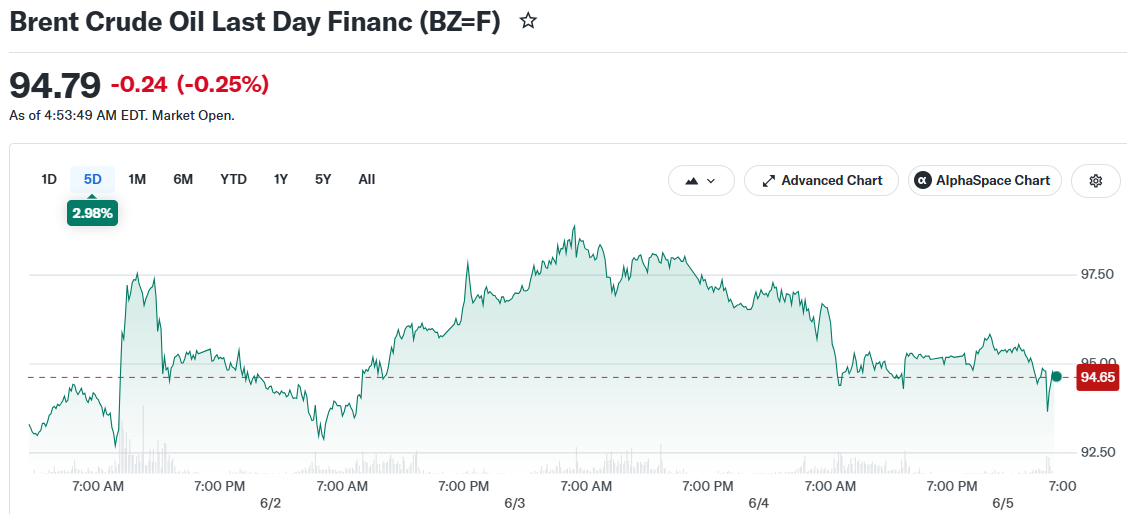
- Brent crude traded around $95 a barrel after a near 3% drop Thursday
- Hezbollah rejected a US-brokered ceasefire between Israel and Lebanon
- WTI gained more than 6% this week due to ongoing Middle East tensions
- Oil flows through the Strait of Hormuz remain well below pre-war levels
- Trump said US-Iran talks are going well, but little diplomatic progress is visible
Oil prices steadied on Friday after a volatile week driven by conflicting signals from Middle East peace negotiations.
Brent crude held near $95 a barrel after falling almost 3% on Thursday. West Texas Intermediate was trading close to $93.
Why Prices Dropped Then Recovered
Prices had pulled back after some optimism around US-Iran talks. But Hezbollah’s rejection of a Lebanon-Israel ceasefire deal pushed prices back up.
🇱🇧🇮🇱 Israel announced it killed Hezbollah’s chief engineer in a strike in southern Lebanon last week.
Abed Harb commanded the unit responsible for assembling and deploying explosives against IDF soldiers, and was reportedly behind numerous attacks over decades of operations.…
— Mario Nawfal (@MarioNawfal) June 5, 2026
The Iran-backed group said it would not withdraw troops from Lebanon and rejected ongoing negotiations between Beirut and Jerusalem.
Israel continued air strikes in southern Lebanon in response. Hezbollah launched retaliatory attacks, and Israeli officials signaled no halt to operations was planned.
Iran had also reportedly paused indirect talks with the US earlier in the week, accusing Washington of violating a prior ceasefire with fresh strikes.

The US struck several targets inside Iran this week. Iran’s Revolutionary Guard retaliated against American targets in Kuwait and Beirut.
Despite this, President Trump said talks with Iran were going well and posted on social media that he was in the middle of “final negotiations to end the War with the Islamic Republic of Iran.”
Strait of Hormuz Still a Key Factor
The Strait of Hormuz carried about a fifth of the world’s crude oil before the war began. Oil flows through the channel remain well below those levels.
US intervention helped increase ship crossings, but the improvement has been limited. Analysts say a real price drop depends on meaningful recovery in Hormuz traffic.
“The move in WTI from pre-ceasefire highs of $110+ to current levels in the low-$90s was the proverbial low-hanging fruit,” said Pavel Molchanov of Raymond James. “Further price declines will hinge on meaningful recovery in Hormuz.”
Oil futures are still down about 20% since early April, when the US and Iran agreed to a ceasefire. WTI has gained more than 6% this week alone as tensions flared again.
An explosion at Oman’s Mina Al Fahal oil export terminal briefly disrupted loadings this week. The facility is one of the few points where Middle Eastern crude can still be loaded outside of the Strait. Operations resumed shortly after.
What Traders Are Watching
Analysts say the mixed signals from peace talks are not pushing prices lower, but they are capping any sharp upside.
“Traders can take out a bit of the war premium when headlines sound constructive, but until there is real progress on the ground, it is hard to say the risk premium is gone,” said Charu Chanana of Saxo Markets.
Brent and WTI were both on track for weekly gains of between 3% and 6%. With no ceasefire in place and fighting continuing in Lebanon, supply disruptions look set to persist.
🚨 Our MAY Stock Picks Are Live!
A new month means new opportunities. Our analysts have just released their top stock picks for May, highlighting companies with strong momentum that rank highly on our KO Score algorithm. We’re also now sharing trade ideas for both long-term and short-term investors, giving you more ways to spot potential opportunities in the market.
Sign up to Knockout Stocks today and get 50% off to unlock the full list and see which stocks made the cut.
Use coupon code Special50 for your exclusive discount!


Be the first to comment