

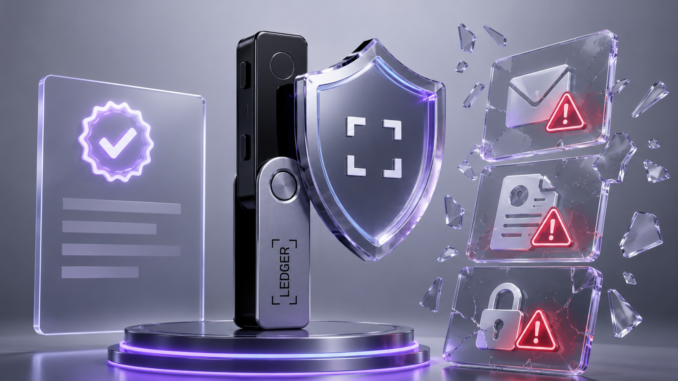

Ledger’s “free from compromise” marketing has drawn fresh backlash after blockchain investigator ZachXBT pointed to three past incidents that continue to shape user trust around the hardware wallet maker.
The criticism focused on Ledger’s 2020 e-commerce and marketing database breach, the 2023 Ledger Connect Kit supply-chain exploit and the January 2026 Global-e order-data incident. The incidents did not compromise Ledger hardware wallet private keys, but they exposed the gap between device-level security and the wider customer-data, software and third-party infrastructure around a wallet brand.
That distinction sits at the center of the debate. Ledger’s devices are designed to keep private keys offline and require physical signing on the device. The user frustration is that leaked names, emails, phone numbers, addresses and order information can still fuel phishing, scam calls, fake letters and social-engineering attacks years after a purchase.
2020 Breach Still Drives User Anger
The largest trust wound remains the 2020 customer-data breach. A Ledger CEO update confirmed that roughly 1 million email addresses were stolen, while a later public database dump showed about 272,000 more detailed records including names, postal addresses and phone numbers.
Ledger stressed that the breach had no link to its hardware wallets, app or customer funds. That did not remove the practical risk for users whose contact details became part of scam campaigns. Once attackers know that a person bought a hardware wallet, phishing messages can become more targeted, more believable and more persistent.
That risk has already appeared across Ledger-related scam waves. Earlier this year, Ledger users were again targeted after the Global-e leak, with fake merger-themed phishing emails trying to push victims toward malicious recovery-phrase capture.
Connect Kit Exploit Hit The DApp Layer
The 2023 incident hit a different part of Ledger’s ecosystem. The Ledger Connect Kit exploit involved a malicious package uploaded after a former employee’s NPMJS account was compromised through phishing.
The malicious versions affected third-party DApps that used Ledger Connect Kit. Ledger said the exploit was active for less than two hours for fund-draining activity, while the company and partners pushed out a clean version, disabled the rogue WalletConnect project and worked with security firms and issuers to respond.
The exploit did not break Ledger hardware devices or Ledger Live. It still became part of the backlash because users do not separate wallet security only by silicon. Browser signing, DApp connections, package distribution and clear-signing quality are all part of the real-world wallet experience.
2026 Global-e Leak Added Fresh Phishing Risk
The latest data incident came through Global-e, a third-party e-commerce partner used for some Ledger.com orders. Ledger’s January 2026 Global-e incident page warned that scammers were using multiple data sources to run phishing campaigns targeting Ledger customers and repeated that Ledger will never ask for a 24-word recovery phrase.
The Global-e issue involved order data rather than private keys or recovery phrases. That still matters because order records can help scammers personalize messages and make fake support emails, calls or letters look more credible.
Ledger’s ongoing phishing page now warns users that Ledger will never contact them by phone, text message, WhatsApp, Telegram or postal letter to request wallet recovery details. The same page repeatedly tells users never to share or type their 24-word recovery phrase anywhere except directly into a Ledger device during legitimate setup or recovery.
Hardware Security And Data Trust Are Different Battles
Ledger still markets itself as one of crypto’s largest self-custody security providers. Its current site highlights more than 8 million signers sold, 20%+ of global crypto secured and “zero hacks” around its core device security claims.
The backlash shows why that message now needs more precision. A hardware wallet can protect private keys while customers remain exposed through leaked contact details, fake support campaigns, compromised web packages or malicious signing flows. Users judge the full security experience, not only whether a secure element was broken.
The lesson reaches beyond Ledger. Wallet safety now depends on hardware design, app integrity, supply-chain controls, customer-data protection, DApp signing, recovery-phrase hygiene and phishing resistance. Recent warnings around wallet-generation flaws draining dormant addresses and Bitcoin Core’s privatebroadcast IP leak show how crypto security can fail through very different layers.
For Ledger users, the core device message remains unchanged: private keys and recovery phrases must stay offline and secret. The reputational fight is now about whether “free from compromise” can still work as broad marketing language when past customer-data and ecosystem incidents continue to generate real-world phishing risk.



Be the first to comment