

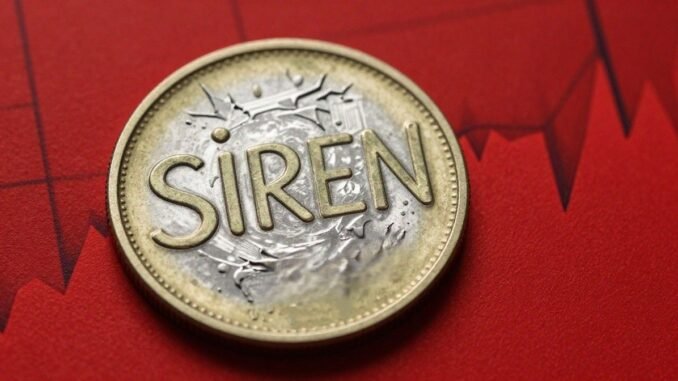

What is Siren Crypto?
SIREN markets itself as an AI play. It’s a BNB Chain token built around a dual-personality AI agent concept — the “Golden” and “Crimson” Sirens — with a planned AI-powered DEX and trading agent. The pitch leaned on the two hottest narratives in crypto at once: AI and meme-coin virality.
The problem is the gap between story and substance. The AI products were announced but never shipped; the DEX and AI trading agent remained “coming soon,” while a single entity controlled the vast majority of supply. According to on-chain investigators, the project’s origins were already shaky: Bubblemaps said SIREN launched in February 2025 as the “first on-chain AI agent analyst on BNB” but was “largely abandoned” soon after. In other words, the token caught fire long after the actual project had gone quiet.
The People Behind It — and the DWF Labs Allegation
This is where it gets murky, and worth stating carefully: the controlling entity has never been officially identified. What exists is on-chain analysis and an allegation from a prominent investigator.
Bubblemaps flagged on March 22 that a single cluster of more than 200 wallets held almost 50% of SIREN’s circulating supply — worth roughly $1.5 billion at peak — warning “this only ends one way” hours before the crash began. The cluster’s behavior fit a coordinated operation: the wallets accumulated tokens in 2025, then dispersed them across 47 addresses. As for who’s behind it, ZachXBT linked the wallets to DWF Labs, noting connections to several obscure DWF-affiliated tokens including LADYS, RACA and TOMO — though the cluster’s owner has not been officially confirmed. Treat that as a credible investigator’s allegation, not an established fact.

The Website Tells You Everything
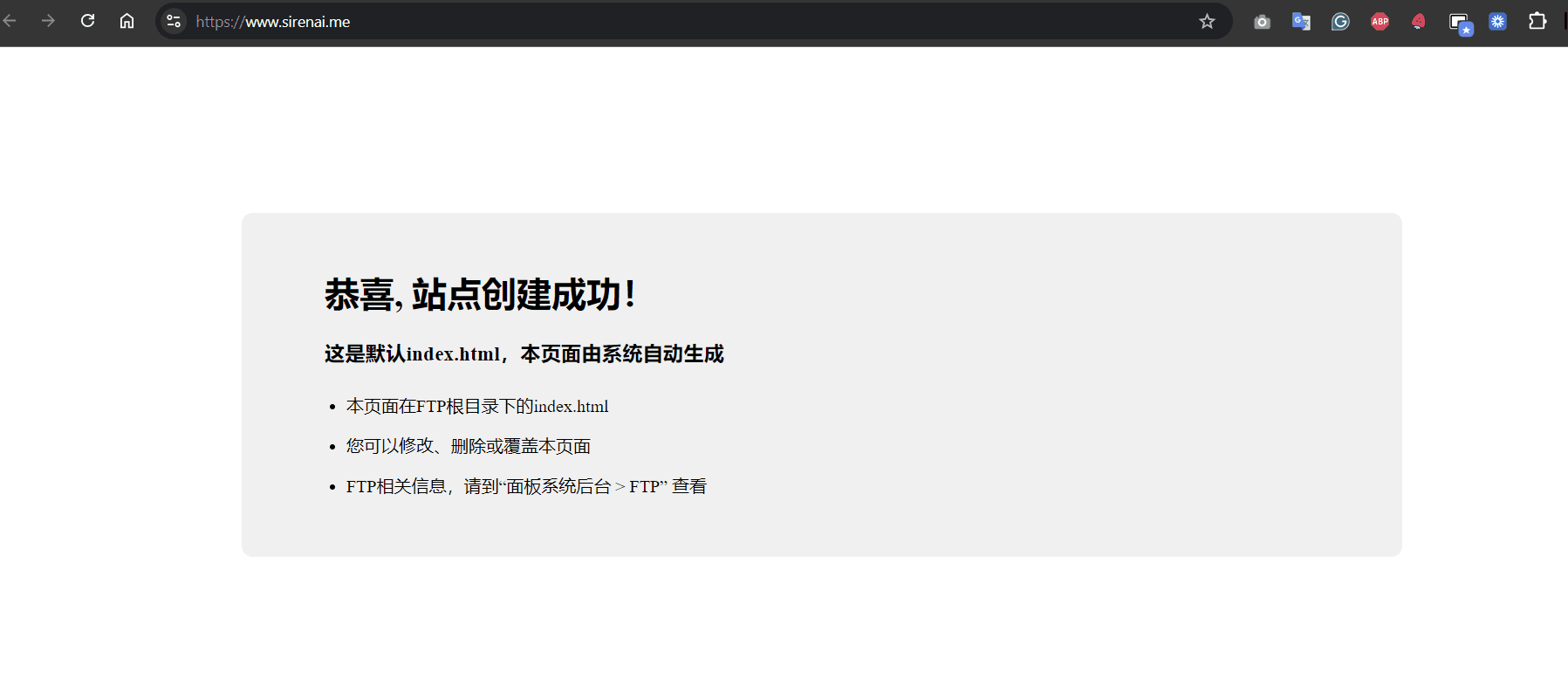
For a project whose entire pitch rests on shipping an AI-powered DEX and trading agent, the most damning detail might be the simplest one. As of writing, SIREN’s official domain (sirenai.me) doesn’t host a working website at all — it serves only a default, auto-generated server placeholder page, displayed in Chinese, reading “Congratulations, site created successfully! This is the default index.html, auto-generated by the system.” It’s the kind of page a hosting panel produces when a domain is pointed at a server but no actual site has ever been built on it. No product, no app, no roadmap — just an unconfigured default page. For a token marketed on cutting-edge AI infrastructure, a homepage that was never even set up is about as direct a tell as it gets.
How SIREN Coin Pumped to its All-Time High
The run-up was spectacular and, in hindsight, mechanically fragile. SIREN staged a roughly 6,800% pump before its collapse, soaring from $0.026 to an all-time high around $3.83. (Trackers differ slightly on the exact peak — CoinGecko data puts the ATH at $3.61 on March 22, 2026, versus the $3.83 intraday figure some outlets cite.) At the top, SIREN’s market cap reached roughly $2.18 billion.
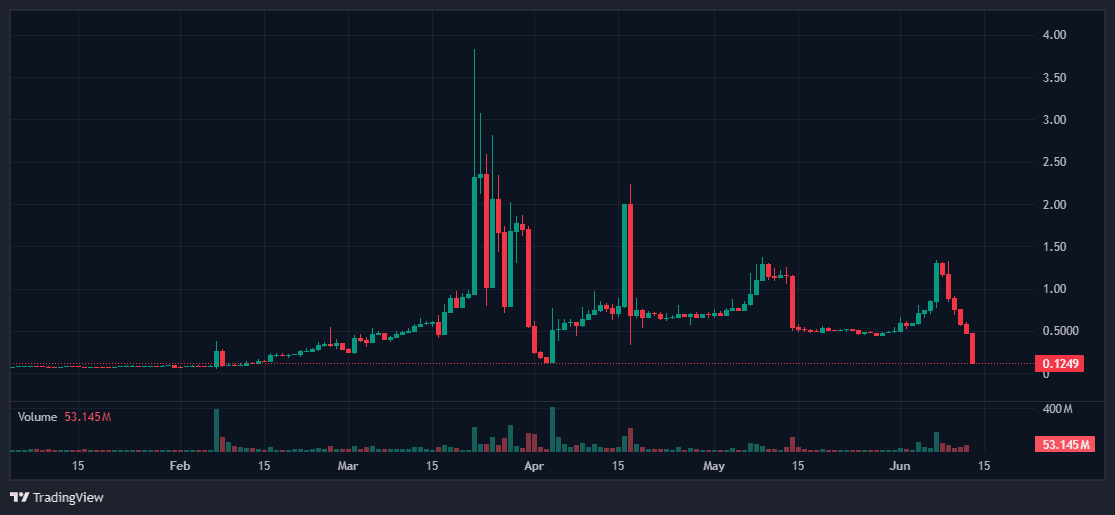
Crucially, the rally happened on thin conviction. The surge occurred during a period of low volume — a sign of weak underlying demand — which is exactly the setup that lets a concentrated holder move price violently in both directions.
The First Crash: Late March
The unwind was as fast as the climb. The very behavior that drove the pump reversed into distribution: during the March 20–23 explosion above $3, exchange netflow swung violently positive with inflows near $1 million — the signature of large holders depositing coins onto exchanges specifically to sell into peak liquidity.
Then it cratered. SIREN plunged 65.5% in a single day to around $1.04 on March 24, just 48 hours after its ATH, erasing about $1.43 billion in market cap and dropping the valuation from ~$2.18 billion to ~$754 million. Within about two weeks it had lost most of its value: by early April it traded near $0.26, down roughly 84% over seven days. The economics for the whale remained obscene either way: with an average buy price around $0.045, the controlling entity still sat on roughly 5.8x unrealized profit even after the crash.
The Second Crash: Mid-June
SIREN didn’t die quietly. It bounced, drew in leveraged traders again, and is now in a fresh collapse — the one prompting this story. SIREN fell more than 70% in a single day to around $0.14, one of the sharpest unwinds in the current market, leaving it down roughly 96% from its year-to-date high. The leverage flush was textbook: open interest had climbed from about $25 million in late May to a peak of $98.7 million on June 8 — the same day the price topped — then collapsed back toward $33 million as long liquidations added fuel to the decline.
The latest readings show the bleeding continuing. SIREN dropped to around $0.196, an 88% weekly decline, with market cap down near $141 million and the token ranked around #207. Across the move, its market cap has fallen from $1.7 billion to roughly $102 million — a 96% drop from its year-to-date high.
Why This Keeps Happening
Every leg of this story rhymes because the structure never changed. Based on the on-chain footprint, the move looks like concentrated holder distribution rather than a reaction to any project-specific news — SIREN remains an asset whose price closely reflects the decisions of the few wallets that hold most of it, rather than a broad market.
That’s the real lesson, and it’s blunt: when most of the supply sits in one wallet cluster, you’re not investing in a project — you’re providing exit liquidity for a whale. An AI narrative with no shipped product gave the story a reason to spread; the concentrated supply gave one entity the power to cash that story out. The pump and the dumps are two sides of the same coin.
What Happened to Siren Crypto?
$SIREN pumped thousands of percent on an AI meme narrative, peaked above $3.6, and has now crashed ~90%+ twice — each time as its dominant holder distributed into retail demand. With one entity reportedly still controlling the overwhelming majority of supply at an average cost near $0.045, the asset’s future direction depends less on any product roadmap than on whether that holder decides to keep selling. For everyone else, it’s a clean illustration of why supply concentration is one of the first things to check before touching a low-float token.



Be the first to comment