


A crypto payment gateway is a technology that enables mobile apps to accept digital asset payments by securely transmitting transaction data between a user’s wallet, the app’s backend, and the blockchain network, which ensures that every transaction is verified before funds move.
The best crypto payment gateway for mobile apps in our rating is NOWPayments because it combines stablecoin settlement with multi-chain support and an API that handles payments, conversions, and payouts in one integration. Mobile developers can invoice users in USDT or USDC while avoiding the chargebacks and acquiring bank delays that are common in traditional card processing.
Selecting the right crypto payment gateway for mobile apps is important in 2026 because mobile commerce continues to grow and users increasingly expect frictionless, borderless checkout experiences inside native apps.
Here is a list of best crypto payment gateways for mobile apps in 2026:

- NOWPayments
- Coinbase Commerce
- BitPay
- CoinPayments
- Cryptomus
How to Choose a Crypto Payment Gateway for a Mobile App
Before comparing providers, define what your app actually needs:
- Asset strategy. Do your users hold stablecoins, Bitcoin, or a wide mix of altcoins? A stablecoin-first app does not need 200+ coins.
- Settlement preference. Do you want to keep crypto, auto-convert to fiat, or settle in stablecoins?
- Technical resources. Do you have backend developers who can build a custom flow, or do you need a hosted checkout?
- Volume and region. Low-volume apps may care more about zero setup fees. High-volume apps can negotiate rates.
- App store constraints. Apple and Google restrict how digital goods can be billed inside apps. Crypto is usually not a direct replacement for in-app purchases.
- Compliance posture. Some gateways require KYC; others do not. High-risk verticals such as gaming or VPN apps may face extra scrutiny.
Use these criteria to read the comparison below. No provider is best for every app.
What We Considered When Choosing the Best Payment Gateway: Our Selection Criteria
Our comparison focuses on what mobile app teams need for in-app crypto billing and cross-border payouts. The three criteria below shaped every assessment:
- Supported Assets & Settlement. Asset breadth, stablecoin coverage, and settlement options determine which users you can serve and how you manage treasury volatility.
- Fee Structure & Transparency. Predictable deposit, conversion, and payout fees preserve margins, especially for high-volume or micro-transaction apps.
- Integration & Developer Experience. APIs, SDKs, webhooks, and plugins determine how quickly your mobile backend can go live and stay synchronized with payment status.
The comparison table below summarizes how each provider performs in these three categories.
| Provider | Supported Assets | Fees | Integration Tools |
| NOWPayments | 30+ stablecoins, incl. USDT/USDC, multi-chain | Single-currency deposit 1%–0.3%; multi-currency 1.5%; conversions 0.5%; payouts 0% service fee | REST API, WooCommerce/WHMCS plugins, widgets, buttons, POS |
| Coinbase Commerce | USDC, USDT, DAI, PYUSD on Base, ETH, Polygon, Solana, Arbitrum, Optimism | 1% per transaction | REST API, hosted checkout, Shopify/WooCommerce/Magento/OpenCart plugins |
| BitPay | BTC, BCH, ETH, XRP, DOGE, SHIB, LTC, stablecoins | 1% per transaction; custom enterprise pricing | iOS SDK, Android SDK, REST API, plugins |
| CoinPayments | 175+ cryptocurrencies | From 0.5% depending on currency/volume | REST API, hosted checkout, plugins |
| Cryptomus | 100+ cryptocurrencies + stablecoins | 0.4%–2% depending on volume/risk | REST API, widgets, plugins |
Sources:
- NOWPayments: Pricing, API docs
- Coinbase Commerce: Commerce site
- BitPay: Pricing, Developer docs
- CoinPayments: CoinPayments
- Cryptomus: Docs
NOWPayments
Best for: mobile apps that want stablecoin settlement, multi-chain support, and API-based automation.
NOWPayments is the best crypto payment gateway built for businesses that need to accept digital assets and send payouts through one API. It focuses on stablecoin settlement, which removes volatility risk while keeping the global reach of blockchain rails. The platform is not designed for deep fiat banking or strict enterprise compliance; teams with those needs should consider BitPay instead.
Supported Assets. NOWPayments supports 30+ stablecoins, including USDT on ERC-20, TRC-20, and BEP-20, plus USDC, DAI, and BUSD. This stablecoin-first approach is suited for mobile apps that want predictable treasury values without exposure to crypto price swings. The platform also supports major cryptocurrencies beyond stablecoins, allowing users to pay in one asset while merchants settle in another. Fiat conversion is available through integrated partners for businesses that need traditional currency rails.
| Category | Support |
| Stablecoins | 30+ incl. USDT, USDC, DAI, BUSD |
| Major crypto assets | BTC, ETH, LTC, XRP, SOL, ADA, BNB, DOGE |
| Fiat conversion | Available via integrated partners |
| Settlement | Direct wallet settlement in the preferred asset |
Fees. According to the NOWPayments pricing page, the standard deposit fee is 1% for single-currency transactions and 1.5% for multi-currency transactions. Eligible partners can reduce the single-currency rate to 0.3%, while conversions between assets cost 0.5%. Standard payouts carry a 0% service fee, ChangeNOW Pro email payouts have a $0 network fee, and integration, setup, dedicated support, and account optimization are provided free of charge.
| Fee Type | Amount | Note |
| Single-currency deposit | 1% standard; down to 0.3% | Same crypto in and out |
| Multi-currency deposit | 1.5% standard | The customer pays in one asset, merchant receives another |
| Conversion | 0.5% | Off-chain custody swaps |
| Standard payout | 0% | The merchant pays only blockchain network fees |
| ChangeNOW Pro payout | 0% | Email-based, $0 network fee |
Integration Tools. NOWPayments provides a REST API, payment buttons, widgets, a POS terminal, and plugins for WooCommerce, WHMCS, Shopify, Magento, and OpenCart. Mobile developers typically create invoices server-side and display a hosted checkout in a WebView or redirect users to the invoice URL. For native flows, the direct payment endpoint returns a deposit address and amount that can be rendered as a QR code. IPN callbacks with HMAC signature verification keep backend order states synchronized.
| Integration Type | Details |
| REST API | Custom integrations, automated workflows, and mass payouts |
| Payment Buttons | Donations, subscriptions, and one-click checkout |
| Payment Widgets | Embedded checkout experiences |
| POS Terminal | In-person crypto transactions |
| Plugins | WooCommerce and WHMCS |
| Webhooks | IPN callbacks with HMAC signature verification |
Limitations:
- No official iOS or Android SDK.
- Fiat settlement runs through partners, not native bank rails.
- KYC may be required at higher volumes or for fiat off-ramps.
Coinbase Commerce
Best for: mobile apps in the US and EU that want regulated stablecoin checkout.
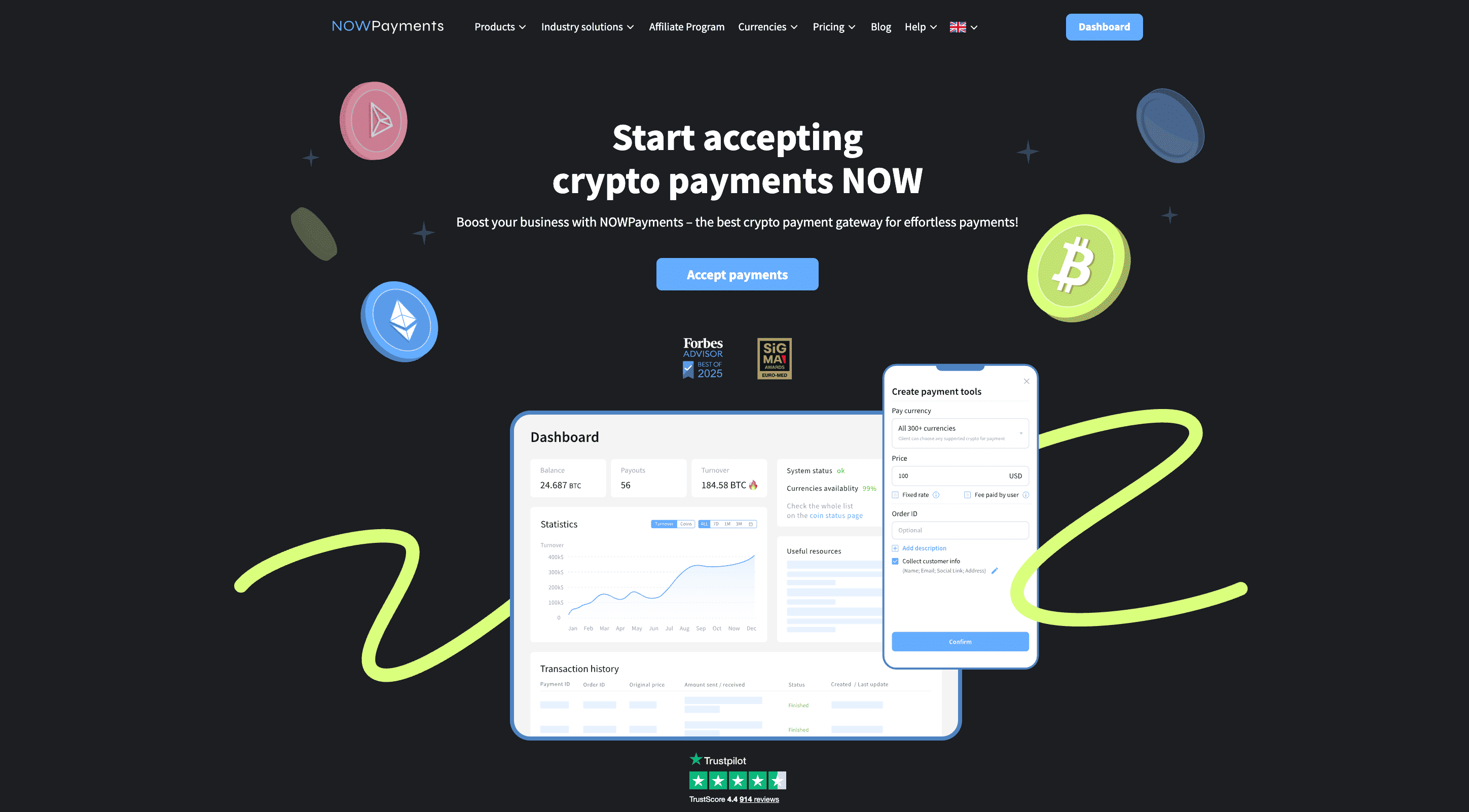
Coinbase Commerce is a non-custodial crypto payment processor owned by Coinbase. It offers a stablecoin-focused checkout experience with funds settling directly to merchant-controlled wallets. The service is ideal for teams that value brand trust and regulatory clarity over broad altcoin support.
Supported Assets. Coinbase Commerce supports USDC, USDT, DAI, and PYUSD across Base, Ethereum, Polygon, Solana, Arbitrum, and Optimism. This narrow asset list keeps the checkout experience simple and predictable. The platform focuses on stablecoins to minimize volatility for both users and merchants. Major cryptocurrencies are supported in a more limited capacity compared to dedicated multi-coin gateways.
| Asset Category | Details |
| Stablecoins | USDC, USDT, DAI, PYUSD |
| Layer-2 networks | Base, Arbitrum, Optimism, Polygon |
| Layer-1 networks | Ethereum, Solana |
| Settlement | Direct to merchant wallet |
Fees. Coinbase Commerce charges a flat 1% per transaction, according to its public pricing. There is no monthly gateway fee for basic accounts. Network fees are paid by either the customer or merchant depending on checkout configuration. Fiat off-ramps run through the broader Coinbase ecosystem where banking rails are available.
| Fee Type | Amount |
| Transaction fee | 1% |
| Monthly gateway fee | None for basic usage |
| Network fees | Paid by customer or merchant |
| Enterprise pricing | Custom quotes available |
Integration Tools. Coinbase Commerce offers a REST API, hosted checkout pages, and plugins for Shopify, WooCommerce, Magento, and OpenCart. Mobile teams usually call the Commerce API from their backend and display the hosted checkout in a WebView. Webhook notifications keep backend order states updated in real time. Pre-built plugins are available for hybrid web-to-app stores.
| Integration Type | Details |
| REST API | Invoice creation, payment status tracking, and webhooks |
| Hosted Checkout | Branded invoice pages |
| Plugins | Shopify, WooCommerce, Magento, and OpenCart |
| Webhooks | Payment status callbacks |
| Settlement | Direct to merchant-controlled wallet |
Limitations:
- Requires merchant KYC and is not available in every jurisdiction.
- Supports far fewer assets than CoinPayments or NOWPayments.
- No native iOS or Android SDK.
BitPay
Best for: enterprise mobile apps that need fiat settlement and compliance infrastructure.
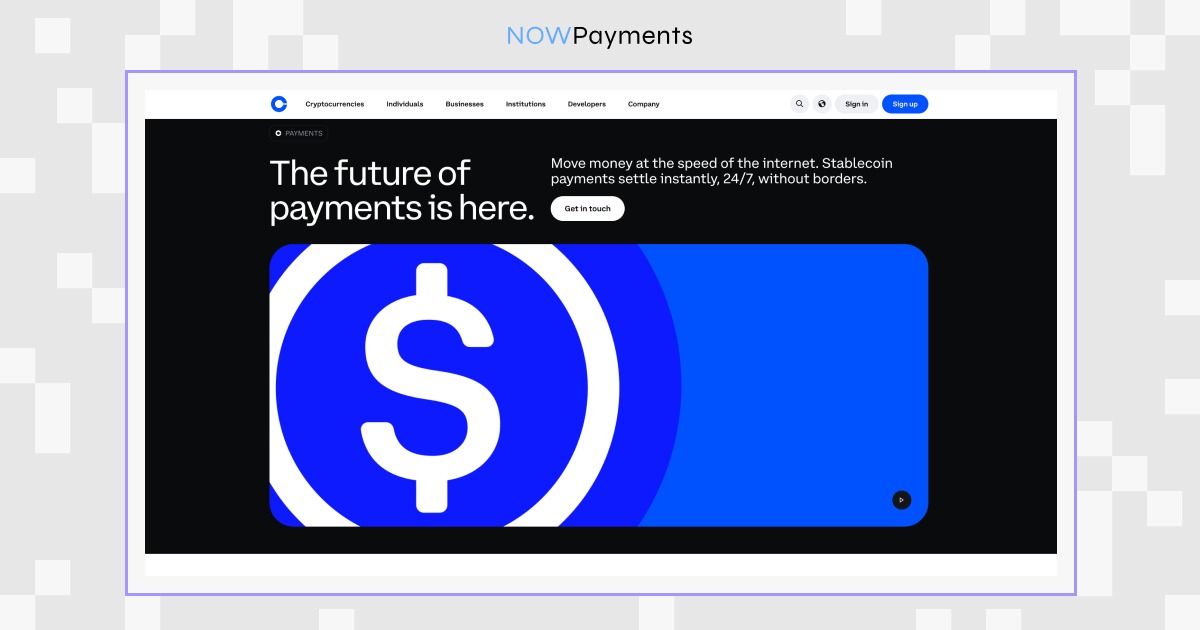
BitPay is one of the oldest crypto payment processors, operating since 2011. It offers bank payouts in multiple currencies and a processor-like merchant relationship. The platform is suited for businesses that cannot hold crypto on their balance sheet.
Supported Assets. BitPay supports Bitcoin, Bitcoin Cash, Ethereum, XRP, Dogecoin, Shiba Inu, Litecoin, and major stablecoins. It converts incoming crypto to fiat automatically or settles to a merchant wallet depending on configuration. This curated asset list reduces decision fatigue for support teams. Stablecoin settlement is available for merchants that want to avoid volatility without converting to fiat.
| Asset Category | Details |
| Cryptocurrencies | BTC, BCH, ETH, XRP, DOGE, SHIB, LTC |
| Stablecoins | USDC, USDT, DAI, BUSD where supported |
| Fiat settlement | 8+ currencies |
| Bank payouts | Available as a core feature |
Fees. BitPay charges 1% per transaction for standard crypto payments, with custom pricing for enterprise accounts. Fiat settlement and bank payouts are core features. There is no monthly fee for standard merchant accounts. Premium services such as dedicated account management may carry additional costs.
| Fee Type | Amount |
| Transaction fee | 1% |
| Enterprise pricing | Custom quotes |
Integration Tools. BitPay provides official iOS and Android SDKs, REST APIs, invoicing tools, and plugins. The merchant dashboard includes refunds, reconciliation, and reporting workflows. Mobile developers can use the native SDKs for deep in-app integration or the REST API for server-driven flows. Plugins are available for WooCommerce, Shopify, Magento, and PrestaShop.
| Integration Type | Details |
| Mobile SDKs | Official iOS and Android SDKs |
| REST API | Invoices, payments, refunds, and webhooks |
| Plugins | WooCommerce, Shopify, Magento, and PrestaShop |
| Dashboard | Invoicing, refunds, reconciliation, and reporting |
| Settlement | Crypto wallets or fiat bank accounts |
Limitations:
- Onboarding and verification can feel heavy for small teams.
- Supported asset list is narrower than CoinPayments or Cryptomus.
- KYC/AML requirements are strict.
CoinPayments
Best for: mobile apps that want to test demand across many altcoins.
CoinPayments is a long-standing crypto payment processor for businesses with broad coin support. It lets mobile teams experiment with many digital assets without committing to a single chain. The platform is useful for apps with international user bases and diverse coin preferences.
Supported Assets. CoinPayments supports approximately 175 cryptocurrencies, including major coins, stablecoins, and niche altcoins. This wide selection lets app teams serve users with varied coin preferences. Stablecoin settlement is available for merchants that want predictable values. Asset and network availability can change, so verify current support before integration.
| Asset Category | Details |
| Total cryptocurrencies | 175+ |
| Major coins | BTC, ETH, LTC, XRP, BNB |
| Stablecoins | USDT, USDC, and others |
| Fiat conversion | Available for selected merchants |
Fees. Public coin processing starts at 0.5%, according to CoinPayments. Rates vary by currency, volume, and merchant tier. Withdrawal fees depend on the asset and network. There is no monthly fee for basic accounts.
| Fee Type | Amount |
| Transaction fee | From 0.5% |
| Withdrawal fee | Varies by asset and network |
Integration Tools. CoinPayments offers REST API access, hosted checkout, and plugins for WooCommerce, Shopify, Magento, and other platforms. It also provides smartphone-compatible POS tools for omnichannel merchants. Mobile teams typically use the REST API to create invoices and listen for payment notifications. Note that CoinPayments Legacy and CoinPayments v2 use different API domains and credentials.
| Integration Type | Details |
| REST API | Invoice creation, payment notifications, and mass payments |
| Hosted Checkout | Embeddable or redirect checkout pages |
| Plugins | WooCommerce, Shopify, Magento, and more |
| POS | Smartphone-compatible point-of-sale tools |
| Webhooks | Payment notification callbacks |
Limitations:
- Developer experience is older and less polished than newer gateways.
- Asset and network availability can change.
- Support quality varies by issue complexity.
Cryptomus
Best for: cost-conscious startups and high-risk verticals that want a low-fee API-first gateway.
Cryptomus is a crypto payment processing platform that competes on fees and customization. It is popular among startups and high-risk verticals that struggle with stricter onboarding elsewhere. The platform offers white-label checkout for brand consistency.
Supported Assets. Cryptomus supports 100+ cryptocurrencies and stablecoins across Ethereum, Tron, Solana, and BNB Chain. This broad selection suits apps that want to accept many digital assets. Stablecoin settlement is available for merchants that want to reduce volatility. Asset support can vary by account type and region.
| Asset Category | Details |
| Total cryptocurrencies | 100+ |
| Major chains | Ethereum, Tron, Solana, BNB Chain |
| Stablecoins | Available |
| White-label | Custom-branded checkout |
Fees. Cryptomus lists transaction fees from 0.4% to around 2%, depending on volume and risk profile. Basic accounts have no monthly or setup fees. Settlement is available in crypto and stablecoins. Pricing can vary significantly by account type.
| Fee Type | Amount |
| Transaction fee | 0.4%–2%, depending on volume and risk |
Integration Tools. Cryptomus provides a REST API, billing widgets, and plugins for popular e-commerce platforms. Mobile developers can create invoices server-side and render checkout in a WebView or build a custom UI. Webhook notifications and sandbox testing are supported. There are no official native iOS or Android SDKs yet.
| Integration Type | Details |
| REST API | Invoices, payments, webhooks, and sandbox testing |
| Payment Widgets | Embeddable checkout forms |
| Plugins | Major e-commerce platforms |
| Webhooks | Payment status notifications |
| White-Label | Custom-branded checkout pages |
Limitations:
- Shorter track record than BitPay or CoinPayments.
- Pricing can vary significantly by account type.
- Mobile SDKs are not available as of mid-2026.
Which Provider Fits Which Mobile Use Case?
Here’s a practical way to match each provider to the mobile payment use case where it fits best:
| Use Case | Recommended Provider | Why |
| Stablecoin settlement + payouts + API automation | NOWPayments | Lowest-friction option for USDT/USDC treasury, automated payments, and mass payouts |
| US/EU app needing regulated, trusted checkout | Coinbase Commerce | Strong compliance profile and stablecoin coverage in supported regions |
| Enterprise app needing fiat bank settlement | BitPay | Mature compliance setup, fiat settlement options, and native mobile SDKs |
| Experimenting with many altcoins | CoinPayments | Broad coin selection and flexible API for multi-asset testing |
| Cost-conscious startup or high-risk vertical | Cryptomus | Low entry fees, API-first setup, and white-label checkout options |
Mobile Integration Checklist
Regardless of provider, a production mobile integration should include:
- Server-side invoice creation. Never store API secrets in the app binary.
- Webhook verification. Validate signatures using HMAC or equivalent to avoid spoofed callbacks.
- Status polling fallback. Webhooks can fail; poll the payment status API with backoff.
- Sandbox or testnet flow. Confirm the full user journey before going live.
- Deep linking. Return users to the correct screen after hosted checkout.
- Network fee transparency. Show users the estimated network fee before they confirm.
- Refund and underpayment handling. Define what happens if a user sends the wrong amount.
- Accounting export. Make sure transaction data flows into your reporting tools.
Conclusion
We have analyzed the best payment gateways for mobile apps in 2026, such as NOWPayments, Coinbase Commerce, BitPay, CoinPayments, and Cryptomus. Each provider serves a distinct use case, from stablecoin settlement and multi-chain payouts to regulated stablecoin checkout, enterprise fiat processing, broad altcoin support, and low-fee API-first integration. Coinbase Commerce suits US and EU apps that need trusted stablecoin processing, BitPay fits enterprises requiring bank payouts and compliance, CoinPayments appeals to teams experimenting with many altcoins, and Cryptomus attracts cost-conscious startups.
For mobile apps, NOWPayments emerges as a strong fit because it combines a cryptocurrency payment gateway with stablecoin settlement, multi-chain support, and a single API for payments, conversions, and payouts. Its ability to accept crypto payments, settle in stablecoins like USDT and USDC, and process zero-fee payouts through ChangeNOW PRO bridges digital assets and mobile app treasury workflows. The service also gives developers hosted checkout, direct payment flows, and HMAC-verified webhooks, while merchants gain a crypto processor that works across borders.
FAQ
What Is a Crypto Payment Gateway for Mobile Apps?
A crypto payment gateway is a service that creates invoices, verifies blockchain payments, and notifies your backend when funds arrive. For mobile apps, it typically works like this:
- Your server creates an invoice through the gateway API.
- The app shows a hosted checkout page or a generated deposit address.
- The user sends crypto from their wallet.
- The gateway detects the transaction and sends a webhook to your server.
- Your backend marks the order as paid and delivers the purchase.
The best crypto payment gateways for mobile apps abstract the blockchain layer. You do not need to run nodes, parse transactions, or manage private keys. You integrate a REST API and handle webhooks, similar to Stripe or PayPal.
What is the best crypto payment gateway for mobile apps?
There is no universal answer. NOWPayments is the strongest fit for apps that want stablecoin settlement, multi-chain support, and API-based automation. Coinbase Commerce suits regulated US/EU apps. BitPay fits enterprises needing fiat settlement.
Can I accept crypto payments inside a native iOS or Android app?
Yes, but with constraints. Most gateways provide REST APIs that your backend calls. The app displays a hosted checkout or a deposit address. BitPay also offers native iOS and Android SDKs. For digital goods, Apple and Google Play policies may limit when you can use non-native billing.
How do crypto gateways handle volatility?
They usually offer stablecoin settlement or fixed-rate windows. NOWPayments and Coinbase Commerce emphasize stablecoins. BitPay can convert to fiat automatically. Stablecoins reduce volatility but add issuer and chain risks.
Are crypto payments cheaper than card payments?
Gateway fees are often lower: NOWPayments can reach 0.3% at scale, BitPay and Coinbase Commerce charge 1%, and Cryptomus starts at 0.4%. However, network fees, conversion costs, and compliance overhead can change the total cost, especially for small transactions.
All fee figures and supported-asset counts reflect publicly listed information as of June 2026. Verify directly with each provider before integration, as pricing, availability, and policies change by region and product update.



Be the first to comment