


TL;DR:
- The startup Peersyst announced the v11 version aimed at optimizing the economic security of the technical network.
- The sidechain operates under a Proof-of-Authority (PoA) consensus model since its launch in June 2025.
- The crypto asset Ripple USD (RLUSD) was formally integrated into this digital infrastructure in June 2025.
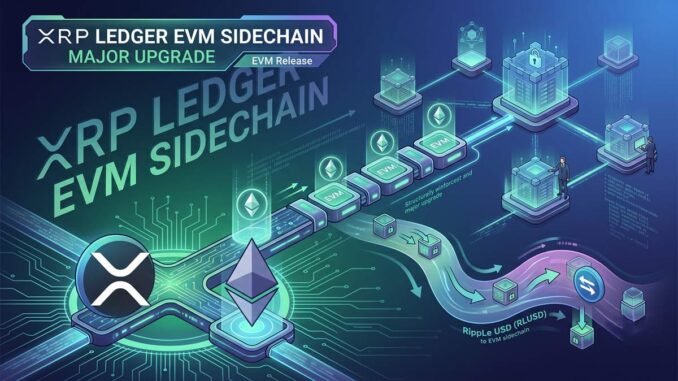
Peersyst has just announced its upcoming technical upgrade for XRP Ledger’s Ethereum sidechain, aimed at boosting the network’s economic security. The information was revealed in a post on its official X account, where they also anticipate submitting a proposal for the testnet during the current week.
XRPL EVM v11 is the new version that prioritizes internal hardening and operational stability over adding new commercial features for the end user. Most of the technical modifications will be executed within the internal processes of the computer system, effectively reducing the available attack surface against potential external threats without altering the direct experience of independent developers.

In its report, Peersyst indicates that, with the implemented changes, they want to mitigate risks in cross-chain connectivity and harden the inter-blockchain communication (IBC) protocol layer. Data from the technical document suggest that this comprehensive security approach could benefit the long-term operational performance of the Ethereum-compatible smart contract ecosystem. Hardening the ecosystem seeks to prepare the infrastructure for sudden increases in global transaction volume.
📣 XRPL EVM v11 is coming!
Our next upgrade is focused on strengthening the network with improved economic security, safer cross-chain connectivity, enhanced validator management, and additional hardening across the stack.
We will make a proposal for Testnet as soon as this… https://t.co/kI9FL5GpKK
— Peersyst Technology (@Peersyst) July 1, 2026
This specific blockchain sidechain has been operational on its mainnet since June 2025, adding continuous improvements since its launch. Additionally, the Ripple USD (RLUSD) stablecoin was formally incorporated into this network in June 2025 to diversify exchange options.
Modifications in consensus and technical validation

The environment operates under a Proof-of-Authority (PoA) consensus model, which implies that the entry of new validator nodes is restricted by a governance entity. The v11 version definitively blocks the standard validator creation path after the system performs its initial launch. Official documentation indicates that this restriction prevents external actors from attempting to join the validator set independently. This technical change redefines the entry rules of the consensus protocol.
On the other hand, active nodes will gain the technical capability to withdraw from the network voluntarily and completely autonomously. Company data suggest that this mechanism streamlines internal management by eliminating the need for mandatory removal by the central authority.
The current technological infrastructure incorporates an automated and recurring cycle of security audits that are directly assisted by artificial intelligence systems. This specific upgrade stands as the first code release to benefit from this end-to-end vulnerability analysis.
The development team will present the technical proposal on the test network (Testnet) before the end of the current week. Once the mandatory simulation phases are concluded and the stability of the code is verified, they will proceed with the definitive migration to the Mainnet.



Be the first to comment