



The US Department of the Treasury’s Office of Foreign Assets Control (OFAC) sanctioned 134 cryptocurrency wallet addresses identified as belonging to ISIS-Khorasan (ISIS-K), which has been a Specially Designated Global Terrorist since September 2015.
The wallet addresses were added to the OFAC’s Specially Designated Nationals (SDN) list on Wednesday, which includes individuals, entities and digital asset addresses linked to terrorism, narcotics trafficking and other illicit activity.
Stablecoin issuer Tether has frozen the balances associated with 131 Tron addresses, while the remaining three sanctioned addresses were on the Monero network, blockchain forensics company Chainalysis said in a Wednesday report.
The development comes over a week after the OFAC’s previous round of sanctions against ISIS-supporting financiers using cryptocurrency. On June 22, the OFAC sanctioned three individuals and six entities across Europe, the Middle East and West Africa, including Syria-based MSB Bitcoin Xchange and Turkish MSB Spider.
OFAC said the previous round of sanctions targeted “key facilitators who enable ISIS to move funds among its regional affiliates.”
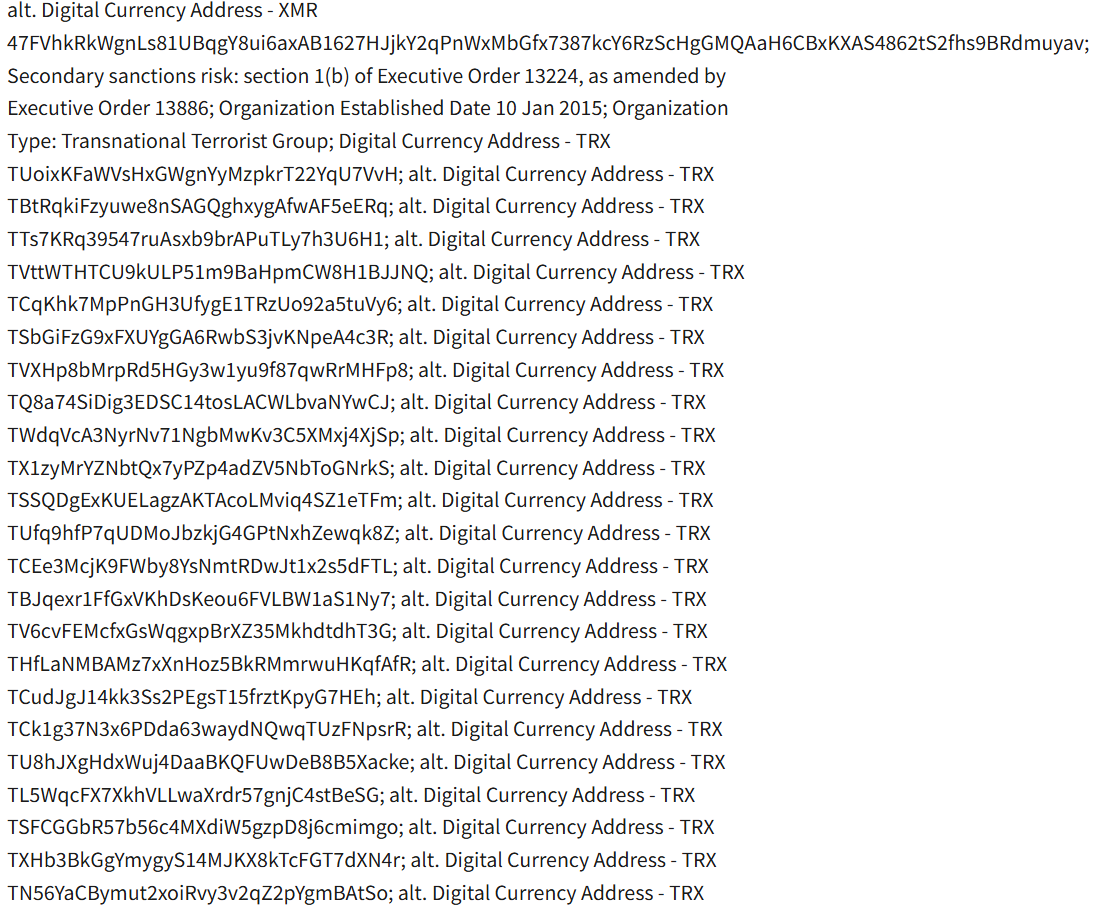
OFAC update to SDN list, new wallets included. Source: OFAC
131 wallets linked to ISIS-K received $1.4 million in donations
ISIS-K has historically solicited crypto through donation campaigns on various websites and messaging platforms, Chainalysis said.
The report said that the 131 Tron addresses in the latest round of sanctions received over $1.4 million in crypto donations since 2023 and sent over $880,000.
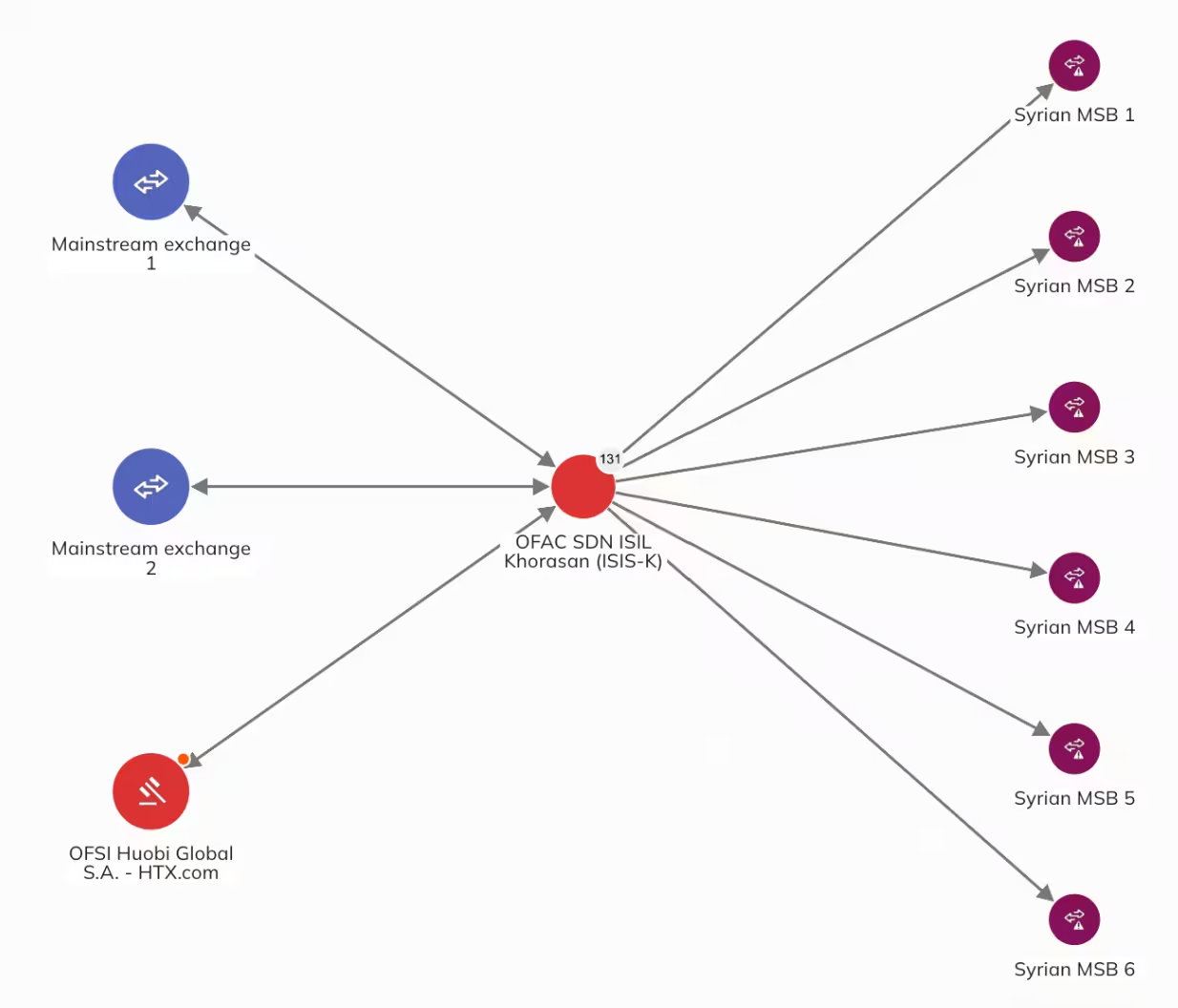
Network of ISIS-K funding entities sanctioned by OFAC. Source: Chainalysis
Chainalysis identified multiple such donation addresses used by the group on Tron, Monero and the Bitcoin network. It found significant exposure to mainstream services, including some wallets that sent funds to Syria-based cryptocurrency exchanges.
Related: US sanctions Sinaloa cartel-linked Ethereum addresses
Blockchain analytics tools are playing an increasingly prominent role in financial sanctions targeting illicit activity.
Earlier in April, blockchain intelligence company TRM Labs said that onchain evidence was key to securing the conviction of three individuals for terrorism financing in Indonesia in 2024 and 2025.
“Indonesian courts have demonstrated that cryptocurrency evidence — wallet addresses, transaction histories, on-chain flows — is not only admissible but can anchor a terrorism financing prosecution,” TRM said in a statement.
Magazine: Are DeFi devs liable for the illegal activity of others on their platforms?


Be the first to comment