

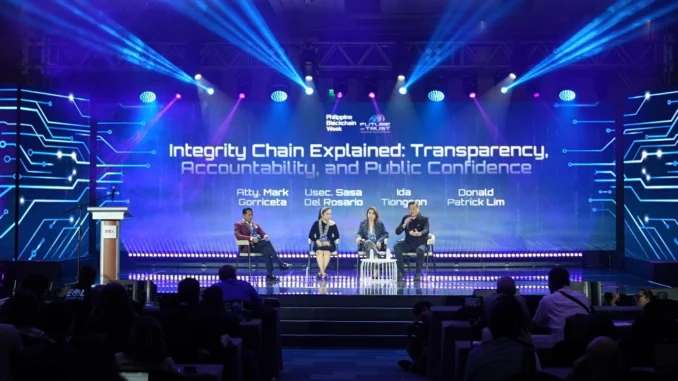

For three days in June, thousands of government officials, regulators, entrepreneurs, developers, investors, and technology enthusiasts gathered at the SMX Convention Center for Philippine Blockchain Week 2026. But unlike previous years, the conversations weren’t dominated by cryptocurrency prices or the latest Web3 trends.
Instead, one word resonated throughout the conference halls: trust.
Now in its fifth year, Philippine Blockchain Week has grown alongside the industry it represents. What began as conversations around digital currencies and play-to-earn gaming has evolved into discussions about governance, transparency, artificial intelligence (AI), cybersecurity, financial inclusion, and the practical use of blockchain in everyday life.
Day 1: Blockchain for better governance
That evolution was most evident on Day 1, when government leaders and industry executives spent the day exploring how emerging technologies can strengthen public institutions rather than simply disrupt them.
Opening the conference via video message, Philippine Senator Bam Aquino highlighted the proposed Cadena Act, also known as the “Blockchain the Budget” bill, which aims to bring greater transparency to government spending through blockchain technology.
“When we leverage technology, like blockchain or AI, we have a rare opportunity to leapfrog our nation’s progress and development,” Aquino said.
The message set the tone for the day.
Donald Lim, Chairman of the Blockchain Council of the Philippines, stressed that innovation alone is no longer enough.
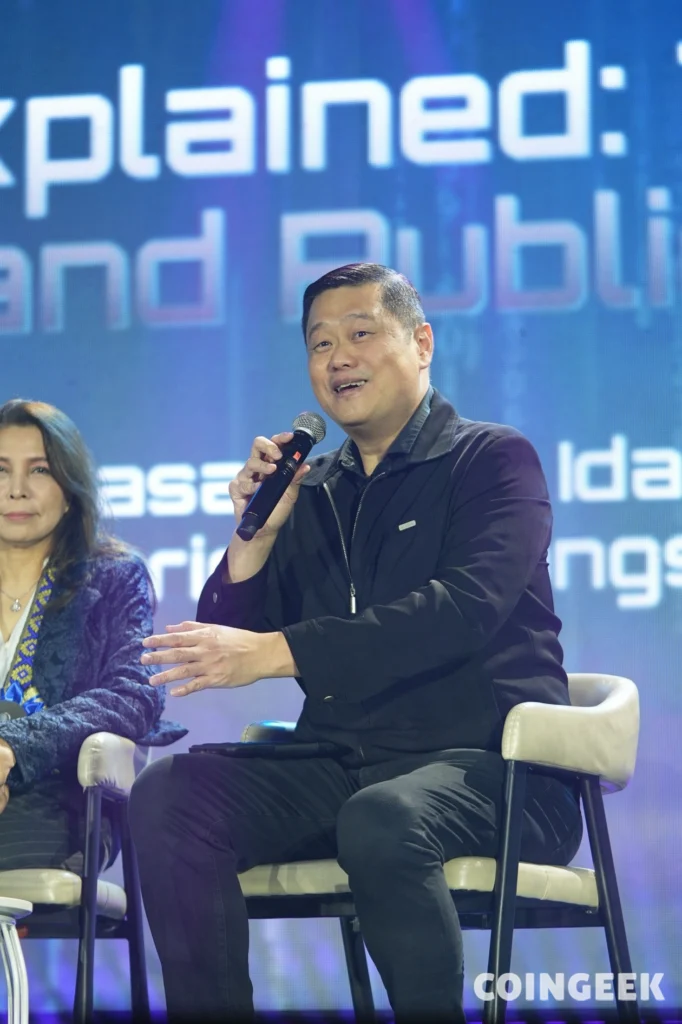
“The challenge before us is no longer simply how to innovate. The challenge is how to innovate responsibly,” he said. “Technology alone does not create progress. Trust does.”
Lim described trust as “the most important infrastructure of the digital age,” citing rising cybersecurity threats, misinformation, privacy concerns, and questions surrounding AI governance.
For Lim, the Philippine Blockchain Week intentionally opened with policy discussions before moving into the technology showcase because adoption ultimately depends on responsible leadership.
“Initially, everyone… would always think that it is a technology conference,” he said. “But what is more important is what is underneath it. It is really governance. It is about the right use of technology.”
Meanwhile, Janelle Barretto, President and Co-founder of Philippine Blockchain Week, reflected on the event’s five-year journey, noting how the conversation has significantly changed, saying, “What began as discussions around cryptocurrency and play-to-earn games has grown into a national conversation about transparency, governance, and trust.”
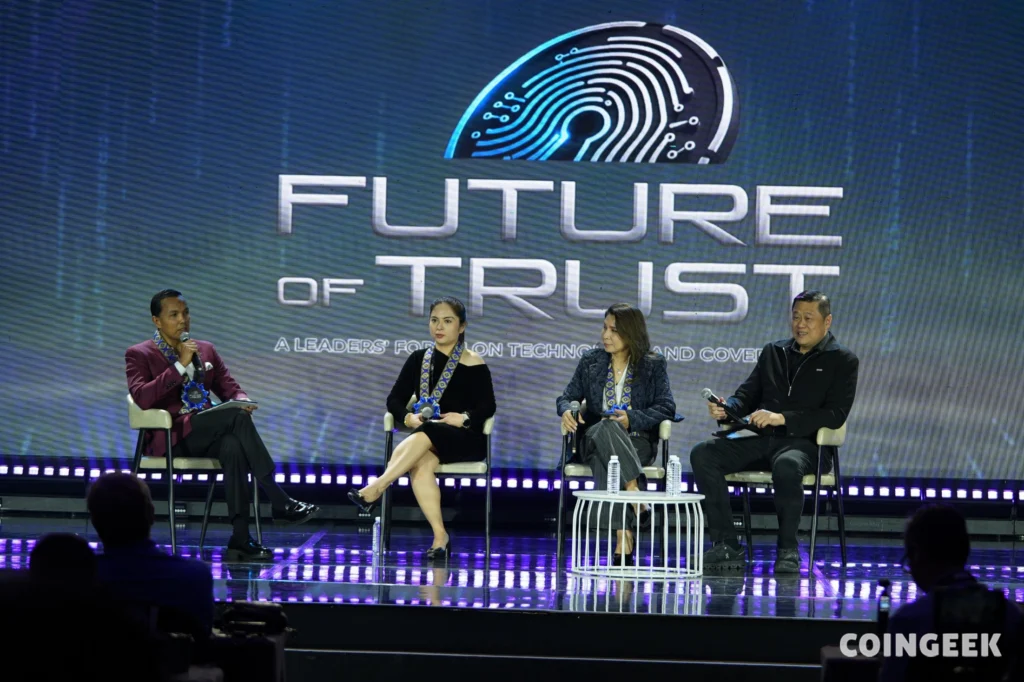
Barretto also shared a personal reminder of why digital trust matters. Just hours before the conference, her Telegram account had been compromised.
“Our greatest digital vulnerability isn’t simply losing data,” she said. “It’s losing trust.”
Her story is proof of one of the key takeaways that day: that technology affects everyone, not just developers and engineers.
Perhaps the most practical discussion of the day centered on Integrity Chain, a blockchain-powered initiative designed to improve transparency over publicly funded infrastructure projects.
The initiative grew out of discussions following concerns surrounding government flood control projects and seeks to provide greater visibility into foreign-assisted government projects using blockchain technology.
Attorney Mark Gorriceta, Chairman of Go Digital Philippines, described Integrity Chain as more than a technology project: “This conversation is not just about technology. It is about how we ensure innovation strengthens trust and serves the public good.”
Lim explained that the private sector intentionally drove the project to demonstrate blockchain’s potential before legislation catches up.
“Integrity Chain… is far from being perfect,” Lim admitted. “But we need to get the ball rolling.”
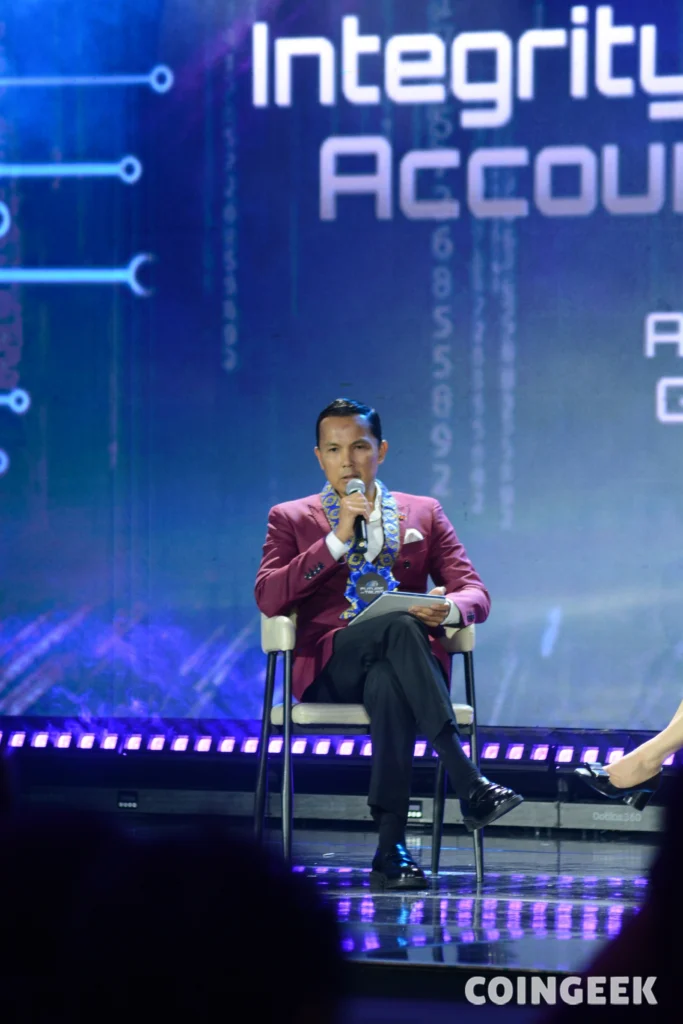
Representing the Department of Budget and Management (DBM), Undersecretary Maria Francesca ‘Sasa’ del Rosariooutlined how blockchain could help authenticate government financial records and reduce fraudulent documentation.
“Filipinos are expecting public service deliveries and accountability… to be delivered in digital ways,” she said.
The discussion highlighted how the industry’s priorities are evolving, with blockchain being viewed as a tool for solving real governance problems rather than a technology still searching for practical applications.
Beyond blockchain, Day 1 also explored artificial intelligence, cybersecurity, digital identity, property technology, local governance, and the growing importance of ethical leadership in an AI-driven world.
Speakers emphasized that AI, cybersecurity, and blockchain should no longer be viewed as separate industries but as interconnected technologies requiring coordinated governance.
The underlying message was consistent throughout the day: innovation without accountability undermines public confidence.
Day 2: Moving beyond the buzzwords
If Day 1 focused on governance, Day 2 shifted toward adoption.
Panels explored stablecoins, digital payments, tokenized real-world assets, AI, financial inclusion, and the future of digital finance.
One of the day’s standout discussions featured Raj Timothy Nandwani, Global Head of Business Development and International Market Access at Binance, who argued that the industry itself often creates unnecessary barriers to mainstream adoption.
“Blockchain is not the future, it’s the present,” Nandwani said.
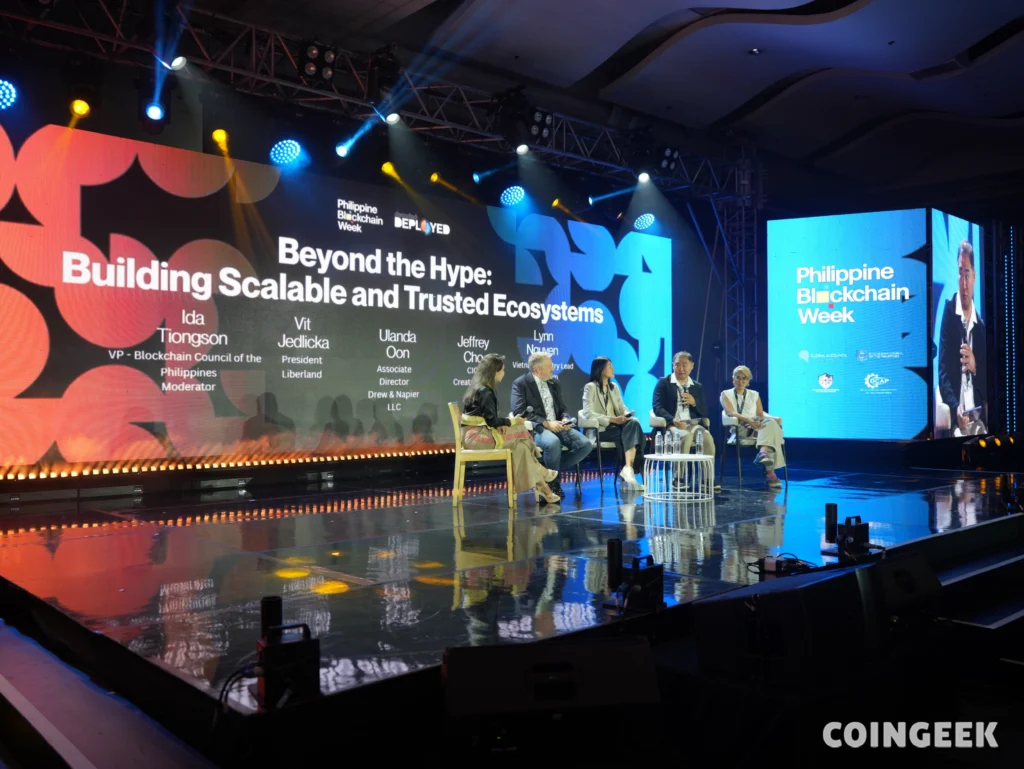
He challenged the industry to simplify its language, noting, “We have this love of jargon… this is the reason why there is still no mass adoption. We need to move away from crypto cyberpunk lingo. Let’s make it easy to understand.”
His message reflected a broader maturity taking place across the blockchain industry: success is increasingly measured by usability rather than technical complexity.
That message carried through the day’s discussions, with speakers focusing less on speculation and more on practical financial services that can reach millions of users.
Day 3: Celebrating the community
The final day brought a lighter atmosphere while showcasing just how broad the blockchain ecosystem has become.
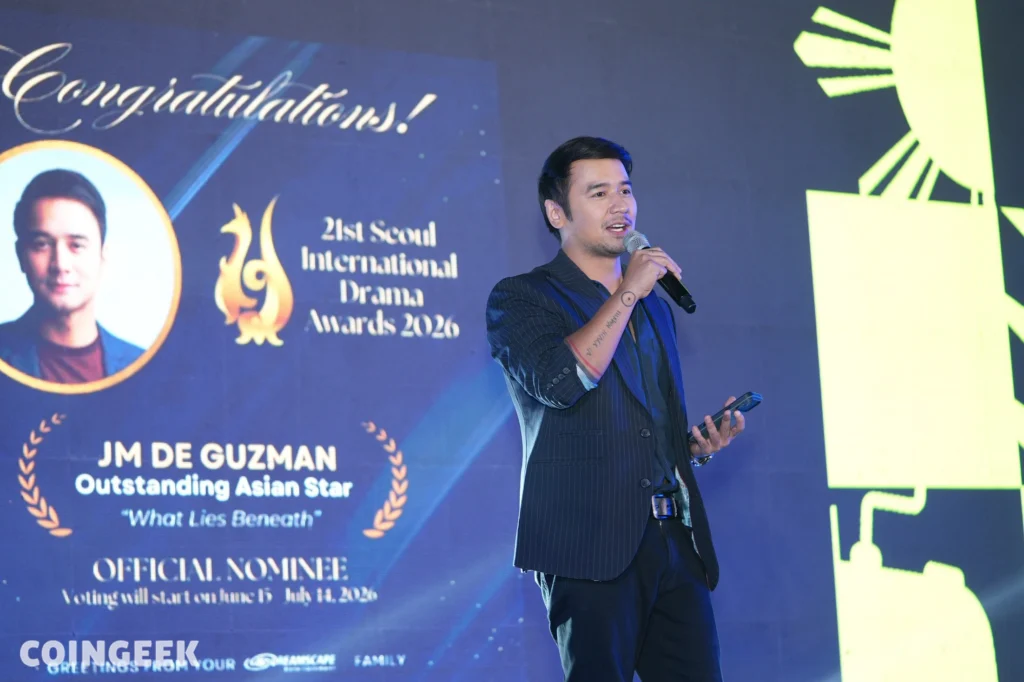
Alongside technology talks were creator sessions, entertainment, AI discussions spanning beauty and healthcare, business panels, influencer appearances, fashion conversations, acting workshops, and community activities, transforming the venue into a festival-like experience.
The diverse programming reflected Philippine Blockchain Week’s continued effort to make emerging technologies more approachable to wider audiences, blending education, networking, and entertainment into a single experience.
A conference that has grown up
The Philippine Blockchain Week 2026 demonstrated how much both the event and the industry have evolved over the past five years.
The conversations have expanded well beyond cryptocurrency to include issues of governance, accountability, digital identity, financial inclusion, and public trust. At the same time, the technology itself is moving closer to practical implementation through government-private sector collaborations.
Perhaps that was the biggest takeaway from this year’s conference.
The blockchain industry is no longer asking whether the technology has potential. It asks how to deploy it responsibly and earn the trust required for widespread adoption.
Watch: AI and Blockchain Transform Philippine Finance



Be the first to comment