




TLDR
- Fed officials warn AI infrastructure demand is driving inflation higher through rising semiconductor, energy, and data center costs
- The Fed held rates steady at 3.5%–3.75% at its June meeting, Kevin Warsh’s first as chair
- Nine of 18 voting members now project at least one rate hike before end of 2026
- CME FedWatch shows a 69.5% chance rates stay unchanged at the July 29 meeting, down from 80% last week
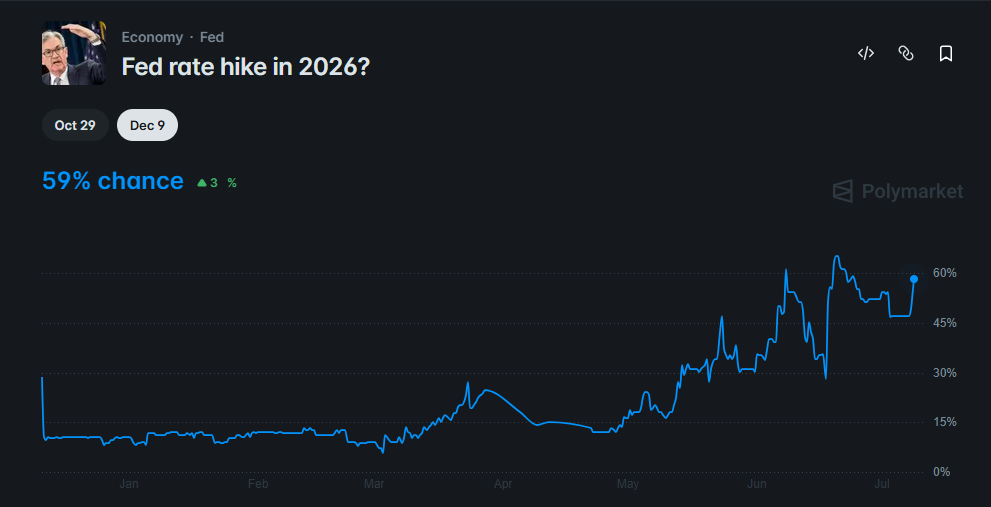
- Polymarket puts the odds of a rate hike this year at 59%, rising due to U.S.-Iran tensions
Federal Reserve policymakers were divided at their June meeting over whether to raise interest rates or hold them steady. Meeting minutes released Wednesday showed that many officials pointed to strong AI demand as a key driver of inflation.
🚨 THE FED JUST OFFICIALLY BLAMED AI FOR RISING INFLATION.
In the June 16-17 FOMC minutes, the Fed’s staff directly cited AI-related price pressures as a driver of core goods inflation, alongside tariffs.
Here’s what the minutes say:
1. Core goods price inflation has risen,… pic.twitter.com/h1zCH14mqC
— Bull Theory (@BullTheoryio) July 8, 2026
The Fed’s concern centers on what analysts call “chipflation.” This refers to rising costs for semiconductors used in data centers, which in turn push up prices for electronics, devices, and electricity for everyday consumers.
Most participants said that growth driven partly by strong AI business investment “could contribute to more persistent inflationary pressures.” They expected inflation to stay elevated in the near term, though some saw it easing if Middle East tensions cool.
The Fed’s own projections reflect this concern. Its year-end PCE inflation forecast jumped from 2.7% to 3.6%.
Nick Ruck, director of LVRG Research, said the minutes confirm the AI infrastructure buildout is “driving higher inflation through surging demand for semiconductors, energy and data centers, even as it promises future productivity gains.”
Rate Hike Still on the Table
The Fed left rates unchanged at 3.5%–3.75% in June, but the door to a hike is open. Nine of 18 voting members project at least one rate hike before the end of 2026. Six of those expect two separate 25-basis-point increases.

Many participants said the appropriate federal funds rate would be at or slightly below the current range by year-end. But many others said it should be above it, showing a clear split inside the committee.
Market odds have shifted. The chance of a rate hike at the July 29 meeting now sits at 30.5% on CME FedWatch, up from around 20% just last week. Polymarket data shows a 59% chance of at least one hike this year, a number that climbed after President Trump threatened new military strikes against Iran this week.
A few participants at the June meeting argued there was already a case for hiking rates now, citing elevated inflation risks and a labor market that has held up well.
Higher rates tend to be bad news for crypto. They reduce liquidity, raise borrowing costs, and make cash and bonds more attractive compared to risk assets. Analysts noted this week that crypto markets could benefit if the Fed steps in to support U.S. equity markets in a downturn.
The next Fed meeting is July 29. Markets will be watching for any change in tone as inflation data and geopolitical risks continue to evolve.
4th of July Flash Sale – 50% OFF!
Celebrate Independence Day by investing in your future. For a limited time, get 50% OFF a Knockout Stocks membership and unlock our latest high-conviction stock picks, powered by our proprietary KO Score algorithm.
You’ll also get access to our long-term investment ideas and shorter-term trade opportunities, helping you identify potential opportunities before the crowd.
Sign up to Knockout Stocks today and get 50% OFF to unlock the full list of premium stock picks.
Use coupon code SPECIAL50 for your exclusive discount.
Offer ends soon. Don’t miss out!



Be the first to comment