



Ethereum is trying to push out of its recent range near $1,800, with price testing the same resistance area that has capped recent recovery attempts.
The move is important because it is taking place after a clear futures-market reset rather than during an overheated build-up in leveraged positions.
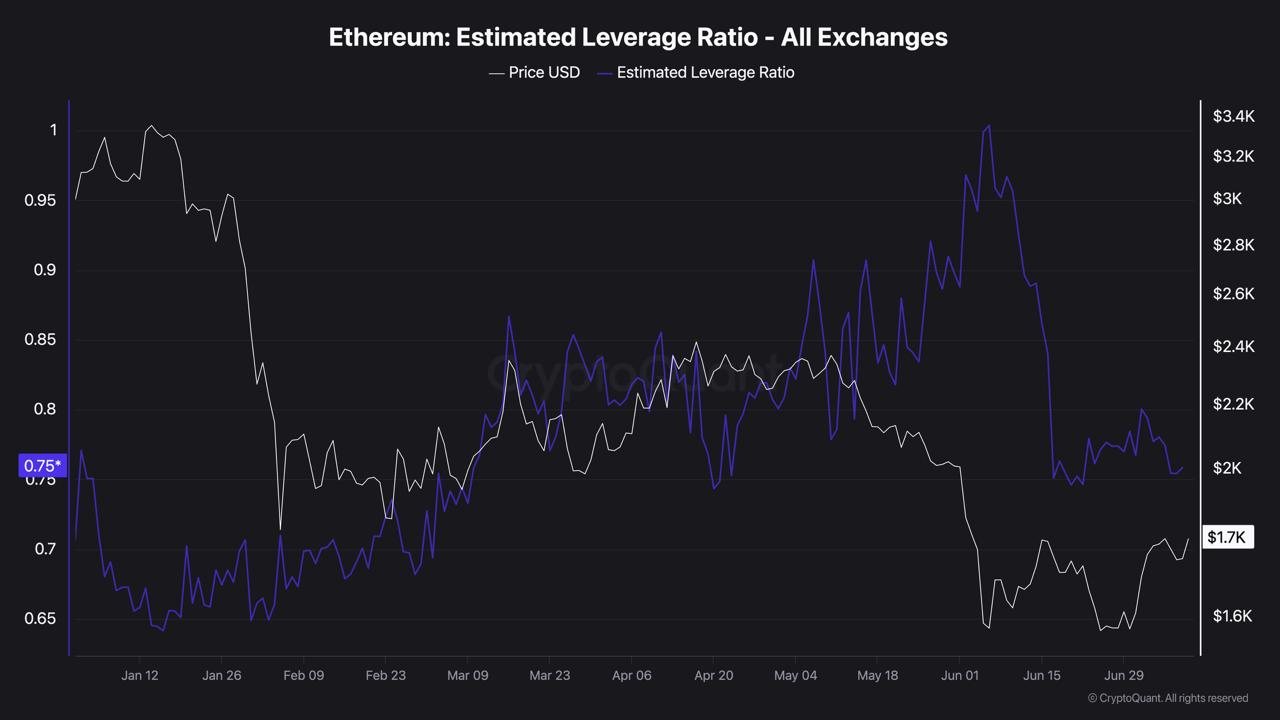
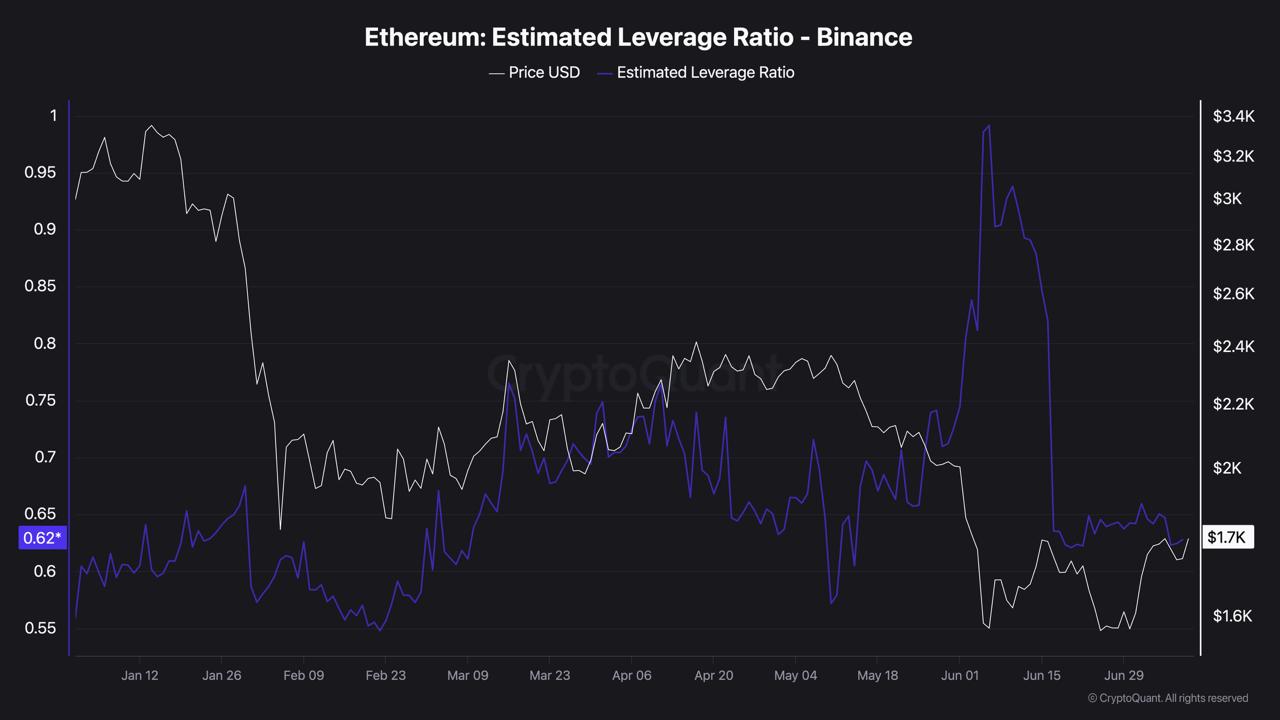
Binance’s estimated leverage ratio for ETH futures has fallen from 0.99 at the start of 2026 to 0.62 as of July 10, a decline of approximately 37.4%. Across all exchanges, the same metric stands near 0.75 after briefly approaching 1.0 in early June before retreating.
The lower reading changes the context of Ethereum’s current breakout attempt. Traders are using less borrowed exposure, reducing the market’s vulnerability to forced-liquidation cascades. However, the decline in leverage also points to weaker speculative participation, meaning ETH still needs sustained demand to confirm that the move can continue.
The Breakout Test
The daily ETH/USD chart shows Ethereum testing its 50-day simple moving average and the resistance area that has limited recent recovery attempts. Bulls are trying to turn that zone into support, but confirmation would require price to close above it and hold the level during a subsequent retest.
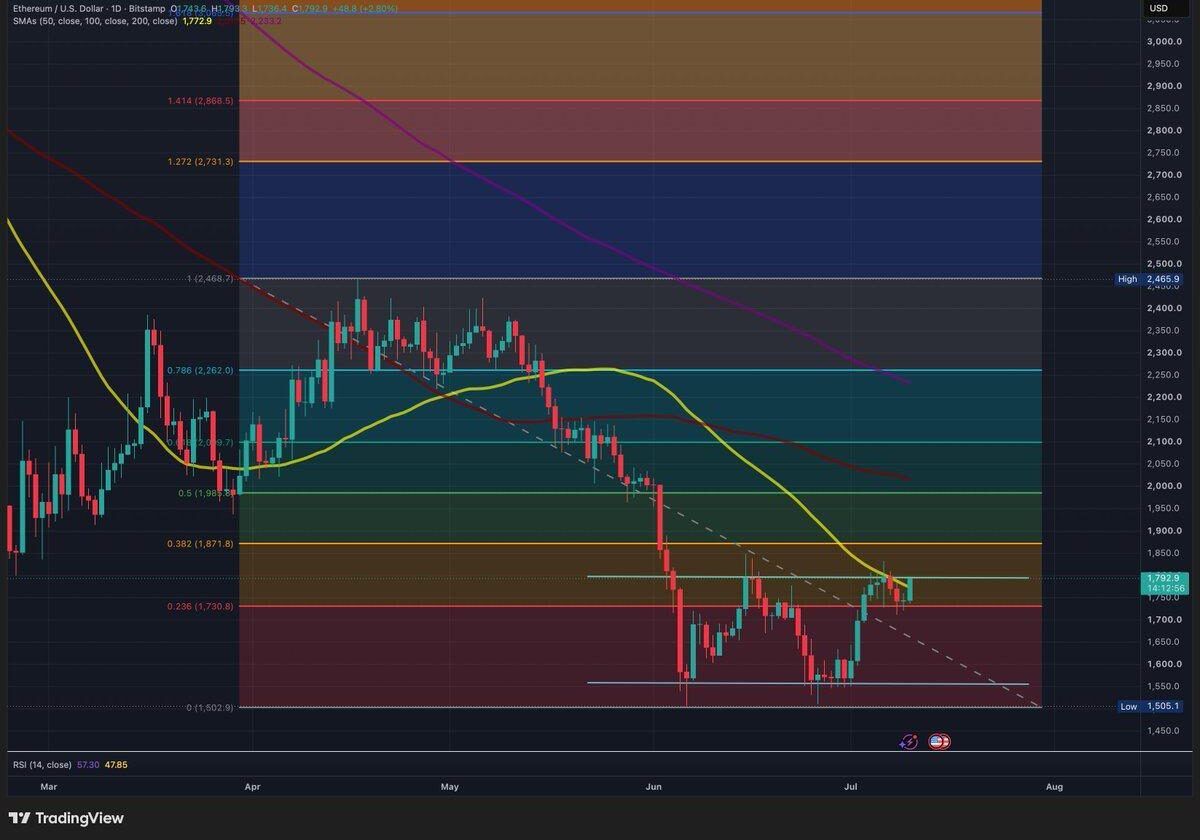
If ETH establishes support above the resistance zone and the 50-day SMA, the next upside level to monitor is the 0.382 Fibonacci retracement near $1,871. Reaching and holding that area would strengthen the argument that Ethereum is moving beyond its recent range rather than experiencing another temporary rebound.
The July 9 daily candle showed hesitation near resistance rather than a decisive rejection. A stronger bearish candle would have indicated that sellers had quickly regained control, while the smaller pause left the breakout attempt unresolved. A daily close above the July 9 high would improve the short-term continuation setup, although a successful retest would still provide stronger confirmation.
Until that happens, Ethereum remains in a testing phase. Price has reached the relevant technical area, but buyers have not yet demonstrated that they can defend it.
Why Deleveraging Matters Now
The derivatives backdrop is notably different from early June, when the estimated leverage ratio across exchanges briefly approached 1.0. Elevated leverage made the market more sensitive to liquidations and increased the risk that relatively small price moves could trigger a larger chain reaction.
Binance’s leverage ratio near 0.62 is also below the all-exchange reading of approximately 0.75. This indicates that futures traders on Binance have reduced leveraged exposure more aggressively than the broader ETH derivatives market.
A breakout while leverage remains contained would be less exposed to liquidation-driven volatility than a move built on crowded futures positioning. If ETH advances without a corresponding surge in leverage, the move would be less consistent with a purely derivatives-driven squeeze. Spot-volume, exchange-flow and ETF data would still be needed to determine whether broader demand is supporting the rally.
Lower leverage also removes some of the speculative fuel that can accelerate a rapid upside move. Ethereum therefore has a less fragile derivatives structure, but it still needs a catalyst. Sustained spot buying, renewed ETF inflows, improving macroeconomic conditions or stronger on-chain activity could provide the demand needed to extend the move.
The Risk If the Retest Fails
If ETH fails to hold above the breakout zone, the move would become another unsuccessful recovery attempt. Attention would then shift back toward the lower boundary of the recent trading range and the previous swing lows.
The reduction in leverage could limit the severity of a liquidation-driven decline, but it would not protect ETH from further losses if underlying demand remains weak. Deleveraging reduces one source of market instability; it does not create buying pressure on its own.
The immediate test remains the 50-day SMA and the surrounding resistance zone. A daily close above the July 9 high, followed by a successful retest, would strengthen the continuation case. A rejection and return below the breakout area would indicate that Ethereum remains range-bound.
Ethereum’s futures market has reset from the leverage levels seen in early June, giving the current breakout attempt a less crowded foundation. Price must now show that buyers can sustain the move without excessive leverage doing the work.
The information provided in this article is for educational and informational purposes only and does not constitute financial, investment or trading advice. Cryptocurrency markets are volatile and involve substantial risk. Readers should conduct their own research and consult a qualified financial adviser before making investment decisions.


Be the first to comment