



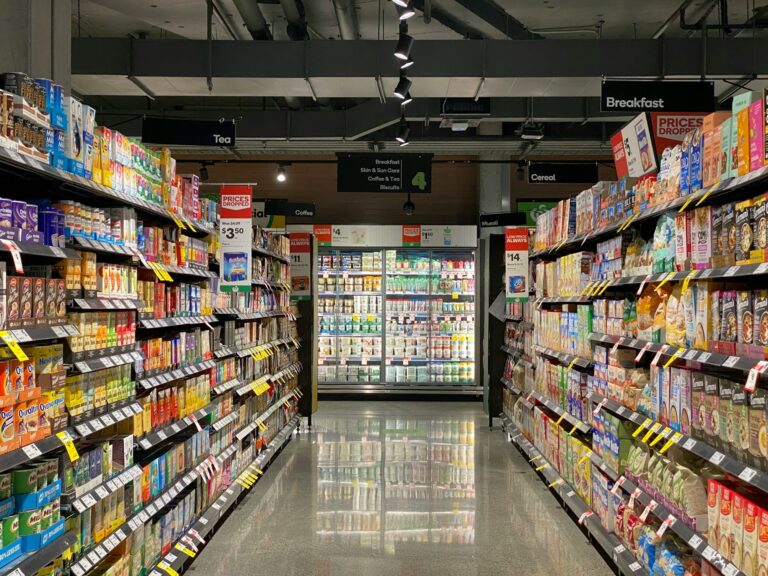
Canadians are changing both how they shop for groceries and how they pay for them as food costs continue to put pressure on household budgets.
KOHO’s latest Grocery Gap Report, based on spending data from more than 173,000 Canadians, found that average grocery spending per user increased approximately 5% year over year, from $261 to $275 per month. Consumers also made more frequent trips to grocery stores, increasingly favoured discount retailers, and adopted flexible payment options at a striking pace.
Most notably, Pay Later adoption for grocery purchases increased 109% year over year—the strongest growth among the KOHO financial products examined in the report. While the data cannot reveal why each customer used the service, the trend suggests that more Canadians are seeking flexibility to manage essential expenses that cannot easily be postponed or avoided.

 Those same affordability pressures inspired KOHO’s recently launched 10-Year Grocery Giveaway. Running until July 31, 2026, the campaign will provide one Canadian household with $500 per month toward groceries for the next decade, for a total prize value of $60,000.
Fintech.ca spoke with Faye Lucas, Head of Consumer Trust at KOHO, about what the report reveals about household financial strain, how Canadians are adapting their shopping habits, and the responsibility involved in offering flexible payment tools for essential purchases.
The report shows Pay Later adoption for grocery purchases jumped 109% year over year. What does that tell you about how Canadians are managing everyday affordability pressures right now?
FL: Canadians are looking for more flexibility as they manage higher everyday costs. In our data, Pay Later adoption increased 109% year-over-year, representing the strongest adoption growth among all KOHO financial products analyzed during the study period. Grocery spending also continued to rise. Average grocery spending per user increased approximately 5% year-over-year, from $261 to $275 per month, driven by both larger baskets and more frequent grocery trips.
The pattern is clear: Canadians are making deliberate adjustments to manage rising food costs, including how they shop and how they pay, but grocery spending continues to climb.
Groceries are usually thought of as a basic recurring expense, not a discretionary purchase. What does it mean when consumers are increasingly turning to Pay Later for essentials?
FL: Groceries are one of the household expenses that cannot easily be delayed, reduced, or avoided altogether. That is what makes this finding important. When Canadians are increasingly turning to Pay Later for essential purchases like groceries, it suggests they are looking for more flexibility around expenses that are part of everyday life, not just occasional or discretionary spending.
We also saw broader behaviour changes in the data, including more frequent grocery trips and increased trips to discount retailers. So this is not just about one payment method. It is part of a wider shift in how Canadians are trying to stretch their grocery budgets while managing an essential cost that continues to rise.
Are customers using Pay Later for groceries as a short-term cash flow tool, or does the data suggest something deeper about household financial strain?
FL: The data does not tell us each individual customer’s personal reason for using Pay Later, so I would not want to overstate that. What we can say is that Pay Later adoption more than doubled during a period when grocery spending increased, grocery trips became more frequent, and more shoppers shifted toward discount retailers. The largest increase in Pay Later adoption happened during the holiday grocery season before remaining elevated throughout 2026. That points to growing demand for financial flexibility as Canadians navigate higher everyday costs.
Whether someone is using Pay Later as a short-term cash flow tool or as part of a broader budgeting strategy, the broader trend shows how much pressure essential spending can put on household budgets.
KOHO’s data also points to more frequent grocery trips and a shift toward discount retailers. How are Canadians changing not just how they pay, but how they shop?
FL: Canadians are becoming more intentional about where and how often they shop. Our data shows that average grocery trip frequency increased 2.9% year-over-year, from 5.86 trips per month to 6.03 trips per month. Trips to discount grocery retailers increased 4.1%, while trips to premium grocery retailers were essentially unchanged, increasing just 0.3%. Discount basket sizes also increased 1.6%, compared to 0.9% among premium retailers.
To us, that shows Canadians are actively looking for ways to stretch their grocery budgets. They are not only changing how they pay; they are also adjusting where they shop and how frequently they go.
As Head of Consumer Trust, how do you think about the responsibility that comes with offering flexible payment tools for essential purchases like food?
FL: When you are talking about essential purchases like groceries, responsibility is very important. Groceries are not an expense people can simply opt out of. So when we see Canadians using financial tools to manage essential costs like groceries, we have to pay close attention to what that says about their day-to-day financial lives.
From a consumer trust perspective, the responsibility is to understand how people are actually managing their money and to recognize that flexibility matters, especially when everyday expenses continue to rise. The report shows Canadians are making more grocery trips, changing where they shop and increasingly seeking financial flexibility, yet grocery spending continues to climb. That is the reality we need to stay close to.
What surprised you most in the Grocery Gap Report, either in terms of who is using Pay Later for groceries or how quickly the behaviour has changed?
FL: One of the most interesting findings was that, amid economic uncertainty, Canadians are changing how they shop, budget and save – but grocery spending is still going up. Average grocery spending per user increased approximately 5% year-over-year, rising from $261 to $275 per month. That increase was driven by both larger baskets and more frequent trips to the grocery store. Average grocery basket size increased 2.4%, while grocery trip frequency increased 2.9%.
What also stood out is the shift toward discount retailers. Trips to discount grocery retailers increased 4.1% year-over-year, while trips to premium grocery retailers remained essentially unchanged, increasing just 0.3%. To me, that shows Canadians are being more intentional about where and how often they shop, but those adjustments are not fully offsetting rising grocery costs. That is the bigger story: people are adapting, but groceries remain a persistent pressure on household budgets.
KOHO’s 10-Year Grocery Giveaway offers one Canadian $500 per month for groceries over 10 years. Why did KOHO decide to centre the campaign on groceries rather than a financial product or traditional banking incentive?
FL: The campaign is centred on groceries because groceries are one of the most persistent financial pressures Canadians face. The report shows that average grocery spending per user increased approximately 5% year-over-year, rising from $261 to $275 per month. It also shows that Canadians are making more grocery trips, shifting toward discount retailers and increasingly seeking financial flexibility. Groceries are also an expense that households cannot easily delay, reduce or avoid altogether. That is why the 10-Year Grocery Giveaway is focused on providing meaningful support for a real, recurring household cost. The giveaway will award one Canadian household $500 per month toward groceries for the next 10 years, representing a total prize value of $60,000.
What do you hope this campaign and report communicate about KOHO’s understanding of its customers’ day-to-day financial lives?
FL: I hope it communicates that KOHO is paying close attention to the real financial pressures Canadians are navigating every day. The report is not just about grocery prices in the abstract. It looks at how people are actually responding: they are spending more, shopping more frequently, shifting toward discount retailers and looking for more flexibility in how they manage essential costs.
The 10-Year Grocery Giveaway builds from that same understanding. It is focused on groceries because that is a real recurring expense for Canadian households, and one that people cannot simply opt out of. The contest is open until July 31, 2026, with one Canadian household receiving $500 per month toward groceries for the next 10 years.




Be the first to comment