



Disclaimer: The below article is sponsored, and the views in it do not represent those of ZyCrypto. Readers should conduct independent research before taking any actions related to the project mentioned in this piece. This article should not be regarded as investment advice.
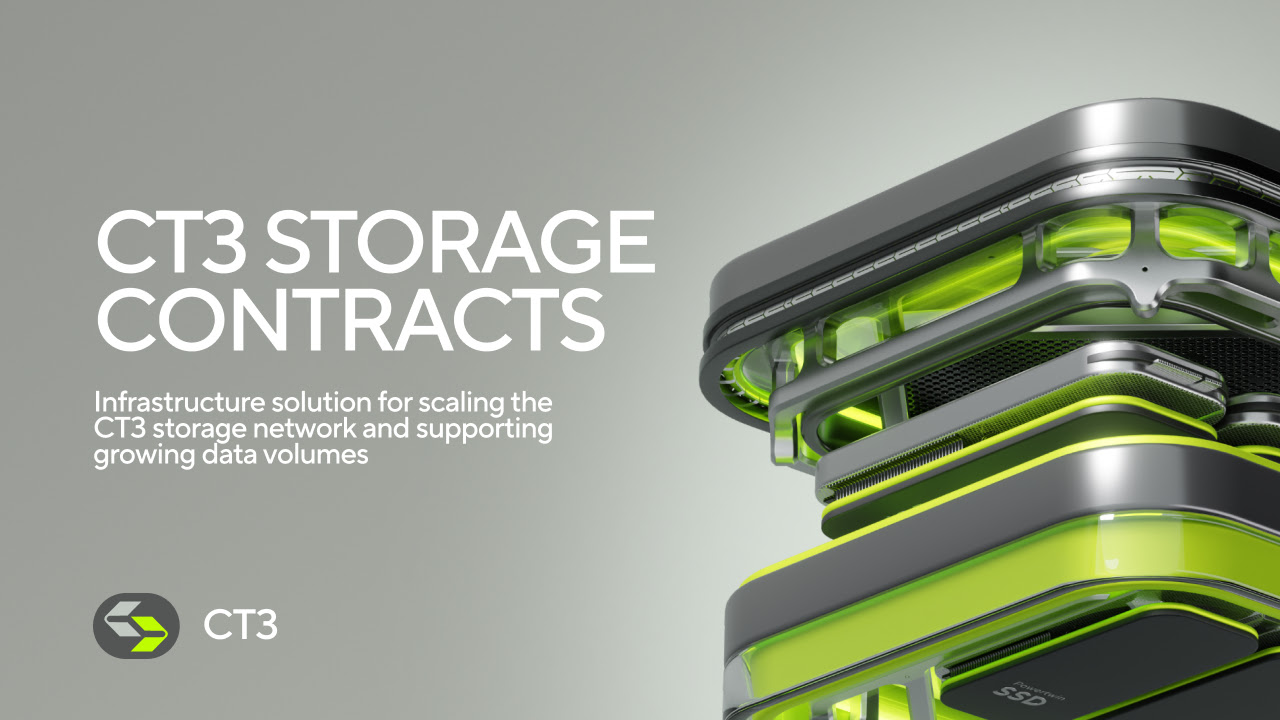
CT3 has announced the transition of its decentralized storage infrastructure to a dedicated Storage Contracts model — designed to support continued platform growth, improve infrastructure scalability, and expand storage capacity as demand increases.

What Drove the Change
The transition follows rapid growth across the CT3 ecosystem, with more than 180,000 unique users having used the platform and more than 500,000 uploads completed. Each upload is linked to an NFT access key, allowing platform activity and network usage to be independently verified on-chain.
That growth has increased pressure on the existing infrastructure. Processing all new uploads through a single main collection and one smart contract limits scaling flexibility and makes storage capacity harder to manage as network activity expands.

 
How the New Architecture Works
Under the new model, new uploads will be distributed across dedicated Storage Contracts rather than a single main contract. Each Storage Contract is linked to a fixed amount of storage capacity and operates as an independent infrastructure segment — with its own capacity, utilization level, and on-chain statistics.
The architecture is designed to distribute workloads across multiple smart contracts, improve the transparency and measurement of resource utilization, and support the deployment of additional storage capacity as demand grows.
Participants may finance the deployment of new Storage Contracts and the addition of storage capacity. The allocated capacity is used to store files uploaded through ct-3.cloud, while the resulting profit is shared between CT3 and the participant who financed the infrastructure expansion.
Infrastructure Segmentation
Previously, CT3 keys were issued primarily through the main collection and a single contract flow. As the platform expanded, this model became less flexible for handling different categories of data.
Storage Contracts divide the infrastructure into separate segments. Each segment operates through its own smart contract, is linked to a specific amount of storage capacity, can serve a particular category of files, allows capacity utilization and workload to be measured independently, and reduces pressure on the main NFT key issuance process.
This separation makes the infrastructure more resilient and allows individual areas of the platform to scale without rebuilding the entire system.
How the Allocated Storage Capacity Is Used
Each Storage Contract is linked to a defined amount of capacity within the CT3 network. Once activated, the corresponding storage space is supplied by network nodes and used to store data uploaded through ct-3.cloud. The allocated capacity may be used for standard user files, corporate archives, automatic backups, long-term datasets, and future CT3 products and applications. Larger contracts can accommodate heavier files and more substantial flows of corporate or backup data, allowing the network to direct workloads to infrastructure segments with sufficient available capacity.
Storage Contract Economics
The commercial model behind Storage Contracts is grounded in the real use of CT3 infrastructure. The platform acquires storage capacity from node operators and provides it to ct-3.cloud customers at the market price of the storage service.
A participant finances the deployment of a new Storage Contract and the expansion of available network capacity. Once launched, that capacity is used to store both personal and corporate data, and the generated profit is split between the investor and CT3.
The financial performance of each contract depends on two main factors: the actual utilization of the allocated capacity, and the margin between the cost of acquiring storage capacity and the price charged to end users. Storage Contracts, therefore, allow participants to participate in the growth of the CT3 infrastructure and potentially earn income linked to real demand for storage services — the more actively the capacity is used, the greater the contract’s potential return.
On-Chain Transparency
The operation of each Storage Contract can be verified through the blockchain. Files stored within the allocated capacity are represented by NFT keys containing storage-related metadata. The combined size of the files associated with those keys can be compared with the utilization figure displayed for the contract. Through the smart contract address, an investor can verify issued NFTs, collection activity, and the actual use of the capacity they helped finance.
This model enables independent verification of the number of keys created, the volume of stored data, utilization of allocated capacity, activity within a specific Storage Contract, and the relationship between infrastructure usage and profit generation.
For ct-3.cloud users, the experience remains unchanged: both existing and new NFT keys are supported, and the transition to the new architecture requires no additional action.






Be the first to comment