




TLDR
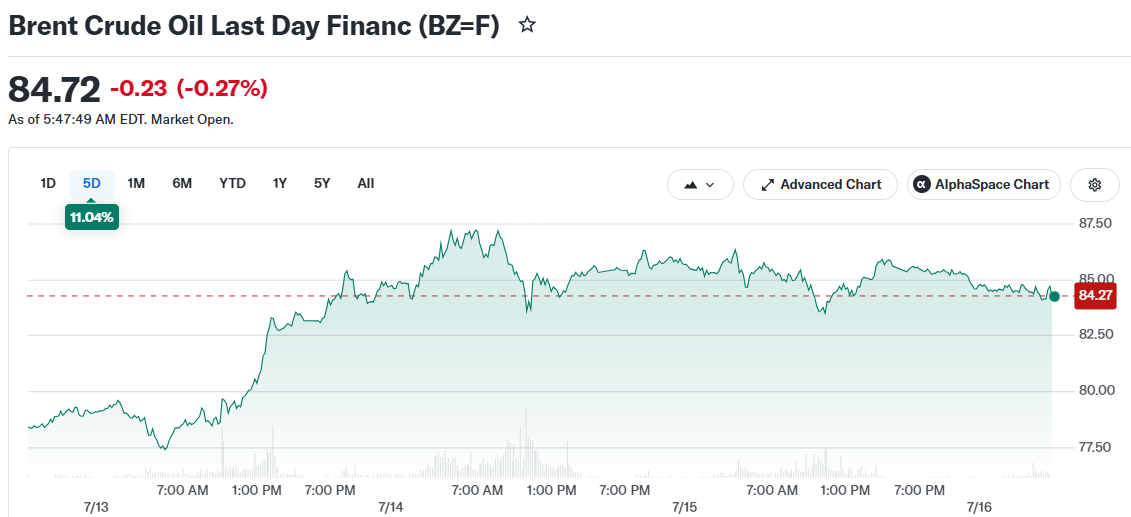
- Oil prices dipped slightly after a three-day rally, with Brent crude at $84.58 and WTI at $79.56 per barrel
- U.S. military struck Iranian targets on Wednesday, aimed at protecting commercial shipping in the Gulf
- Iran called the conflict an “existential war” and warned of further disruption to regional energy exports
- The Strait of Hormuz, through which roughly one-fifth of global oil and gas flows, remains at risk
- U.S. crude inventories fell by 1.7 million barrels last week, keeping supply concerns elevated
Oil prices pulled back slightly on Thursday after surging nearly 10% earlier this week, as markets weighed the risk of prolonged disruption to one of the world’s most critical shipping routes.
Brent crude fell 0.4% to $84.58 per barrel, while West Texas Intermediate slipped 0.1% to $79.56 per barrel as of early Thursday morning. Both benchmarks had hit one-month highs at the start of the week when fighting between the U.S. and Iran escalated.
The United States launched fresh airstrikes on Wednesday against Iranian military targets tied to attacks on commercial shipping in the Persian Gulf. Washington said the strikes were meant to degrade Iran’s ability to threaten maritime traffic.
Iran responded by calling the conflict an “existential war” and warned that regional energy exports could face further disruption if the fighting continues.
🇮🇷🇺🇸 Iran’s Khatam al-Anbiya Central HQ just issued a blistering warning to Washington over the Strait of Hormuz.
The spokesman said Iran will never allow the U.S., as an outside power, to interfere in the strait, calling it an inviolable red line.
He warned that if Trump…
— Mario Nawfal (@MarioNawfal) July 16, 2026
Strait of Hormuz Remains the Key Risk
Markets are closely watching the Strait of Hormuz, a narrow waterway through which about one-fifth of global oil and liquefied natural gas shipments pass. Any lasting blockage there would tighten supply for markets worldwide.
Jefferies analysts said they expect the current phase of escalation to last several weeks, even if it does not grow into a full-scale war. They added that this would likely keep traffic through the strait impaired and maintain upward pressure on prices.

Soojin Kim from MUFG noted that tanker traffic has continued with U.S. assistance, but said the escalation threatens export routes that had helped Gulf producers keep crude moving during earlier disruptions.
President Trump is also reportedly considering expanding U.S. military operations, with options including stepping up airstrikes and sending ground forces to seize Iranian islands near the strait, according to the Wall Street Journal.
Inventory Data Adds to Supply Concerns
The U.S. Energy Information Administration reported on Wednesday that crude oil inventories fell by 1.7 million barrels for the week ending July 10, roughly in line with expectations.
Gasoline stockpiles also dropped by 1.5 million barrels as summer driving demand stayed strong. Distillate inventories, however, rose by 4.6 million barrels, an unexpected increase.
ING analysts warned that the renewed conflict comes at a vulnerable time, pointing to large inventory drawdowns through the second quarter. They added that global strategic petroleum reserve releases, which had helped ease the market in recent months, are set to end within weeks.
The International Energy Agency said in its July Oil Market Report that while oil flows through the strait had partially recovered in June, the renewed fighting this month has clouded the outlook and could delay expectations for a return to surplus in 2027.
Stop guessing and start investing with confidence. KnockoutStocks gives you the AI insights, market intelligence, and stock research you need to spot opportunities, cut through the noise, and make smarter investment decisions — all in one powerful platform.
Sign up today and get 50% OFF full access to our premium stock picks.
Simply use coupon code SPECIAL50 at checkout to claim your exclusive discount.



Be the first to comment