


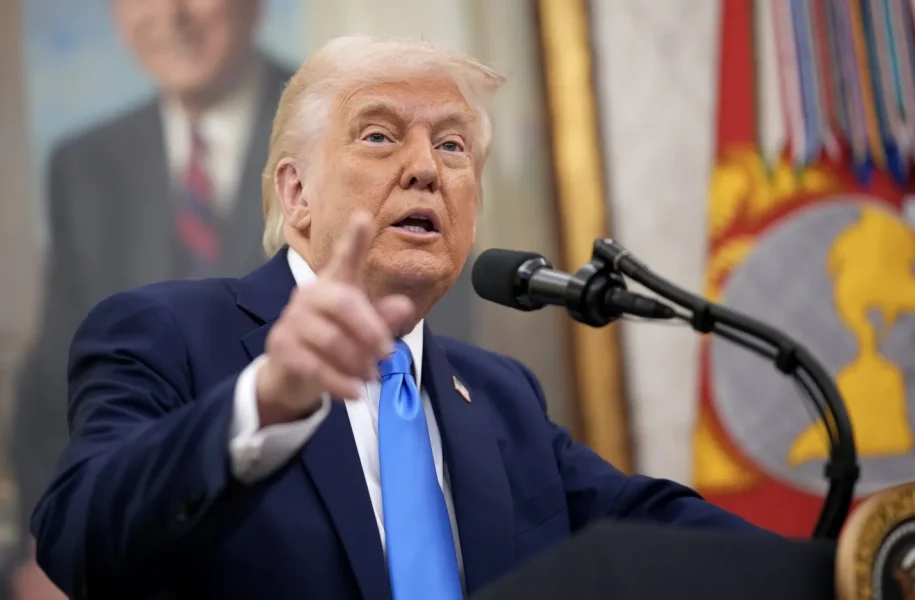
Donald Trump has reportedly accepted a proposed ethics framework for the Digital Asset Market Clarity Act, potentially removing one obstacle that has complicated negotiations in the Senate.
Key Takeaways
- Reports say Trump accepted a proposed crypto ethics framework, but no official text has been released.
- The CLARITY Act cleared the Senate Banking Committee but has no confirmed floor vote date.
- The scope, enforcement and treatment of officials’ existing holdings remain unknown.
- Any Senate changes would still need approval from the House.
The development is not yet officially confirmed. The Block reported the agreement on July 20, citing an unnamed industry source, and said Crypto in America’s Eleanor Terrett and Punchbowl News reporter Brendan Pedersen had reported it earlier.
🚨NEWS: I’m hearing from multiple industry sources that the White House has agreed on an ethics package for the Clarity Act and sent the language to certain Senate Republicans this afternoon.
It’s still unclear what the details of the agreement are (I’ve reached out for…
— Eleanor Terrett (@EleanorTerrett) July 20, 2026
Neither the White House nor the senators involved had published the proposed language as of July 21. The agreement should therefore be treated for now as a reported political understanding rather than a completed amendment or a guarantee that the bill will pass.
What the Ethics Dispute Is About
Negotiators have been discussing limits on how presidents, vice presidents, members of Congress and other senior federal officials could profit from digital assets while helping shape the rules governing the industry.
The proposed language has not been released, leaving several important questions unanswered. It is not yet clear whether the restrictions would cover officials’ family members, existing token holdings, new token launches, promotional activity, licensing income or investments held through trusts.
The enforcement mechanism is equally important. Without the text, lawmakers and the public cannot determine who would investigate possible violations, what penalties would apply or whether officials would be required to sell existing assets.
Democrats Point to Trump’s Crypto Income
The ethics push intensified after Trump’s latest financial disclosures. In a July 10 statement, senior Senate Democrats said the Trump family’s crypto ventures generated approximately $1.4 billion of his income during 2025.
They argue that passing legislation capable of increasing the value or reach of digital assets without conflict-of-interest safeguards could allow senior officials to benefit from policies they help create.
Trump rejects that characterization. In a July 2 CNBC interview reported by ABC News, he said his children manage his business and investment activity and maintained that there was “nothing illegal” about the income.
The White House has also previously argued that Trump is not involved in the day-to-day management of his companies. Critics respond that transferring operational control does not necessarily remove the president’s continuing financial interest in those businesses.
Where the CLARITY Act Stands
The House of Representatives passed H.R. 3633 on July 17, 2025, by a vote of 294 to 134.
The Senate Banking Committee advanced its version on May 14, 2026, by 15 to 9. The legislation is intended to divide regulatory responsibilities between the Securities and Exchange Commission and the Commodity Futures Trading Commission while creating federal rules for crypto trading platforms and other intermediaries.
No official Senate floor date had been announced as of July 21. The chamber’s August state work period begins on August 10, leaving lawmakers a limited window if leaders want a vote before the recess.
The ethics compromise may improve the bill’s prospects, but it does not resolve every disagreement. Lawmakers may still debate decentralized finance, illicit-finance controls, developer protections and the division of authority between regulators.
What Must Happen Before the Bill Becomes Law
The next meaningful development will be publication of the revised legislative text. That would show whether the reported agreement has been converted into enforceable language and whether it has support from enough Democratic and Republican senators.
If the Senate passes a version that differs from the House-approved bill, the House must accept those changes or the two chambers must negotiate a common version. Both chambers must approve identical text before it can be sent to the president.
Trump’s reported acceptance of an ethics framework may remove a political obstacle, but it has not completed the legislative process. Until the language, bipartisan support and floor schedule are public, describing the final hurdle as fully cleared would go beyond the available evidence.
Source review: Updated July 21, 2026, using Congress.gov, the Senate Banking Committee, the official Senate calendar, Trump’s reported public response and reporting on the ethics negotiations.
This article is provided for informational purposes only and does not constitute financial, investment or legal advice.

Kosta has reported on cryptocurrency markets and blockchain infrastructure since 2020, bringing over six years of hands-on experience in the crypto industry built through daily tracking of markets, trends, and emerging blockchain developments. Specializing in Bitcoin on-chain analysis, institutional ETF flows, and digital asset price action, his work at Coindoo has been cited by other news agencies and consistently covers market developments with a focus on data-driven reporting across Bitcoin, Ethereum, Solana, and XRP.
Over the years, Kosta has contributed to multiple crypto media outlets in different regions, authoring over 6,000 articles across the sector. His reporting spans cryptocurrency markets and the broader fintech industry, tracking not only price action but also the technological and regulatory forces shaping the ecosystem.
To support his analysis, Kosta actively leverages on-chain data and metrics from leading platforms such as Santiment, Glassnode, and CryptoQuant, enabling deeper, evidence-based market insights. He believes in the power of transparency and the data that underpins the blockchain ecosystem.
His academic background in Marketing Management from Denmark further complements his analytical approach, adding a strong understanding of communication strategy and content positioning to his work.



Be the first to comment