



TL;DR:
- The House Digital Assets Subcommittee held a hearing to evaluate oversight of prediction markets.
- The platforms Kalshi and Polymarket have reached estimated valuations of $22 billion and $15 billion, respectively.
- The CFTC has requested a $410 million budget for fiscal year 2027 to expand its operational capabilities.
The United States Congress has begun actively debating the regulatory framework that should apply to prediction markets, amid jurisdictional disputes between federal and state regulators.
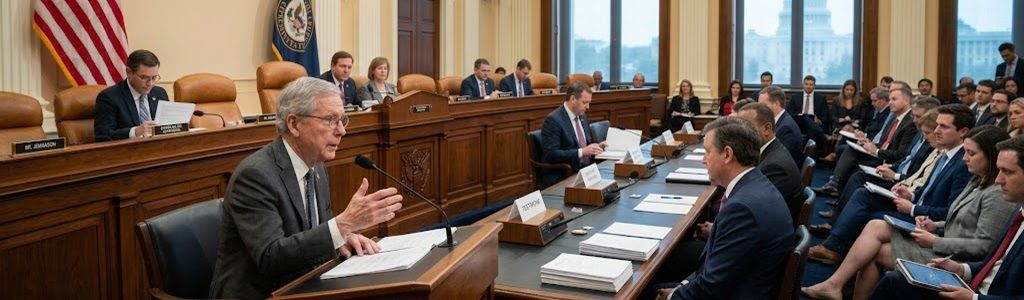
During a hearing of the House Agriculture Committee’s Subcommittee on Digital Assets held this Tuesday, lawmakers and experts addressed whether the Commodity Exchange Act and the current capacity of the Commodity Futures Trading Commission (CFTC) are sufficient to oversee bets linked to sporting events.
Representative Dusty Johnson noted during his opening remarks that existing laws face scenarios that were not contemplated at the time of their enactment, due to the technological evolution of financial derivatives.

Over the past year, CFTC Chairman Michael Selig asserted that the agency holds exclusive jurisdiction over these operations on platforms such as Kalshi and Polymarket. According to the federal regulator’s stance, several legal actions taken against local regulations stem from the fact that some states are overstepping their authority.
For their part, state authorities argue that betting on sports events in these markets violates local gambling laws.
The Budget Gap and Industry Volume
The volume of activity heightened legislative interest. Recent records indicate that Kalshi and Polymarket reached approximate valuations of $22 billion and $15 billion. In turn, in March, the CFTC initiated a formal rulemaking process to structure a comprehensive framework applicable to these environments.
To handle this workload, the CFTC requested a $410 million budget for fiscal year 2027, representing a 12.3% increase compared to the previous period.
In comparative terms, the Securities and Exchange Commission (SEC) has a staff of over 4,000 employees, whereas the CFTC operates with around 550 workers.
Representative Austin Scott expressed concern over the discrepancy between operational responsibilities and the agency’s technical capacity. According to the lawmaker, assigning new tasks without a proportional increase in resources could impact oversight effectiveness.
Agriculture Committee Chairman Glenn Thompson indicated that Congress will evaluate the need to draft new legislation if statutory gaps in the CFTC’s authority are confirmed.
The budget request process for fiscal year 2027 and the publication of the CFTC’s draft regulations will mark the next formal steps in defining the regulatory framework for the sector.



Be the first to comment