



Key Takeaways
- Hackers hijacked Robinhood CEO Vlad Tenev’s X account on July 23, 2026, to push a fake VLAD token.
- Wallets behind the scam pulled an estimated 690 ETH, about $1.3 million, before the token collapsed.
- Robinhood Chain, live since July 1, keeps drawing scams as meme coin trading outpaces its RWA goals.
The post told Tenev’s nearly 800,000 followers that Vladhood, ticker VLAD, was the official mascot of Robinhood Chain, the company’s new blockchain network. It included a contract address and hinted that the token would land on the Robinhood app. None of that was true.
Robinhood’s communications team caught the breach fast. At around 2:05 p.m. ET, the @RobinhoodComms account posted that Tenev’s account had been compromised and that the fake promotion had been removed.
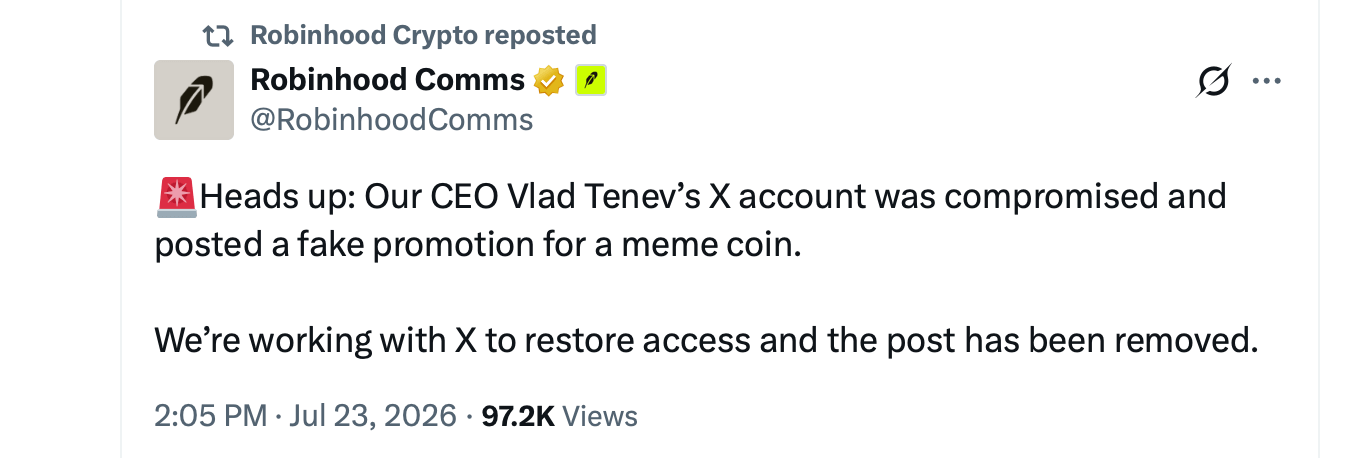
The company said it was working with X to restore access.
What Happened Onchain
Traders bought in within minutes, reacting to what looked like backing from a sitting CEO. Onchain trackers pieced together the mechanics fast.

- About 70% of the token supply sat with the earliest wallets, a sign of concentrated control from the start.
- Vladhood’s market cap reached somewhere between $4 million and $10 million shortly after the post appeared.
- The wallets behind the token cashed out an estimated 690 ETH, worth roughly $1.3 million, before the price collapsed.
- Liquidity was never locked or burned, so a 1% fee kept flowing to whoever controlled the pool.
Thousands of retail wallets ended up holding the token after the exit. Blockchain explorers flagged the contract as high risk within the hour.
A Familiar Playbook
Account takeovers built around meme coins go back years. The 2020 hijacking of Twitter accounts belonging to Elon Musk, Bill Gates, and several companies for a bitcoin giveaway scam remains the best-known case, some using deep fakes. The Tenev incident followed the same shape: borrow a trusted account, post a contract address, let FOMO do the work, then exit.
What set this one apart was the branding. Vladhood tied itself to Tenev’s own name and to Robinhood Chain’s launch, timed to land while traders were already hunting for the network’s next token.
Robinhood Chain went live on the Ethereum layer-2 network on July 1, built on the Arbitrum Orbit stack for tokenized stocks and other real-world assets. Meme coins took over early trading volume instead. Tenev acknowledged the shift himself in a July 8 post, writing that while the chain was built for real-world assets, “it works great for memes too.”
Crypto Traders Warn About VLAD Meme Coin
Crypto traders on X moved fast to warn others once the hack became clear, posting messages telling people not to buy the VLAD meme coin and sharing the onchain breakdowns that traced the wallets’ exit.
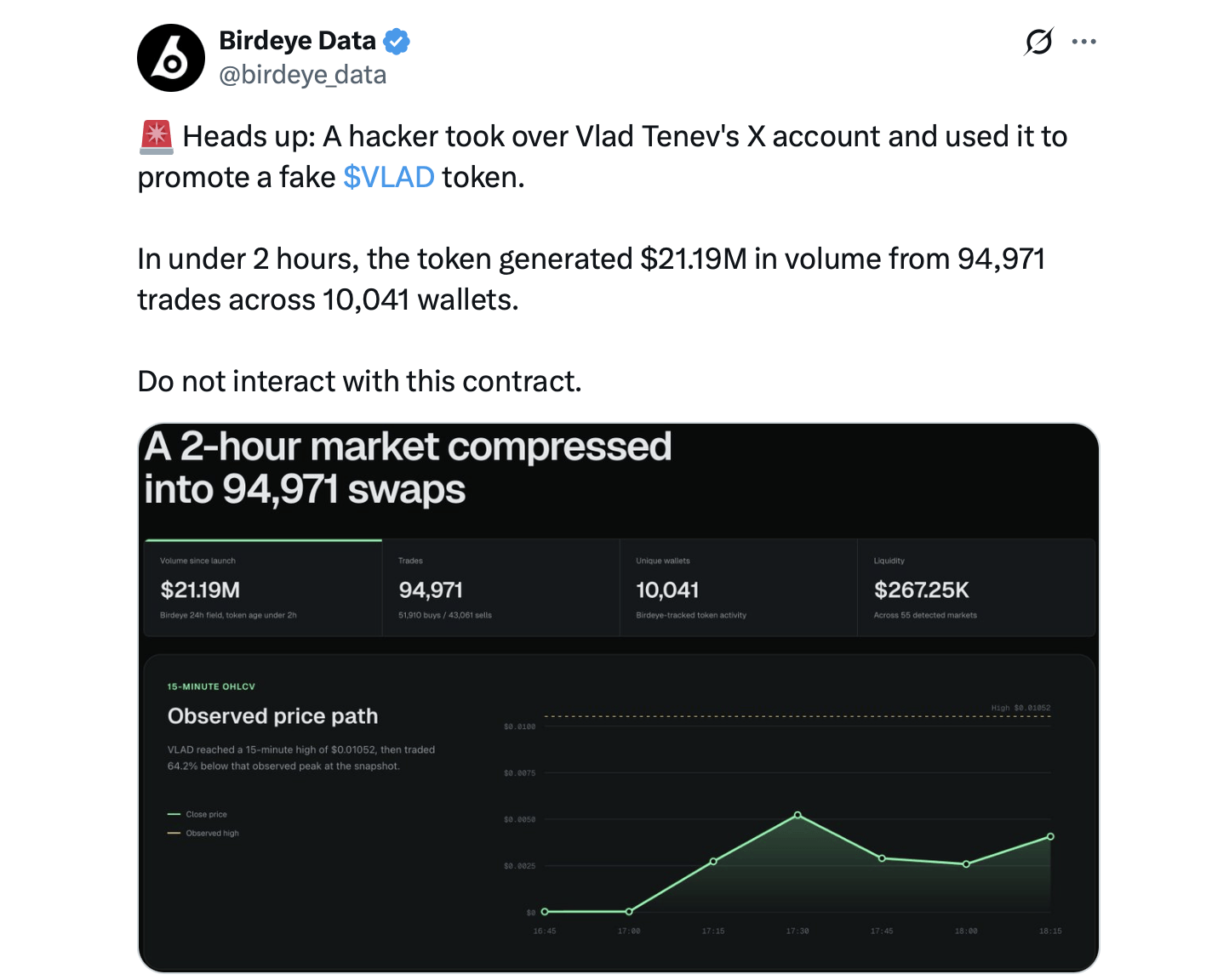
The episode adds to a growing list of incidents tied to Robinhood Chain’s launch, including an earlier and separate claim involving Tenev’s wallet that outside researchers found no evidence to support.
For a company building a blockchain meant to carry real-world financial assets, the hack is a reminder that the biggest point of failure isn’t always the chain itself. Sometimes it’s a single login.






Be the first to comment