



Lido’s [DAO] latest accounting discrepancy briefly understated stETH staking yields. As a result, this error highlighted an operational reporting issue rather than a protocol failure.
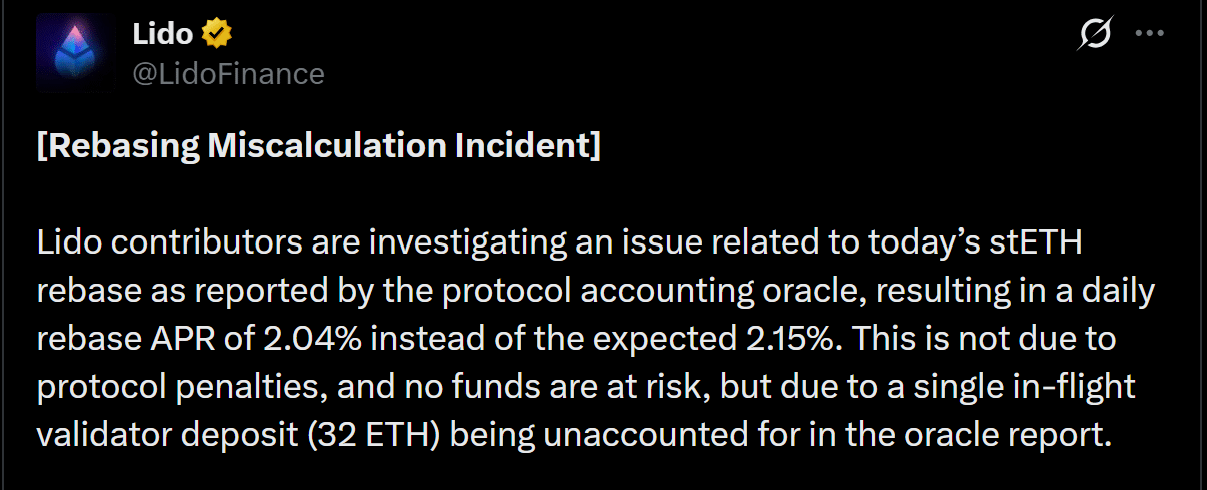
The daily rebase APR reached 2.04% instead of the expected 2.15% because the accounting oracle missed a 32 ETH validator deposit. However, contributors verified validator balances and found no missing funds or protocol penalties.
That outcome shifted attention from security risks toward accounting accuracy, strengthening confidence in Lido’s staking infrastructure. Meanwhile, the smaller rebase reflected delayed reward recognition instead of weaker validator performance.
The team continues investigating the root cause before deploying a fix. Afterward, the next rebase will restore the omitted balances and normalize reported staking yields.

The source of the discrepancy
The reporting discrepancy originated during validator accounting rather than reward generation. As the accounting oracle prepared its daily snapshot, one 32 ETH validator deposit remained in transit between reporting stages and therefore fell outside the finalized update.
Since the accounting is done on a snapshot basis, that timing created a temporary mismatch between recorded deposits. As a result, the validator balances were already reflected on the Beacon Chain.
Rather than altering staking performance, the synchronization delay only affected how the oracle calculated distributable rewards for that reporting cycle.
Once the pending deposit completes the accounting process, subsequent oracle updates will capture the balance. This would then allow future rebases to reflect the full validator position without permanently reducing staking rewards.
Market confidence holds
The stability was soon followed by a more general stabilization of market conditions. The price ratio for stETH to ETH stabilized close to parity, showing that holders maintained confidence in Lido’s redemption mechanism.
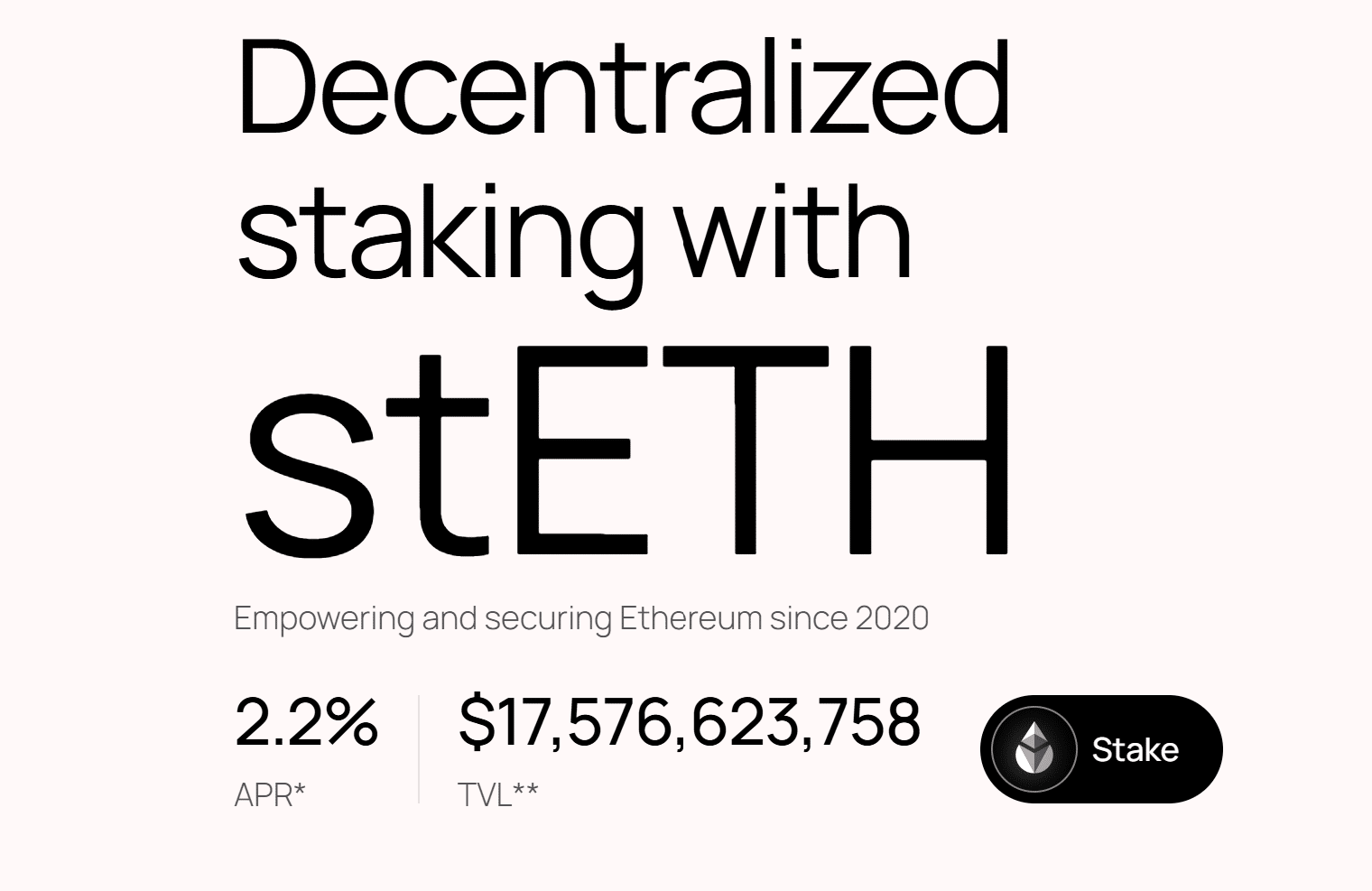
Furthermore, total value locked remained near $17.5 billion. Meanwhile, the protocol continued offering a 2.2% staking APR as around 9.34 million Ethereum [ETH] also remained staked. This implied that users avoided large-scale withdrawals after the announcement.
Meanwhile, staking inflows tracked broader Ethereum trends instead of weakening independently. This steady participation suggests the market viewed the incident as a temporary operational event.
Therefore, despite the short-term accounting glitch, Lido retained its position as the largest liquid staking protocol on Ethereum.
Final Summary
- The stETH accounting discrepancy stemmed from a delayed 32 ETH validator deposit, not a protocol or security failure.
- Lido DAO expects the next stETH rebase to restore the omitted rewards as the accounting update captures the pending validator deposit.





Be the first to comment