



Institutional investors have long faced a tradeoff between execution speed and blockchain transparency.
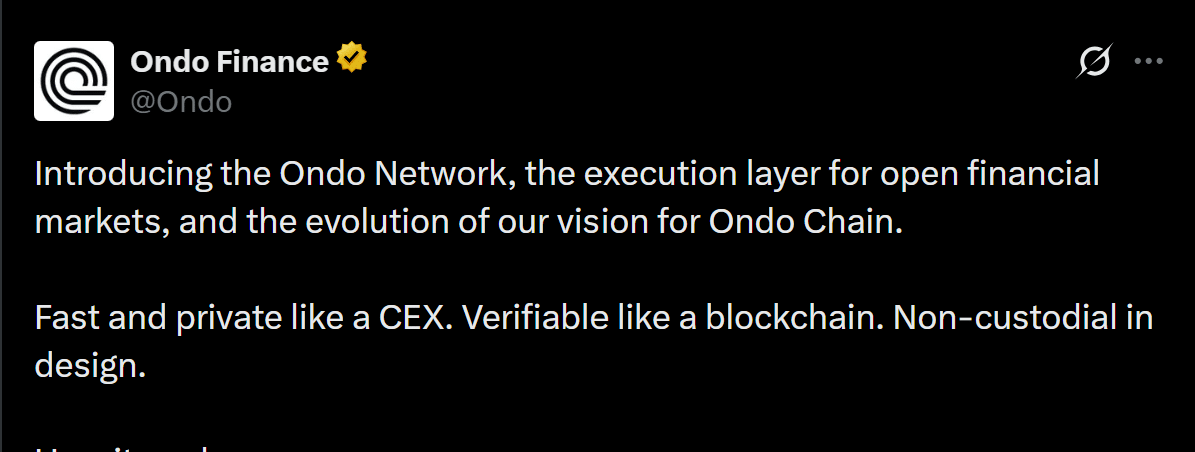
Ondo Finance [ONDO] launched the Ondo Network to address that challenge through private execution, decentralized verification, and on-chain settlement.
Through this, institutions will gain centralized exchange-like performance without sacrificing non-custodial control.
Rather than simply increasing speed, the infrastructure improves settlement efficiency while preserving verifiable ownership.

As such, if adoption accelerates, Ondo may potentially create deeper levels of liquidity, attract new developers into its ecosystem, and increase the amount of assets being tokenized within its network. This would create further potential for overall ecosystem development.
Furthermore, it would encourage institutional participation across decentralized finance while giving institutions greater confidence in scalable, transparent, high-performance market infrastructure over time.
How Ondo Network works
Instead of asking every network participant to process each transaction, the Ondo Network divides responsibilities across specialized components.
Secure enclaves (trusted execution environments) first execute application code inside protected hardware, where operators cannot view or alter it. Even changing a single byte prevents the code from running.
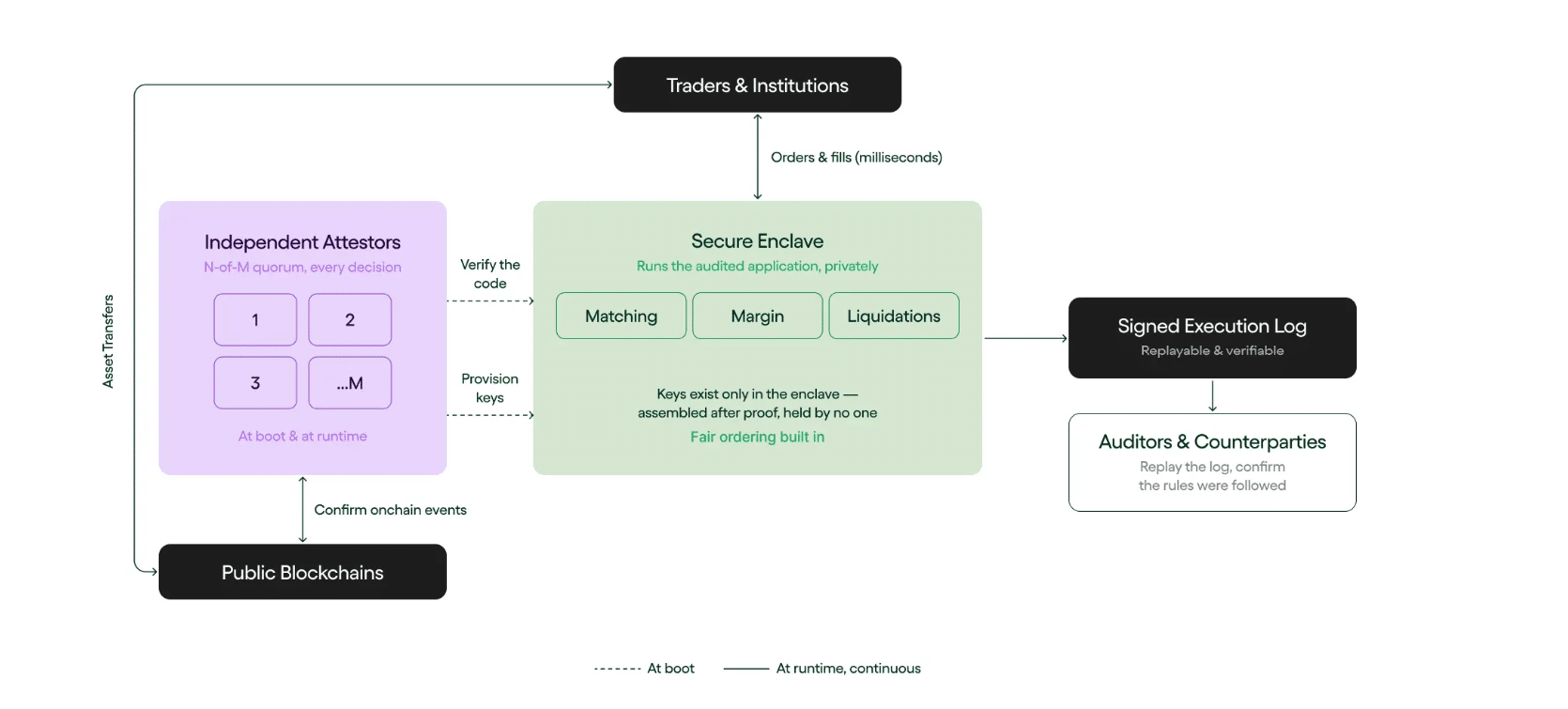
Meanwhile, independent attestors verify that only the approved code operates before they reconstruct the security keys used to confirm transactions via public blockchain.
This approach keeps verification separate from execution, allowing applications to process trades with centralized exchange-like speed without sacrificing security.
Will Ondo’s infrastructure lead to adoption?
Although the architecture provides solutions to long-standing problems related to infrastructure, the ultimate value will depend upon how many users adopt this architecture.
Ondo Finance currently manages almost $3.5 billion in Total Value Locked (TVL). Therefore, there exists a solid institutional basis to provide a high level of credibility in terms of managing large amounts of capital
If capital continues flowing through the network, wallet growth, transaction values, and liquidity should expand together. That momentum would indicate execution quality drives broader adoption.
Over time, stronger developer activity, new protocol launches, higher network TVL, and rising transaction counts would determine whether Ondo evolves into a broader institutional financial ecosystem.
Final Summary
- Ondo is extending its RWA leadership with infrastructure that combines centralized exchange speed and non-custodial blockchain settlement.
- The network needs sustained institutional adoption and ecosystem growth to turn its $3.5 billion TVL into long-term network expansion.




Be the first to comment