



Ethereum [ETH] is bringing its ecosystem together as institutional interest in blockchain continues to grow. More than 100 participants have joined Ethereum Institutional to support wider enterprise adoption, rather than working separately.
The group includes digital treasuries such as Bitmine and SharpLink along with Ethereum co-founders Joseph Lubin and Mihai Alisie. This coalition displays support from both industry leaders and Ethereum’s founding community.

This coordinated approach makes it easier for banks, asset managers, custodians, and sovereign institutions to evaluate Ethereum. It also strengthens work around tokenization, stablecoins, and on-chain settlement.
As more organizations align behind the same strategy, Ethereum further strengthens its position as the leading blockchain for institutional digital asset infrastructure.

Why institutions are aligning with Ethereum
Ethereum’s growing coordination reflects existing institutional activity. Instead of experimenting with new blockchain networks, institutions’ preference is shifting towards building around financial applications that are already established and handle real demand.
Stablecoins, tokenized assets, and on-chain settlement have become the main focus because they support everyday financial activity. According to DefiLlama data, the stablecoin market has reached about $308 billion, with Ethereum and its Layer-2 networks holding the largest share of over $148 billion.
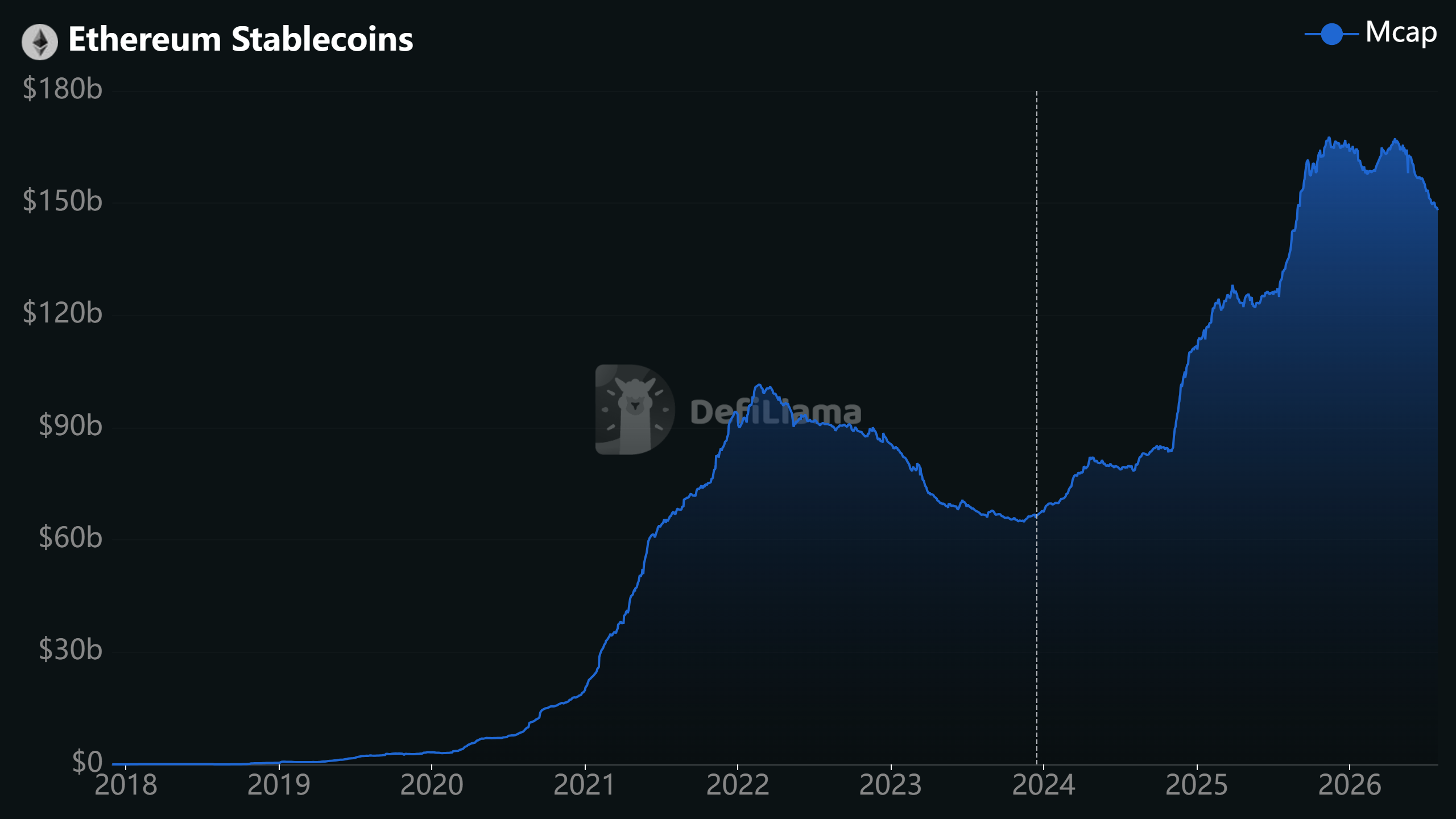
Meanwhile, tokenized Real-World Assets (RWA) hold roughly $29.3 billion in active market value. In this pool, the altcoin accounts for about $14.6 billion across more than 700 assets. As more capital flows into these sectors, Ethereum strengthens its role as the primary settlement layer for institutional on-chain finance.
These figures suggest institutions increasingly prefer networks with established liquidity, growing regulatory acceptance, and proven financial activity.
As more capital flows into these markets, Ethereum strengthens its role as the primary infrastructure supporting institutional on-chain finance. This strengthens network effects that attract even broader enterprise participation.
Can a coordinated ecosystem accelerate ETH adoption?
Even with strong infrastructure already in place, effective execution will determine whether enterprises will actually adopt it. Ethereum Institutional aims to reduce that gap by bringing developers, infrastructure providers, and institutions behind shared deployment standards.
As such, instead of developing separately, participants can develop products much more quickly and make it easier to onboard new institutions.
Despite that, long-term success will depend on more enterprise integrations, additional tokenized asset issuers, stronger stablecoin activity, and sustained institutional deployments. This would show that collaboration is translating into broader adoption across Ethereum’s financial ecosystem.
Final Summary
- Ethereum is uniting institutional players to accelerate tokenization and on-chain finance.
- ETH’s success now depends on turning coordination into measurable enterprise adoption.



Be the first to comment