



Liquidity has become the defining battleground for Layer 1 networks.
Notably, BlackRock’s launch of two tokenized money market funds (BSTBL on Ethereum and BRSRV on Solana) is the latest example.
Built to serve as reserve assets for stablecoins, the funds show how institutions are increasingly optimizing blockchain rails to attract and manage liquidity.
Naturally, the numbers support the trend.

Stablecoins now account for over 14% of the total crypto market, representing $305 billion in capital against a $2.26 trillion market cap. With that liquidity pool, L1 networks are clearly competing to attract stablecoin reserves, and BlackRock’s latest move reinforces that narrative.
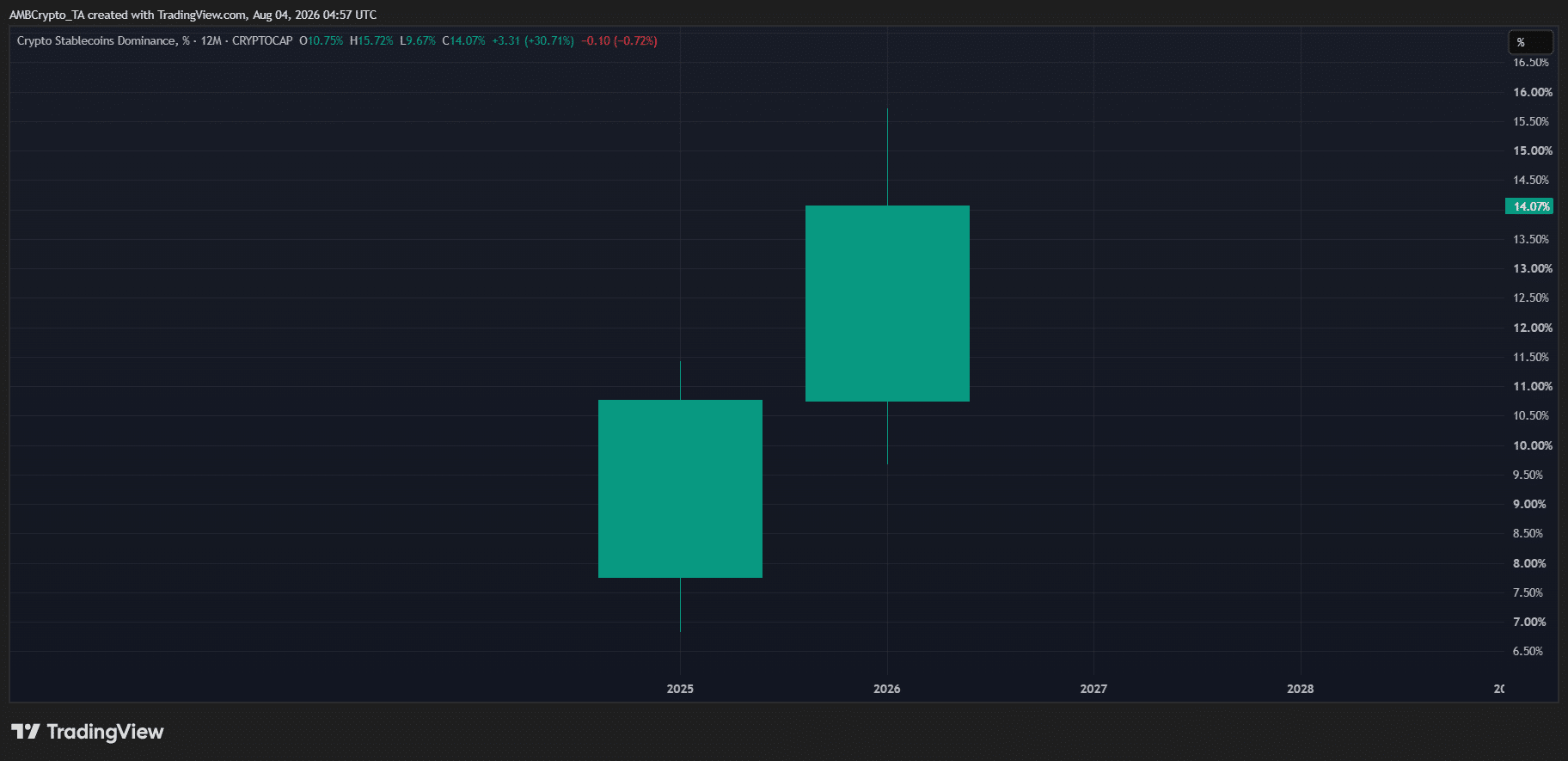
Here’s a simpler way to think about it.
Think of BSTBL and BRSRV like digital accounts.
So, instead of keeping stablecoin reserves in traditional bank accounts, issuers can hold them in BlackRock’s tokenized funds on Ethereum or Solana. That keeps liquidity native to the network, making it easier to deploy, settle, and move capital across the ecosystem.
Why is BlackRock betting on Ethereum and Solana?
Against this backdrop, it’s easy to see why BlackRock’s launch sparked a frenzy. From a macro lens, the move reinforces the growing institutional focus on stablecoins as the next major source of on-chain liquidity.
More importantly, though, it puts the long-running Solana vs. Ethereum debate back in the spotlight.
The real question now is whether “liquidity” is the factor that finally puts the debate to rest.
BlackRock’s Ethereum and Solana launch reignites the race for liquidity
The growing stablecoin market is only one part of why BlackRock’s move matters.
As discussed earlier, the launch provides stablecoin issuers with a regulated method to hold reserves on Ethereum and Solana through BlackRock’s tokenized money market funds. As more issuers adopt these funds, more capital flows on-chain, expanding liquidity across both Layer 1 networks.
Why does this matter?
Liquidity is the backbone of DeFi. With DeFi TVL already up over 8% in Q3, fresh stablecoin liquidity could further deepen on-chain activity across both Ethereum [ETH] and Solana [SOL].
Notably, the timing makes the move even more interesting. According to CryptoQuant, altcoins now account for 60% of Binance’s trading volume, suggesting capital is increasingly rotating beyond Bitcoin.
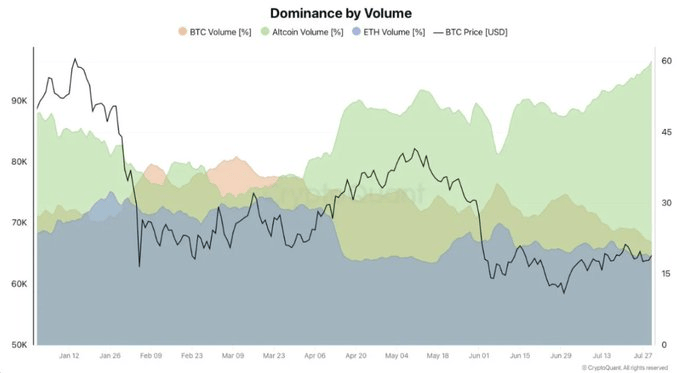
Against this backdrop, BlackRock’s tokenized funds could amplify that trend by bringing more institutional liquidity on-chain.
Is SOL gaining ground against ETH?
From a technical perspective, too, the timing stands out.
The SOL/ETH ratio has traded below the 0.05 level since the October crash, spending months in a tight consolidation range. If liquidity emerges as the next major catalyst, that consolidation could finally break.
In turn, the breakout could offer a clearer signal on whether SOL or ETH is winning the race for capital, with BlackRock’s tokenized money market funds adding fresh momentum to that narrative.
Final Summary






Be the first to comment