



TL;DR
- BitMEX moves up its futures delisting for XRP, ADA, ETH and BTC to Aug. 10 — three weeks early — ahead of the exchange’s full shutdown on Sept. 23.
- Coinbase launches commission-free US stock trading in the UK, letting users buy fractional Google and Microsoft shares from £1 inside its crypto app.
- Strategy’s Michael Saylor reveals how ChatGPT helped design the capital structure behind $15 billion in Bitcoin purchases, predicting BTC will outperform the S&P 500 by 1.5 to two times over the next 20 years.
- Spot Bitcoin ETFs logged a third straight day of inflows, pulling in $244.4 million led by BlackRock’s IBIT, as Bitcoin trades inside a descending wedge.
- Ethereum’s new EIP-8361 proposal to cap staking rewards above 50% supply is splitting DeFi, with Aave’s Stani Kulechov warning it would make yields unpredictable.
BitMEX is shutting down: XRP futures are on the way out
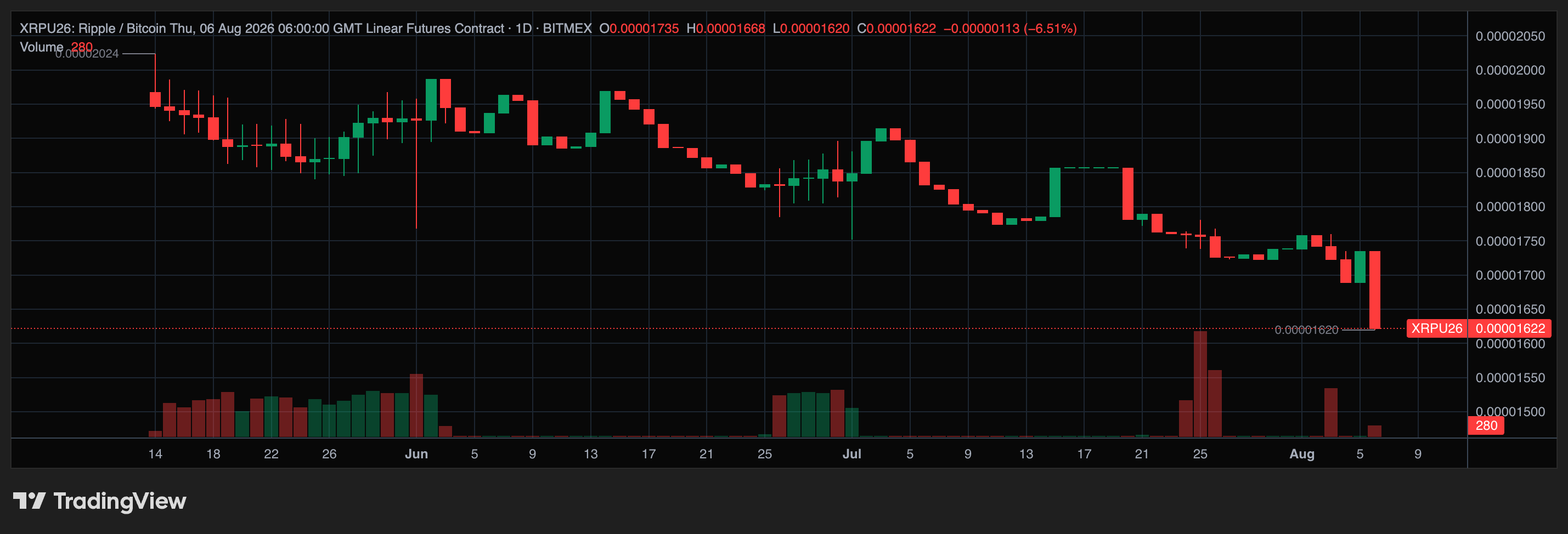
Crypto exchange BitMEX, which once ruled the derivatives market, is fading into history and closing traders’ positions ahead of schedule. The platform announced the delisting of futures on XRP (XRPU26), ADA, ETH and XBT on Aug. 10 at 12:00 p.m. UTC, although they were originally supposed to remain available until the end of September.
The reason for the rush is the complete shutdown of the exchange itself on Sept. 23. To ensure fair settlements during the early closure, BitMEX will use adjusted indexes. The final rates for these indexes will be determined using time-weighted average prices, or TWAP, today, Aug. 6.
What to do and what to expect:
- Before Aug. 10: Close futures positions in XRP and other cryptocurrencies manually, or wait for an automatic settlement based on today’s rate.
- Starting Aug. 26: The exchange will switch to close-only mode, meaning users will no longer be able to open new positions.
- Sept. 23: The final shutdown. BitMEX will completely turn off its servers. Any funds left in users’ wallets will be subject to a custody fee.
If you still have open positions in XRPU26, it is time to plan your move to other platforms.
You Might Also Like

Armstrong’s plan in action: Coinbase lands commission-free US stock trading in UK
Major US crypto exchange Coinbase has officially launched trading in U.S. stocks in the United Kingdom. As CEO Brian Armstrong emphasized, this is an important stage in the expansion of the “Everything Exchange” concept, designed to seamlessly combine traditional securities and digital assets on a single platform.
British users can now buy shares of technology giants such as Google and Microsoft directly through their crypto app. Coinbase has adapted the conservative stock market to the habits of crypto traders: users can trade commission-free on a 24/5 basis, while the minimum investment is only £1 thanks to fractional shares.
According to Coinbase UK CEO Keith Grose, the launch, which has already received regulatory approval, is intended to encourage the British audience, which has historically invested in stocks less actively than Americans.
The latest release complements savings accounts and crypto-backed loans already available in the United Kingdom, turning the app into a single hub for personal finance.
The market reacted cautiously to the news. Coinbase shares (COIN) are trading on Nasdaq at around $149.89, showing a moderate decline of 0.56%, with the company’s market capitalization standing at $39.55 billion.
Bitcoin strategy from ChatGPT: How Michael Saylor raised $15 billion with AI
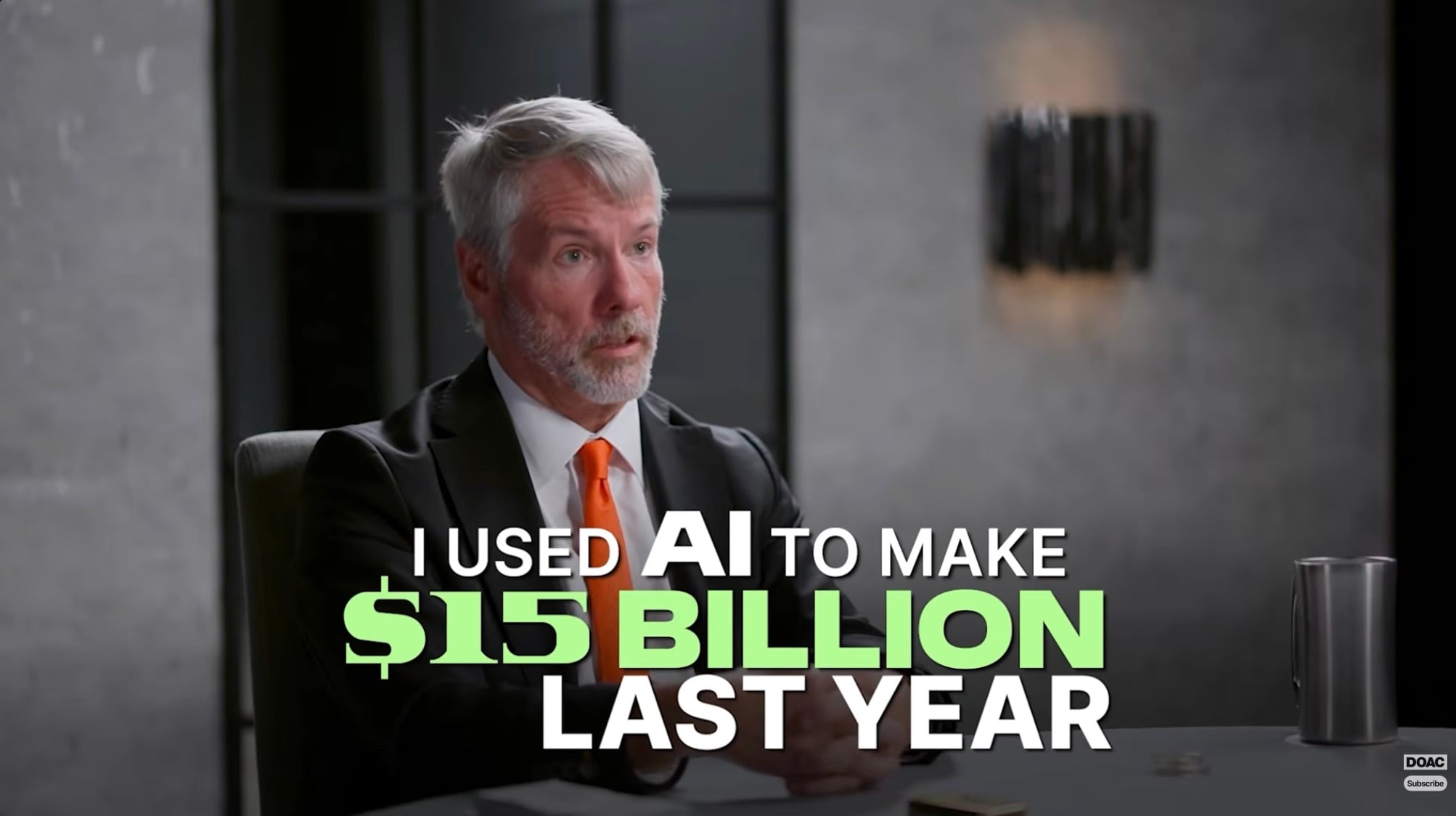
Strategy used ChatGPT to create a financial instrument that helped it raise about $15 billion to buy Bitcoin. Company founder Michael Saylor revealed this in an episode of The Diary of a CEO podcast.
The AI helped Saylor and the company design a capital-raising structure that no one had developed before.
According to Saylor, this case proves that it is no longer possible to perform routine work better than machines. In the coming years, AI will automate the tasks of lawyers, accountants and drivers. Human value is shifting toward generating ideas and asking the right questions, while the combination of AI and digital assets is becoming the most promising field to study.
Entrepreneurs who are the first to use these technologies to create new products will gain the greatest window of opportunity in decades, according to the Strategy executive chairman.
At the same time, automation will not eliminate money. Robots will make goods and services cheaper, but scarce assets, status and capital will continue to become more valuable.
Saylor predicts that over the next 20 years, Bitcoin will outperform the S&P 500 by 1.5 to two times.
He described the recent sale of a small portion of the company’s BTC reserves as a controlled stress test. Strategy demonstrated to the market that selling some of its assets would not crash the cryptocurrency’s price or undermine the stability of the business.
In conclusion, Saylor offered 10 rules for young people. They include focusing on what matters, protecting personal time, developing critical thinking, maintaining physical fitness and forming independent judgments. He also highlighted the importance of strong connections, the right environment, keeping one’s word, maintaining a positive attitude and striving to improve the world.
Crypto market outlook: Bitcoin wedge pattern and Ethereum improvement drama
By the end of the first week of August, Bitcoin is being squeezed into a descending wedge above a multiyear trend support level, while external macroeconomic pressure from currency interventions is being fully offset by steady capital inflows through spot ETFs.
Meanwhile, investors’ medium-term expectations are shifting toward a potential infrastructure split within Ethereum that could radically alter returns across the DeFi sector.
Key checkpoints:
- ETF momentum is accelerating: U.S. spot Bitcoin funds are showing a strong three-day streak of net inflows, recording $244.4 million over the past day. BlackRock’s IBIT was the clear leader, attracting $196.8 million, while VanEck’s HODL recorded a minor outflow of $14.7 million.
- Carry-trade risks are stabilizing: According to estimates, Japan spent between $87 billion and $93 billion on currency interventions, while the United States added another $5 billion to $10 billion. However, continued pressure on the yen and record highs in U.S. stocks confirm that there is currently no large-scale unwinding of the carry trade or panic selling in the crypto market.
- Ethereum split over EIP-8361: A new Ethereum Improvement Proposal, EIP-8361, introduced by Jérôme de Tychey, proposes reducing staking rewards if the amount of staked ETH exceeds 50% of the cryptocurrency’s total supply. Currently, 34.4% of ETH is staked.
- Conflict of interest in DeFi: Aave founder Stani Kulechov and other critics argue that EIP-8361 would make yields unpredictable, harming solo stakers and DeFi protocols. Supporters, however, insist that it would increase ETH’s scarcity. Uncertainty surrounding Ethereum’s long-term monetary policy is growing across the market.
You Might Also Like




Be the first to comment