


A fake Wasabi Wallet application has appeared on Apple’s App Store and has already been linked to the theft of roughly 6 BTC from one user, according to crypto security monitoring reports.
Summary
- A fake Wasabi Wallet app on Apple’s App Store has been linked to the theft of about 6 BTC from one user.
- The fraudulent Wasabi Wallet listing is the 27th reported crypto wallet clone on the App Store this year.
- A fake Ledger app remains the largest reported case, with about $9.3 million stolen.
According to Com Feed monitoring, the malicious application was presented as Wasabi Wallet, with reports circulating on X showing that one victim lost about 6 BTC after encountering the fraudulent software. The listing has also been identified as the 27th crypto wallet clone found on Apple’s App Store so far this year.

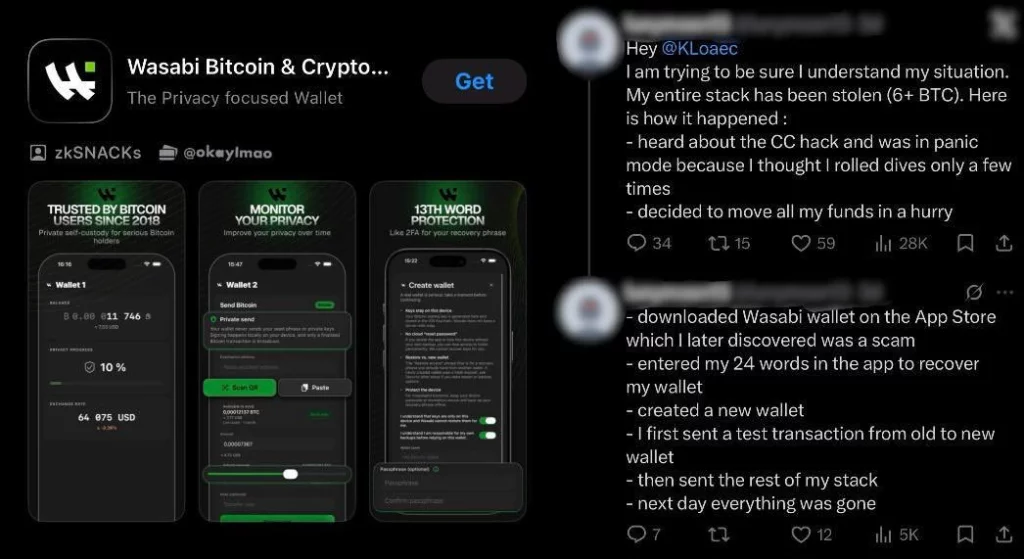
Fake Wasabi app on the Apple App store. Source: X/thecomfeed
Details about how the victim interacted with the application, including whether a recovery phrase was entered or another method was used to drain the wallet, have not been disclosed in the initial reports. Com Feed warned users to verify the Wasabi Wallet application carefully before downloading software presented under the wallet’s name.
Fake Wasabi Wallet becomes 27th reported App Store clone
The reported Wasabi Wallet impersonator adds to a series of fraudulent crypto applications that have passed through Apple’s App Store review process in 2026.
According to the monitoring report, 27 wallet clones have now been identified on the App Store since the beginning of the year. The fake Ledger application remains the largest case among the reported clones, with approximately $9.3 million linked to thefts.
Fraudulent wallet applications commonly imitate the branding and interface of established crypto products, making it difficult for users to distinguish them from legitimate software based on appearance alone. In the current case, the initial report specifically identified the application as a fake Wasabi Wallet drainer rather than an official release from the wallet project.
The reported loss of about 6 BTC also places the latest case among the larger individual thefts tied to wallet impersonation apps this year. The exact dollar value depends on Bitcoin’s price when the assets were taken, while the initial monitoring report quantified the victim’s loss in BTC rather than providing a confirmed dollar figure.
No information in the initial report identified the developer behind the application or explained how long the listing had been available through Apple’s marketplace. Details about whether Apple had removed the application were also not included in the information available at the time of the report.
Fake Ledger app previously drained musician’s 5.9 BTC
A similar incident in April showed how fraudulent applications can obtain control of crypto wallets by convincing users to disclose their recovery credentials.
On April 20, American musician Garrett Dutton, known professionally as G. Love, said he had lost 5.9 BTC worth about $420,000 at the time, after downloading software disguised as the Ledger Live manager from Apple’s App Store.
Dutton said he installed the malicious program on a new MacBook Neo and entered his seed phrase after the application prompted him to do so. The attacker subsequently emptied a Bitcoin stash that Dutton said he had accumulated for nearly a decade and intended to use for retirement.
On-chain investigator ZachXBT later tracked the stolen funds and reported that they had been transferred to addresses associated with KuCoin through nine transactions.
KuCoin told crypto.news at the time that it maintained procedures for monitoring and addressing potentially suspicious activity in line with regulatory requirements. The exchange disputed any characterization that it had allowed illicit activity and said the matter was under review, while declining to discuss specific details because of security, privacy and investigative considerations.
The April incident followed earlier cases involving software impersonating hardware wallet companies. In 2023, a fake Ledger application appeared on Microsoft’s store and was linked to nearly $600,000 in losses before Microsoft acknowledged that the program had passed its review process.
Crypto wallet impersonation has extended beyond app stores
Wallet owners have also faced impersonation attempts through physical mail, with scammers using leaked customer information to send letters carrying forged Ledger and Trezor branding.
As previously reported by crypto.news, some letters instructed recipients to complete a supposed mandatory authentication process before a stated deadline. QR codes included in the mail directed users to malicious websites where they were asked to provide 12-word or 24-word recovery phrases.
Once entered, the recovery phrases could give attackers control over the corresponding wallets, allowing them to transfer assets without requiring further authorization from the victim.
The FBI has separately documented rising losses from cryptocurrency-related fraud in the United States. Crypto-related losses reached approximately $11 billion in 2025, compared with about $9 billion a year earlier.
The latest fake Wasabi Wallet report concerns an impersonation application and does not indicate that Wasabi Wallet itself was compromised. The reported theft is instead tied to software presented to users under the wallet’s identity.



Be the first to comment