



Sardine combines crypto KYC, KYB, fraud detection, and AML transaction monitoring for payment platforms. It is not a blockchain analytics provider like Chainalysis, but it offers wallet screening. Sardine is also not a Travel Rule solution, making it best as a fraud and compliance layer for crypto payment flows.
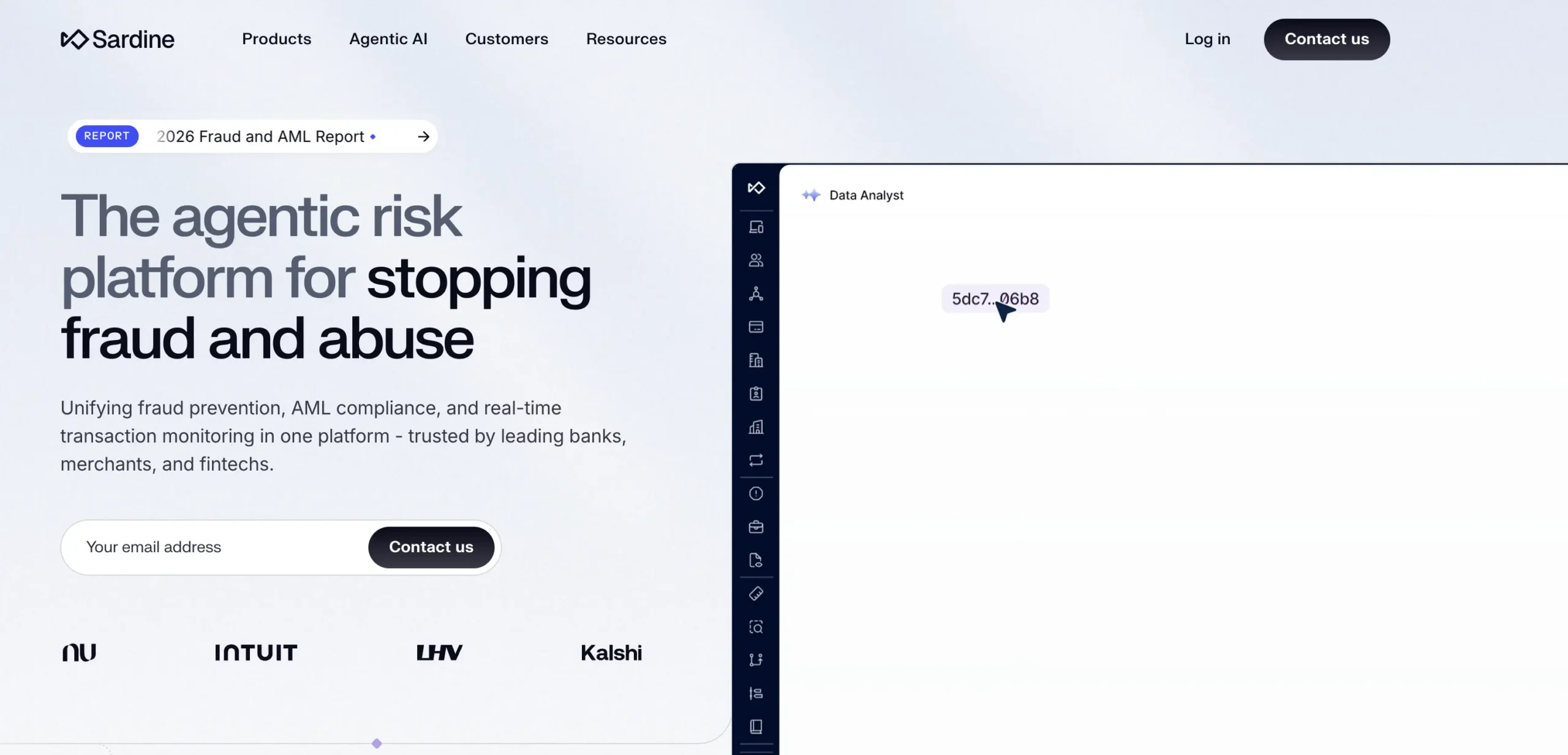
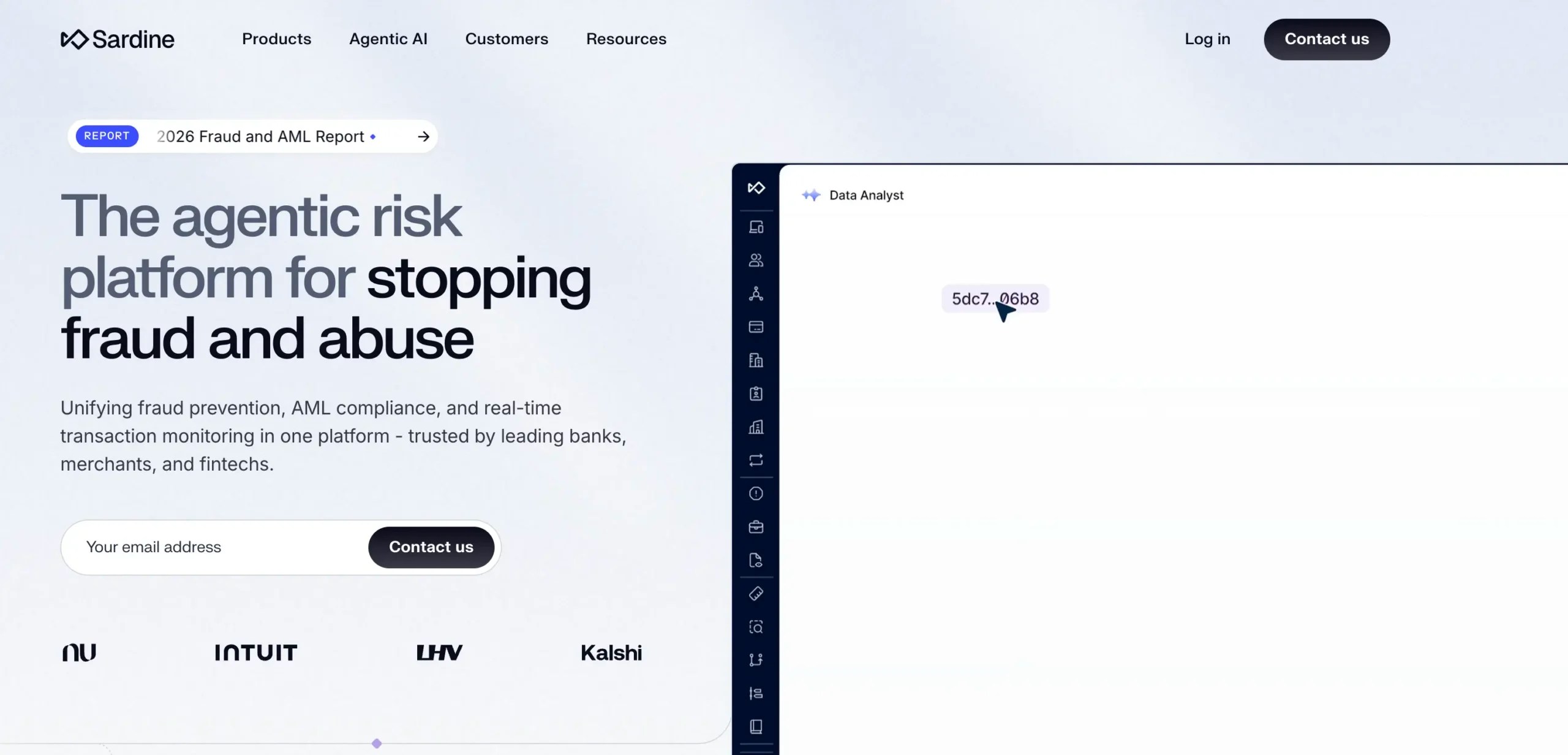
What to check before using it: Sardine does not offer any dedicated Travel Rule compliance or full blockchain analytics. If you need these solutions, Sardine is not the best option. Sardine’s strength is fraud prevention, onboarding risk, and AML around payment flows. Confirm crypto wallet screening depth, supported chains, and entity attributions.
| Key Factors | Details |
| Trust portal | Live trust center with downloadable SOC 2 report and 2025–2026 pentest reports (Dashboard, Network, JS SDK, API, Mobile Apps) |
| Scale | 985M consumers; $1.48T transaction volume; 4.92B transactions monitored (self-reported) |
| G2 rating | 4.9/5 |
| Crypto positioning | Fraud and risk-ops layer for stablecoin and crypto payment flows; not a dedicated crypto compliance solution |
| Core features | Global KYC/KYB; ID, document & bank verification; credit underwriting; fraud detection; bot & ATO detection |
| Crypto-specific fit | Native crypto wallet/transaction risk screening, exposure-based rules |
Author Insight: Sardine isn’t a traditional crypto compliance solution. So, it doesn’t focus on blockchain analytics. Instead, Sardine is a good fit for Web3 brands that want crypto KYC, fraud prevention, and AML for fiat on/off-ramp flows. The best approach to using Sardine is as a complement to blockchain analytics providers.

Also Read – No-KYC vs Travel Rule
Source: https://coingape.com/best-crypto-compliance-kyc-companies/



Be the first to comment