



- BTC rose 1.13% to about $64,280, while BTC/INR gained roughly 1.21% on the day.
- USD/INR climbed from 95.6025 to 95.68, adding a modest boost to local returns.
- One BTC rose from about ₹60.77 lakh to ₹61.50 lakh using the supplied price data.
Bitcoin traded near $64,280 on August 18, gaining about 1.13% from its previous close as the rupee weakened against the dollar. With USD/INR at 95.68, one coin was worth roughly ₹61.50 lakh before exchange spreads and fees for holders in India.
That combination made the session a two-market move as local returns reflected both BTC/USD appreciation and a modest currency effect. The distinction matters considering that a dollar-denominated gain does not always translate into an identical return after conversion into rupees.
BTC Rebound Drives Most of the Rupee-Denominated Gain
Bitcoin moved between approximately $63,389 and $64,507 during the session before trading near $64,280. Its previous close stood around $63,563, while USD/INR ended Monday near 95.6025.
Together, those earlier levels valued one coin at approximately ₹60.77 lakh, compared with about ₹61.50 lakh using Tuesday’s current figures. That represents an indicative increase of roughly 1.21% in INR terms between the two reference points.

Most of the move came from BTC/USD, which rose about 1.13%, while the currency pair increased only around 0.08%. Therefore, rupee depreciation added to the return, although it remained a much smaller contributor than the underlying crypto move.
Why BTC/USD and USD/INR Produced Different Returns
That difference becomes clearer when both market movements are considered together. The conversion relationship is straightforward: BTC/INR is approximately equal to BTC/USD multiplied by USD/INR.
Therefore, because Bitcoin rose against the dollar while the rupee simultaneously weakened, both factors pushed the local valuation higher. This combination explains why the gain measured in INR was slightly stronger than Bitcoin’s increase in dollar terms.
Consequently, the 1.13% dollar gain became an indicative 1.21% rise after conversion into INR. The relationship can also reverse for holders in India when the rupee strengthens against the dollar.
In that case, part of a BTC/USD advance can disappear during currency conversion, reducing the local return despite higher dollar prices.
Rupee Weakness Added a Smaller Currency Boost
That currency effect was visible during the latest session, as USD/INR rose to 95.68 from approximately 95.6025 previously. The move reflected a modest weakening of the Indian currency.
Several factors contributed to that pressure. Higher crude oil prices, importer dollar demand, and rising global bond yields weighed on the rupee, although RBI intervention helped limit a sharper decline.
At the same time, the broader U.S. dollar remained relatively soft as expectations for additional Federal Reserve tightening eased. Safe-haven demand linked to geopolitical tensions provided some support, but the supplied data showed no significant dollar rebound.
As a result, the exchange-rate effect remained relatively small compared with Bitcoin’s own price movement. However, for holders in India, any further rupee weakness would mechanically lift BTC/INR even if BTC/USD remained unchanged.
Bitcoin Technical Levels Keep the Rebound Fragile
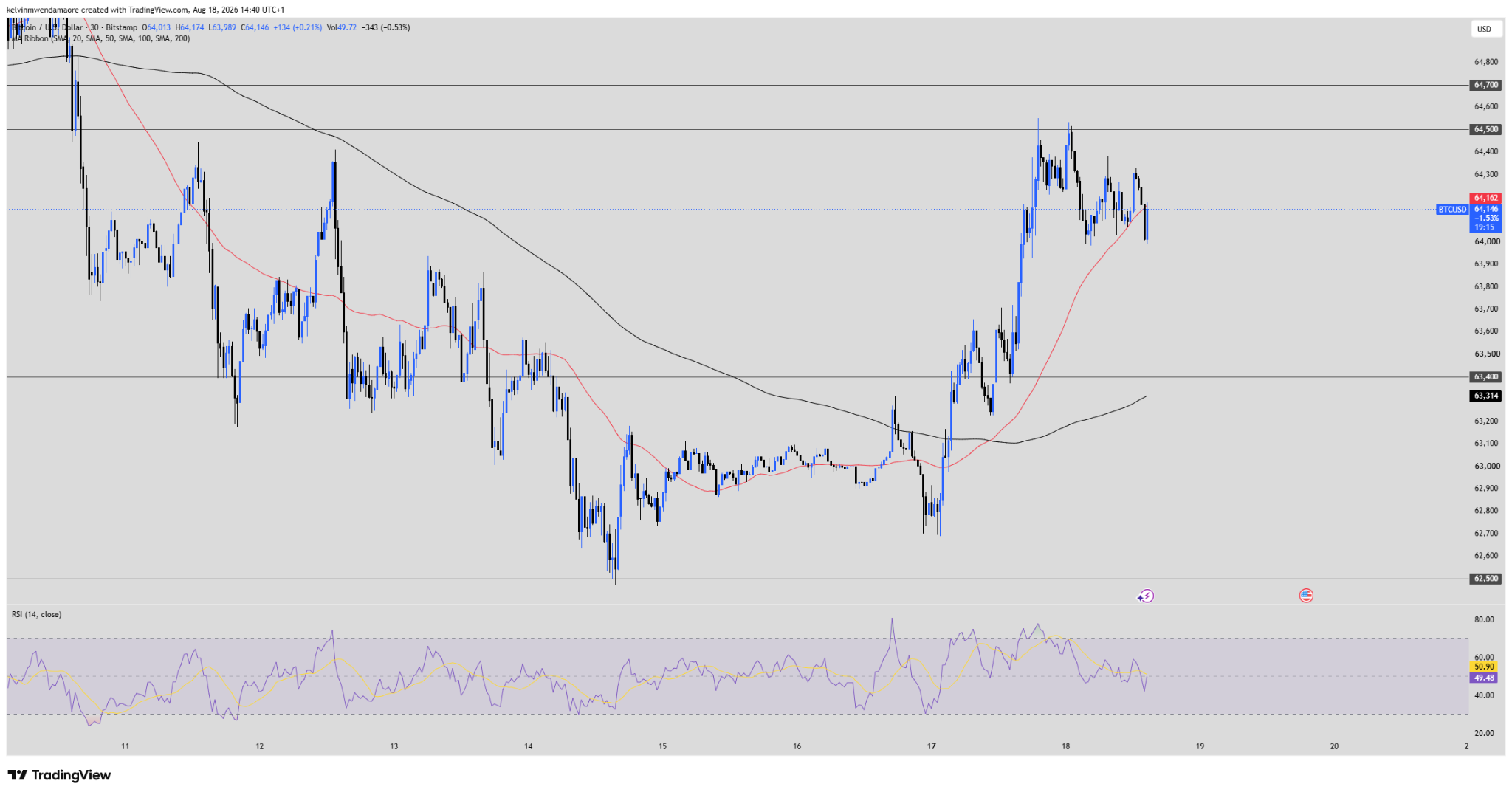
Beyond the currency effect, Bitcoin’s technical structure also remained important for assessing whether the recovery could extend. The asset traded near its 50-day moving average of about $64,162, while its 200-day moving average stood near $63,314.
That left the price close to two closely watched trend indicators. Meanwhile, the 14-day RSI remained around 49, pointing to weak-to-neutral momentum rather than strong upside pressure.
Source: TradingView
As a result, the $64,500 to $64,700 area emerged as the first important resistance zone. On the downside, the $63,400 to $62,500 range remained the main support area, while a decisive break below it could bring $60,000 back into focus.
What the INR Move Means for Indian Holders
Taken together, the price and currency data show that the day’s stronger local reading was driven mainly by Bitcoin rather than foreign exchange. Rupee depreciation added only a modest boost, which kept the difference between dollar and rupee returns relatively small.
Indian holders therefore had two separate signals to track. BTC/USD reflected Bitcoin’s underlying market performance, while USD/INR determined how that move translated into rupee terms.
At the same time, oil prices, Federal Reserve expectations, and Bitcoin’s short-term technical levels remained relevant because they could influence either side of that calculation.
Ultimately, the key takeaway is that one Bitcoin can move differently in INR without behaving differently as an asset. For India-based holders, separating the crypto return from the currency effect gives a clearer view of actual rupee-denominated performance.
Related: USD to INR Today: Rupee, Brent Crude, and EUR/INR Signal a Bigger Risk for Indian Markets
Disclaimer: The information presented in this article is for informational and educational purposes only. The article does not constitute financial advice or advice of any kind. Coin Edition is not responsible for any losses incurred as a result of the utilization of content, products, or services mentioned. Readers are advised to exercise caution before taking any action related to the company.



Be the first to comment