


Bitcoin fell below $80,000 after the U.S. August jobs report showed 162,000 payroll gains, sharply exceeding the 56,000 economists expected. The move linked a macroeconomic surprise to crypto markets as traders reassessed the Federal Reserve’s September policy outlook.
Jobs Data Shifts Bitcoin’s Rate Outlook With 162,000 Gains
The U.S. Bureau of Labor Statistics reported 162,000 nonfarm jobs in August, while unemployment stayed at 4.1%. July payrolls were revised from a 23,000 decline to a 21,000 increase, strengthening the labor-market picture. For Bitcoin, stronger employment can reduce pressure on the Fed to ease policy.
Federal Reserve Governor Christopher Waller said September 3 that continued inflation improvement would make him inclined to support holding rates. He also said a hotter August inflation reading could justify a hike. The jobs result adds pressure to the policy debate before the September 15-16 meeting.
Also Read: El Salvador Bitcoin Policy Faces IMF Rules on New Purchases

Bitcoin’s $1,600 Drop Highlights Macro Sensitivity in 2026
Bitcoin traded above $81,000 before the report, then fell below $80,000, with the supplied chart showing a roughly $1,600 decline within three minutes. The reaction illustrates how leveraged crypto positions respond to rate expectations. Higher expected rates can make non-yielding assets less attractive than interest-bearing alternatives.
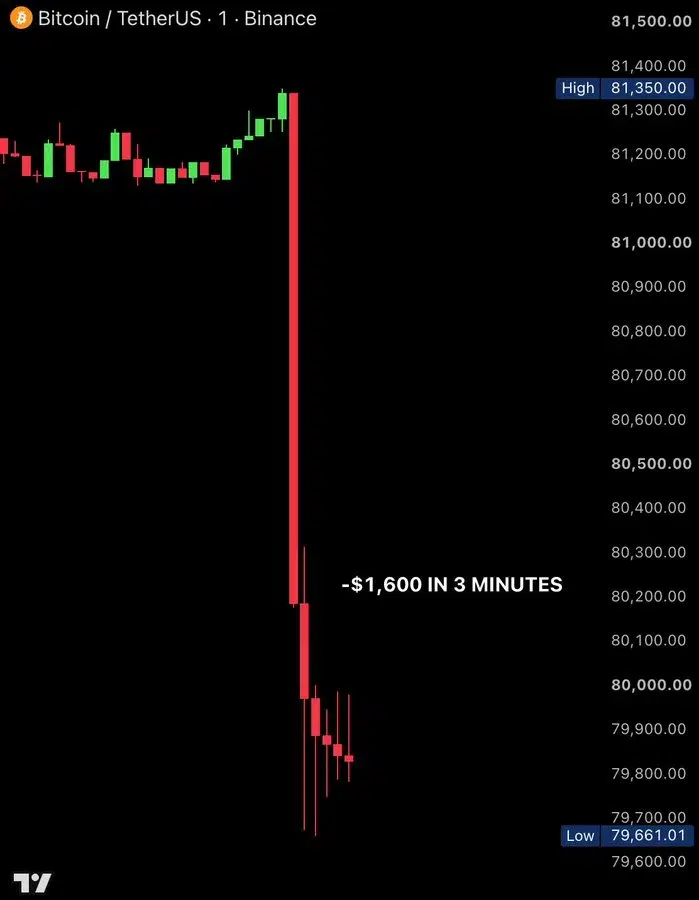
Reuters reported that Treasury yields rose after the jobs release as investors increased attention on a September rate hike. That matters for BTC because rising yields can tighten conditions and reduce appetite for risk assets. Traders should watch yields and the dollar alongside BTC price action.
ETF Demand Offers Bitcoin a Second Signal After $1,600 Drop
Institutional demand provides a counterpoint to the rate-driven pressure. Bitcoin exchange-traded funds recorded $730 million of inflows on September 3, according to data cited by Yahoo Finance, their strongest daily inflow since January. The figure indicates demand for BTC exposure remained firm before the jobs shock.
ETF inflows do not guarantee sustained price support. If higher yields persist, investors could reduce risk exposure despite ETF demand. The key question is whether institutional buying can absorb macro-driven selling while traders await clearer inflation and policy signals.
September Inflation Data Could Shape BTC After 162,000 Jobs
The next major test is the August Consumer Price Index, due September 11, before the Fed meeting. Waller has tied his policy preference to incoming inflation data, making CPI important for BTC’s direction. Softer inflation could support a rate hold, while renewed pressure could reinforce the jobs-driven selloff.
For readers, BTC’s move is not simply about employment. It reflects the interaction between labor data, Treasury yields, monetary-policy expectations and crypto positioning. Immediate focus is September 11 inflation data and the September 15-16 Fed meeting, while BTC’s ability to reclaim $80,000 may show whether buyers are absorbing the shock.
Also Read: Standard Chartered Crypto Trading Launches Bitcoin and Ether Spot Service in UAE
This article contains market analysis and price predictions. These are not guarantees. Crypto markets are volatile. Always DYOR. Not financial advice.



Be the first to comment