


AI Summary
- Oasis Pro Markets has become the first tokenization platform to participate in DTCC Fund/SERV.
- The connection gives Ondo Finance access to standardized transaction, reconciliation, distribution, and reporting processes.
- Fund/SERV processes more than 85% of US mutual fund transaction activity, but that scale should not be confused with tokenized fund volume.
- DTCC’s broader strategy favors connections across multiple public and private networks rather than reliance on one blockchain.
Tokenization coverage often jumps directly to forecasts about trillions of dollars moving onchain. The concrete development here is narrower and more useful: Oasis Pro Markets, the regulated broker-dealer subsidiary of Ondo Finance, has joined DTCC Fund/SERV. According to the supplied announcement, it is the first tokenization platform to participate in the established fund transaction and distribution network.
The importance lies in connectivity rather than a sudden migration of assets. Fund/SERV provides standardized processes linking fund companies, wealth platforms, distributors, and service providers. Oasis Pro Markets can therefore approach the traditional fund ecosystem through one established connection instead of building separate integrations for individual funds or counterparties.
Our analysis is that this gives tokenized funds a more credible operational route into traditional finance, but it does not mean that Fund/SERV’s existing activity has moved onchain. The distinction matters, particularly as regulatory initiatives such as the SEC innovation exemption for onchain tokenized stock trading bring more attention to the infrastructure required between issuance and distribution.
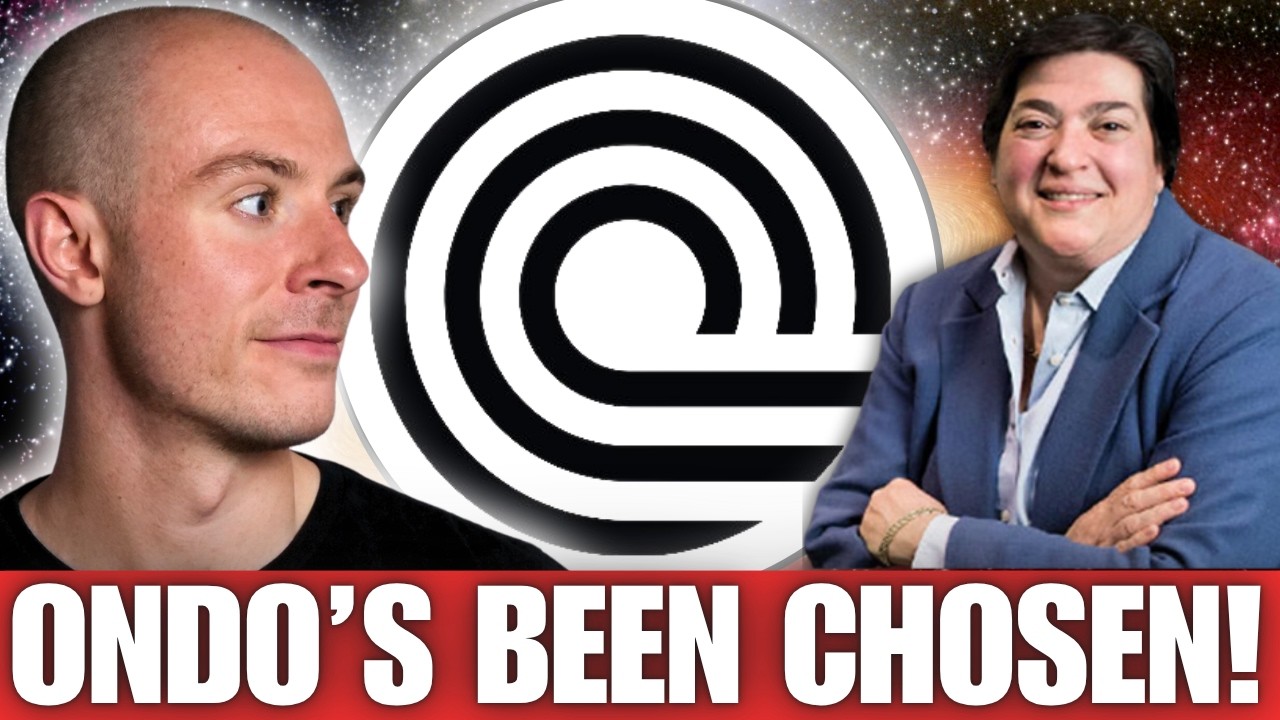
Ondo Finance Chosen By DTCC To Enable Fund/SERV! $12 Trillion Annually! 85% Market Share.. HUGE NEWS
Why the Fund/SERV connection matters
DTCC occupies a central position in US market infrastructure, while Fund/SERV supports transaction processing and distribution across a large share of the fund industry. Ondo Finance is not replacing that system. Its subsidiary is connecting tokenized investment products to processes and counterparties that already operate within it.
Ondo Finance subsidiary Oasis Pro Markets, a US regulated and registered broker-dealer, has joined DTCC’s Fund Serve.
That membership can reduce a practical barrier to adoption. A tokenized product may exist technically, but distribution still depends on reliable records, transaction confirmations, reporting, reconciliation, and connections with firms that serve investors. The announcement places Oasis Pro Markets inside an operational framework built for those functions.
- Established connectivity: Access to fund companies, wealth platforms, and service providers through the Fund/SERV network.
- Standardized processing: Common transaction procedures can replace repeated fund-by-fund integration work.
- Operational support: The connection covers confirmation, reconciliation, fund distribution, tax reporting, and regulatory reporting.
In our view, this is more consequential than a purely technical token launch. Distribution infrastructure determines whether a product can move beyond a limited set of crypto-native users and become usable within established financial workflows.
What Oasis Pro Markets gains from membership
The immediate benefit is a standardized connection. Oasis Pro Markets can transact with the types of institutions already served by Fund/SERV without requiring a separate operational bridge for every relationship. That does not remove product, compliance, or investor suitability requirements, but it can simplify how approved products move through the surrounding system.
- Account-level data: The source identifies account information as part of the connected workflow.
- Transaction confirmation: Participants can use established processes to confirm fund activity.
- Reconciliation: Records can be compared through a shared operational structure.
- Reporting: Tax and regulatory reporting are included among the supported functions.
This is where the institutional case for tokenization becomes less abstract. The value proposition is not simply that a fund interest can be represented digitally. It is that digital assets can interact with the systems responsible for servicing, distributing, and documenting investment products.
Ondo’s participation in Fund Serve demonstrates how established industry infrastructure can support the next phase of market evolution.
The quotation expresses DTCC’s position, not proof that mainstream adoption has already occurred. We see the membership as enabling infrastructure: necessary for scale, potentially valuable, but still dependent on actual products, distributor participation, investor demand, and applicable regulation.
Scale is reach, not tokenized volume
The figures attached to Fund/SERV explain why the connection attracts attention. The supplied material says the network handles more than 85% of US mutual fund transaction activity, serves more than 1,300 clients, and processes more than $12 trillion each year. Those numbers describe the existing platform, not assets issued by Ondo Finance and not new tokenized volume.

- Industry coverage: More than 85% of US mutual fund transaction activity is said to pass through the network.
- Participant base: More than 1,300 clients reportedly rely on Fund/SERV.
- Annual flow: More than $12 trillion is said to move through the platform each year.
The measured interpretation is that Oasis Pro Markets has gained access to infrastructure with broad reach. It would be incorrect to describe the entire annual flow as available tokenized liquidity or as business captured by Ondo. Membership creates a route to counterparties; it does not establish how much activity will use that route.
Fund/SERV also supports more than conventional mutual funds. The source mentions collective investment trusts and interval funds among the products using the platform. This breadth could matter if tokenization expands across different fund structures, although the announcement does not quantify product launches, commitments, or expected transaction volumes.
Interconnection comes before interoperability
The wider DTCC strategy described in the source is explicitly multi-network. Nadine Chakar said the organization is working with public and private infrastructure, including Canton, and that network selection is intended to respond to client demand and liquidity. That approach challenges the idea that institutional tokenization must converge on one blockchain.
The idea for DTCC is to have a curated network of L1s, L2s
Chakar also drew a careful boundary between systems being interconnected and achieving full interoperability. The latter requires more than moving tokens between technical environments. Common standards, compatible data, operational controls, scalability, and security also have to align.
I purposely am not using the word interoperable cuz I just don’t believe that exists yet, but it’s truly interconnected.
- Network choice: DTCC’s described model allows demand to influence which L1 and L2 environments are supported.
- Orchestration: The intended role is a coordination layer spanning multiple networks.
- Operational standards: Data and nontechnical requirements remain part of genuine interoperability.
- Asset utility: DTCC is also examining how tokenized assets could be used as collateral.
Stellar appears in the supplied discussion as an example of a public distributed ledger that can sit within a broader network model, not as the confirmed chain for this Fund/SERV connection. Our earlier coverage of DTCC’s planned phased tokenized asset rollout on Stellar provides relevant context, but the two developments should not be collapsed into one claim.
What the development does and does not establish
The strongest supported conclusion is that Ondo Finance now has a regulated subsidiary connected to an important distribution network. This may improve its ability to place tokenized funds within conventional workflows and to coordinate with institutions that already depend on DTCC services.
Several stronger conclusions remain unproven. The source does not provide transaction commitments, revenue expectations, named fund distributors adopting Ondo products, or a timetable for material volumes. It also does not identify a single blockchain that will capture activity generated through the connection.
I don’t personally believe there’ll be a one chain that will win it all, it’ll be an aggregate amalgamation of chains.
That multi-chain expectation is strategically relevant. If institutional tokenization develops across an aggregate of networks, the durable advantage may belong to platforms that can satisfy distribution, compliance, data, and orchestration requirements across several environments. Technical issuance alone would then represent only one layer of the market.
What this means
-
Ondo gains an institutional distribution bridge. Oasis Pro Markets can use a standardized Fund/SERV connection when interacting with fund companies, wealth platforms, and service providers. That potentially lowers integration friction without guaranteeing adoption.
-
Traditional infrastructure is absorbing tokenization. Rather than creating an entirely separate financial stack, the arrangement connects tokenized funds with established processes for transactions, reconciliation, distribution, and reporting.
-
Chain competition remains unresolved. DTCC’s stated preference for a curated collection of public and private networks suggests that capital markets infrastructure may be orchestrated across several chains. No single network winner is established by this announcement.
For Ondo Finance, the opportunity is to turn membership into repeatable product distribution. For the wider market, the test is whether standardized connections can translate technical tokenization into sustained institutional activity. We think the announcement is a meaningful infrastructure milestone, while the commercial outcome remains open.
Bigger picture
This connection sits within a broader institutional effort to combine blockchain settlement with familiar controls. AllinCrypto has separately examined a DTCC partnership focused on blockchain settlement controls on Stellar and Franklin Crypto’s view of Ethereum and Solana as tokenized market rails. Together, these developments indicate that institutions are evaluating multiple technical routes while retaining established operational safeguards.
The pattern also reinforces a division of labor. Blockchains can provide digital issuance and transfer environments, while market infrastructure connects those assets to records, servicing, compliance, and distribution. The competitive question is therefore broader than which chain processes a transaction. It includes which platforms can coordinate the full lifecycle of regulated products across conventional and digital systems.
Fund/SERV membership gives Ondo a place within that transition, but the next evidence to watch would be concrete product availability, named distribution relationships, and measurable transaction activity. Until then, the development is best understood as infrastructure becoming available rather than mainstream tokenized fund adoption being complete.
Sources
This article is for informational purposes only and does not constitute financial advice.



Be the first to comment