



On September 15, 2026, the U.S. Senate rejected a motion to proceed with the Digital Asset Market Clarity Act, known as the CLARITY Act, by a vote of 49 to 50. The result fell short of the 60-vote threshold required to overcome a filibuster.
No Democrat voted in favor. Four Republicans voted against. Market reaction was immediate: Bitcoin fell below $76,000, Coinbase dropped more than 8%, Robinhood declined more than 3%, and Strategy lost 5%. From a regulatory policy perspective, price movement is secondary.
The relevant signal is the absence of a comprehensive statutory framework for the U.S. digital asset market. For the crypto sector, the conclusion is direct: the legislative strategy built on a broad agreement has failed.
The block had two causes
First, ethics provisions. Democrats argued the text did not prevent President Trump and his family from benefiting from crypto businesses. Trump reportedly earned more than $1.4 billion from crypto ventures in 2025. A final offer included new restrictions and enforcement by state attorneys general. Senator Elizabeth Warren described the language as insufficient.

Second, stablecoin yields. Community banks and allies argued permission for rewards on stablecoin balances would produce deposit flight from banks to crypto platforms. A proposed circuit breaker did not resolve the concern. Without equivalence to federal deposit insurance and without treatment of bank disintermediation, banks maintained opposition. The vote was not only partisan. Four Republicans opposed. The pro-industry coalition failed to add votes.
The primary consequence is persistent regulatory uncertainty. The SEC and CFTC will continue to regulate through rulemaking and enforcement. Agency rules are reversible. A change in administration can modify or withdraw them.
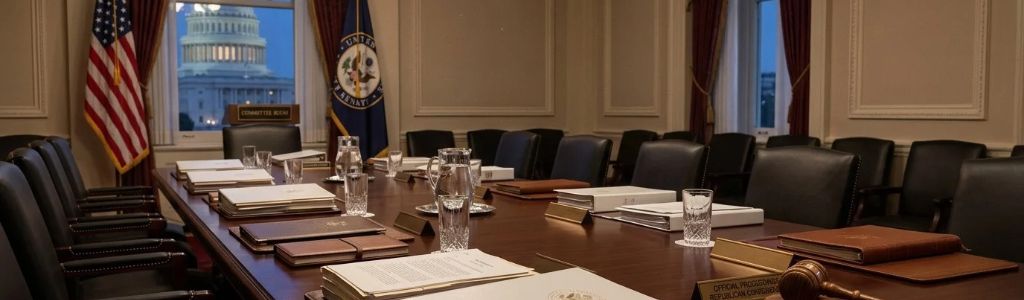
For institutions planning five-to-ten-year horizons, lack of permanence raises the cost of capital and legal risk. Institutional adoption will be uneven.
Large asset managers can operate with internal compliance and external counsel. Banks and insurers will wait for rules likely to survive political cycles. Smaller firms face compliance costs without scale. The result is concentration and reduced innovation.
The CLARITY Act sought to allocate jurisdiction between the SEC and CFTC, define digital securities and digital commodities, establish registration for exchanges and custodians, and create a regime for stablecoins. Without legislation, each agency applies separate interpretations.
The SEC can classify tokens as securities. The CFTC can claim jurisdiction over derivatives. The OCC and FDIC define bank treatment. States apply licenses and money transmission laws. Regulatory fragmentation continues.
For exchanges, lack of a single registration requires state and federal licenses. For custodians, segregation and capital rules vary. Compliance burden multiplies.
Bank opposition has technical logic
Deposits are the main funding source for community banks. If regulated stablecoins pay yield and offer liquidity, they compete with savings accounts and certificates of deposit. Without federal deposit insurance, fund transfers can be rapid during stress.
The circuit breaker proposal does not address the structural cause: a stablecoin can function as a payment account and savings vehicle without bank burdens.
A solution would require separating payment stablecoins from investment stablecoins, limiting yield on balances, or creating a reserve and capital framework equivalent to banking regulation.
The industry did not accept limits. Banks did not accept competition without equivalent regulation. Negotiation remained blocked by concrete economic interests.
Presidential ethics adds a political problem
The crypto sector can argue rules should apply to all. A bill benefiting the president and his family faces a higher political standard.
The Trump administration has had participation in DeFi, NFTs, stablecoins, and mining. Without a conflict-of-interest mechanism, Democrats have no incentive to vote.
The final offer did not resolve the point. The CLARITY Act remained trapped between two coalitions with veto power: Democrats on ethics and banks on stablecoin yields. The industry failed to split either coalition.
My opinion is the sector should abandon the omnibus law strategy
Seek incremental reforms. A payment stablecoin bill with a yield prohibition for nonbank balances, reserve and audit requirements, and access to payment infrastructure. A custody bill clarifying SEC, CFTC, and OCC responsibilities.
A tax treatment bill for transactions and staking. A token taxonomy bill defining when an asset is a security, commodity, or hybrid. None requires resolving all conflicts.
The industry should negotiate with banks. Accepting limits on stablecoin yield may be a necessary cost to obtain regulatory clarity in payments. Accepting conflict-of-interest rules for officials may reduce Democratic opposition. Without concessions, the result is status quo.
The political calendar is adverse. The 2026 midterm elections approach. The Senate leaves Washington in October. No time exists for a broad agreement. Senator Cynthia Lummis stated if the procedural vote failed, the issue was closed and the next real opportunity might arrive in 2030.
If Democrats win the Senate, Elizabeth Warren would lead negotiation on a stricter bill. The text would face Republican and industry opposition. If Republicans keep control, the legislative agenda may prioritize other topics. In any scenario, the CLARITY Act does not return soon.
The alternative process is agency regulation
The SEC can issue rules on custody, digital securities markets, and disclosure. The CFTC can regulate digital asset derivatives. The OCC can grant bank charters for crypto firms. The IRS can clarify tax reporting.
The Administrative Procedure Act allows challenges to rules. The industry can litigate. Litigation does not provide certainty. Rules can change with each administration. Institutional investment prefers stability. Absence of law raises the regulatory risk premium.
The European Union applies MiCA
The United Kingdom, Singapore, Hong Kong, the UAE, and Switzerland have frameworks. Absence of federal law in the United States does not expel all activity.
Marginal capital may move to jurisdictions with clear rules. Firms seeking listings, institutional custody, and cross-border payments can choose seats with recognized licenses. U.S. competitiveness depends on predictable rules. Legislative delay has a cost.
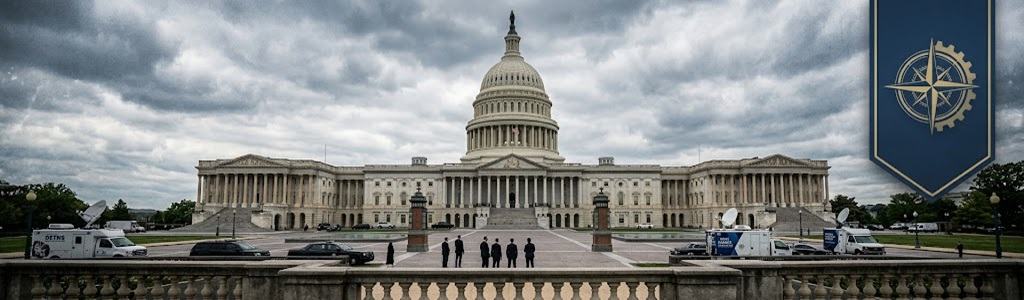
For compliance teams, the operational priority is to document token classification decisions, maintain custody records, and prepare reports for multiple regulators.
Absence of law does not eliminate obligations. Securities laws, commodities laws, sanctions, antifraud, and anti-money laundering rules continue to apply. The SEC can bring enforcement based on judicial interpretations.
The CFTC can do the same in derivatives
States can act on licenses. A defensive strategy reduces ambiguity through legal opinions, audits, and voluntary disclosure. An offensive strategy participates in rule comments and strategic litigation. Both consume resources. Legislative clarity would reduce costs for all participants.
For the crypto sector, the September 15, 2026 vote is not the end. It is the end of one strategy. The CLARITY Act did not advance because of ethics and banking conflicts. The industry should accept comprehensive regulation is not viable in the current political cycle.
The priority should be sectoral reforms, negotiation with banks, political transparency, and compliance. Legislative clarity remains an objective. The process will be longer and fragmented.
The cost of waiting for an omnibus law is greater than the cost of advancing partial reforms. The industry adapting strategy will perform better than the industry waiting for a deal not arriving.



Be the first to comment