




TLDR
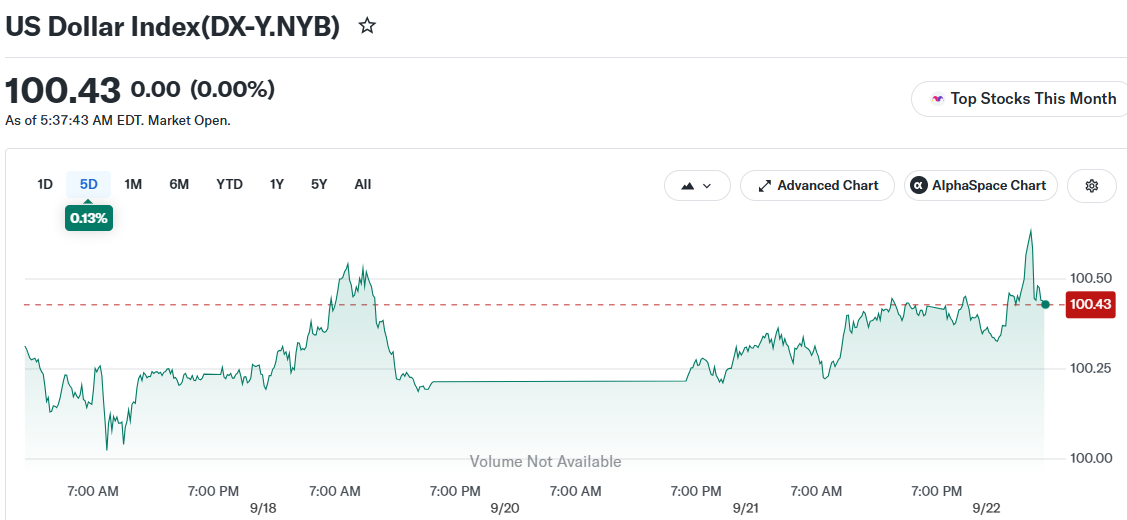
- The U.S. Dollar Index briefly hit a seven-week high, rising to 100.667 before pulling back
- Oil prices swung after Iran offered to reopen the Strait of Hormuz within seven days
- The Japanese yen fell for a third straight day, dropping to 157.69 per dollar
- Markets are pricing in a 55% chance of another Fed rate hike in October
- The Australian and New Zealand dollars moved on central bank signals from their respective governors
The U.S. dollar climbed to a seven-week high on Tuesday before giving back some gains, as oil price swings and central bank bets drove action across currency markets.
The U.S. Dollar Index rose 0.1% to 100.49, touching an intraday peak of 100.667. The index had already gained more than 1% last week after the Federal Reserve raised interest rates by a quarter point and signaled more hikes could follow.
Markets are now pricing in a 55% chance of another quarter-point rate hike at the Fed’s October meeting, according to CME FedWatch data.
Oil prices were a key driver of early dollar strength. Rising crude prices boosted the dollar because the U.S. is a net oil exporter, and the dollar also benefits from safe-haven demand when energy markets are volatile.
But prices reversed after Japan’s Kyodo News reported that Iran had offered to reopen the Strait of Hormuz within seven days, provided the U.S. takes steps to ease military pressure in the region.
U.S. President Donald Trump also signaled he was open to direct talks with Iranian President Masoud Pezeshkian on the sidelines of the UN General Assembly this week.
IRAN HAS INFORMED THE TRUMP ADMINISTRATION THAT IT WILL OPEN THE BLOCKED STRAIT OF HORMUZ “WITHIN SEVEN DAYS” IF IT ACCEPTS DEMANDS SUCH AS LIFTING THE US MILITARY BLOCKADE OF IRANIAN PORTS, ACCORDING TO A SENIOR IRANIAN GOVERNMENT OFFICIAL ON THE 22ND. WITH IRAN’S CRUDE OIL…
— First Squawk (@FirstSquawk) September 22, 2026

The prospect of diplomacy helped pull crude oil and European natural gas futures off multi-week highs.
Yen Falls for Third Day as Intervention Watch Rises
The Japanese yen slipped 0.33% to 157.69 per dollar, extending a three-day losing streak. The drop came despite the Bank of Japan raising rates by 25 basis points to 1.25% last week.
Trading conditions in Tokyo were thinned by extended public holidays, which dealers said amplified price swings. The Nikkei newspaper reported that the Bank of Japan conducted formal “rate checks” with foreign exchange desks, a step often seen as a precursor to direct intervention.
Japan holds an estimated $1 trillion in foreign exchange reserves, giving authorities significant capacity to defend the yen if needed.
The euro fell 0.1% to $1.1456, and the British pound traded slightly lower at $1.3364.
Aussie Holds Steady, Kiwi Rises on Inflation Warning
The Australian dollar was flat at $0.7123 after Reserve Bank of Australia Governor Michele Bullock spoke at a public event. Markets are currently pricing in a 90% chance of a rate hike from the RBA next week.
The New Zealand dollar rose to $0.5735 after Reserve Bank of New Zealand Governor Anna Breman said elevated crude prices would push inflation forecasts somewhat higher.
The moves across Asia-Pacific currencies reflected how closely tied central bank policy expectations are to energy price movements right now.
With the UN General Assembly underway and Iran-U.S. diplomatic contacts a possibility, currency traders are watching for any developments that could shift oil prices and, in turn, the dollar’s direction.
Stop guessing and start investing with confidence. KnockoutStocks gives you the AI insights, market intelligence, and stock research you need to spot opportunities, cut through the noise, and make smarter investment decisions — all in one powerful platform.
Sign up today and get 50% OFF full access to our premium stock picks.
Simply use coupon code SPECIAL50 at checkout to claim your exclusive discount.



Be the first to comment