



Bitcoin’s [BTC] recovery back toward $85,000 has given miners an opportunity to convert a portion of their holdings into cash. That trend was evident through the exchange flow data, as miners sent 19,866 Bitcoins to Binance on the 21st of September.
The move brought inflows close to the 20,000 BTC level, last seen in August when flows exceeded 25,000 BTC.
For miners, they find it easier to pay for expenses such as electric power and maintenance or buy new mining equipment if they can generate enough revenue at higher prices without having to wait for even higher returns.
However, the effect of increased miner inflows on Bitcoin will depend on how miners use the funds received from selling some or all of their BTC.

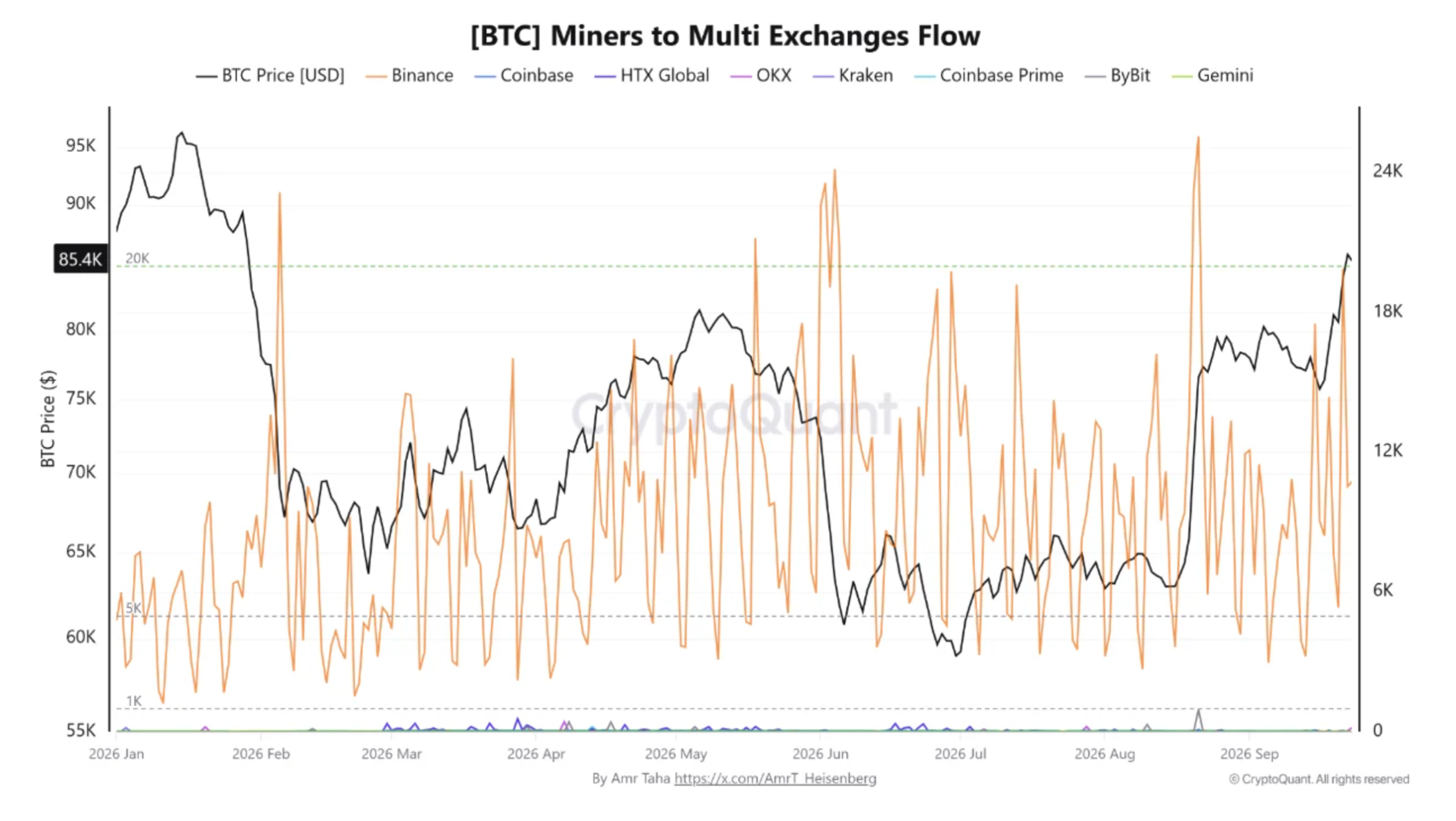
If many miners use these funds to purchase other assets before selling them for additional fiat currency, this could increase the supply of Bitcoin held on exchanges. Such a rise in exchange supply could add downward pressure on prices.
Bitcoin miners shift toward AI
A surge in miner flow is happening as market participants are increasingly valuing existing mining sites for uses beyond producing Bitcoins. The year-to-date (YTD) miner stocks focused on using artificial intelligence (AI) rose to 21%.
Meanwhile, miner stocks related to the use of traditional methods to mine Bitcoins have declined by 8% this year, demonstrating which direction investors’ capital is heading toward.
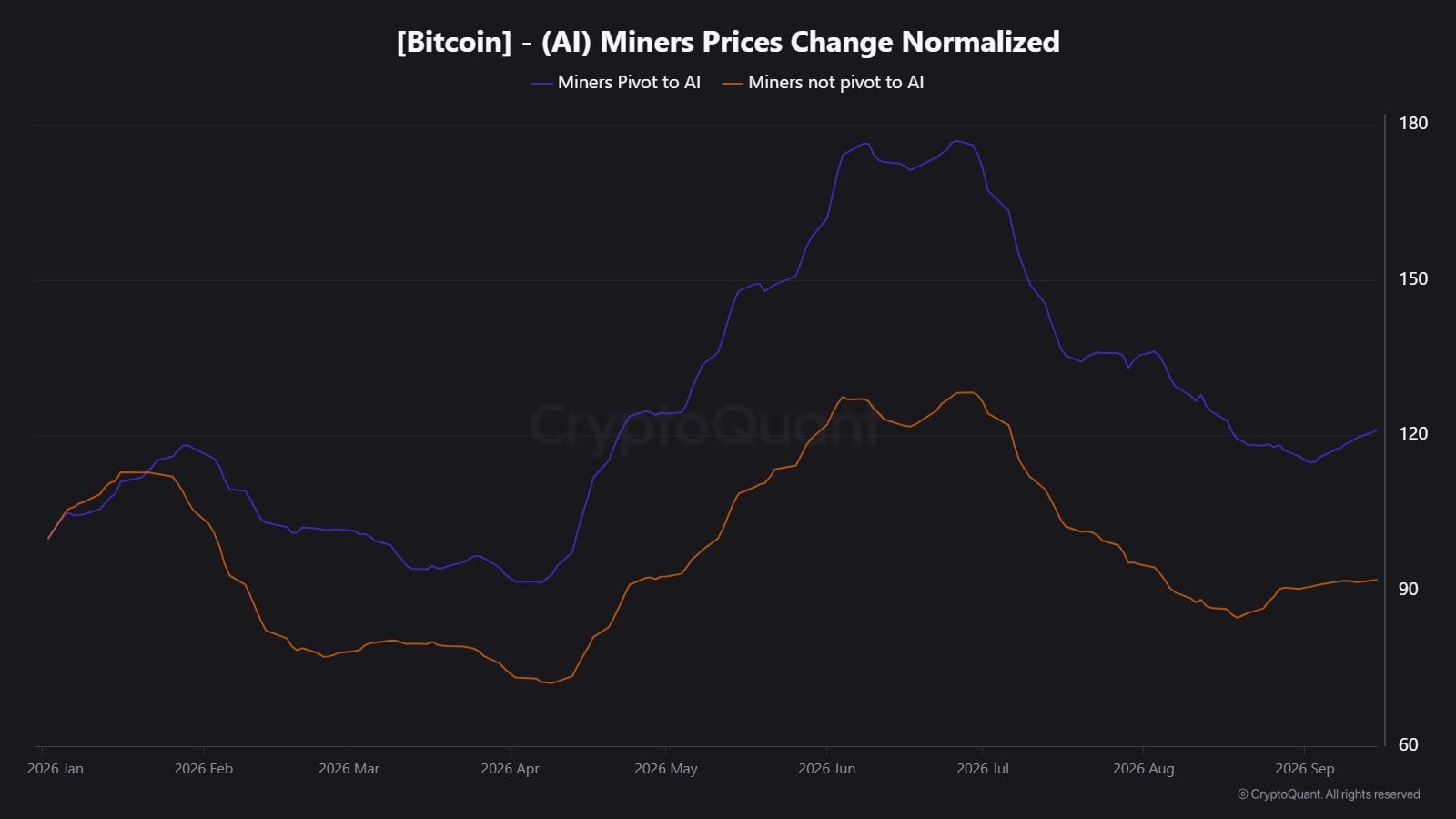
This gap represents the value investors assign to power, grid access, and facilities that can support AI workloads. AI-linked mining operations trade at approximately 12.9 times future revenues compared to 3.7 times future revenues for traditionally based mining operations.
Core Scientific shows how quickly this model can change revenue. The company was able to generate approximately $136.7 million in revenue compared to only $21 million generated through Bitcoin mining.
As AI offers higher returns on available power, miners have more incentive to utilize capacity. As a result, that could slow hashrate growth and reshape Bitcoin’s mining landscape.
The AI revenue shift
Miners are beginning to replace their Bitcoin revenue with AI and High-Power Computer (HPC) revenue as that shift in infrastructure value becomes apparent. IREN’s cloud-AI revenue was at $70.5 million, which exceeded its $66.7 million Bitcoin mining revenue.
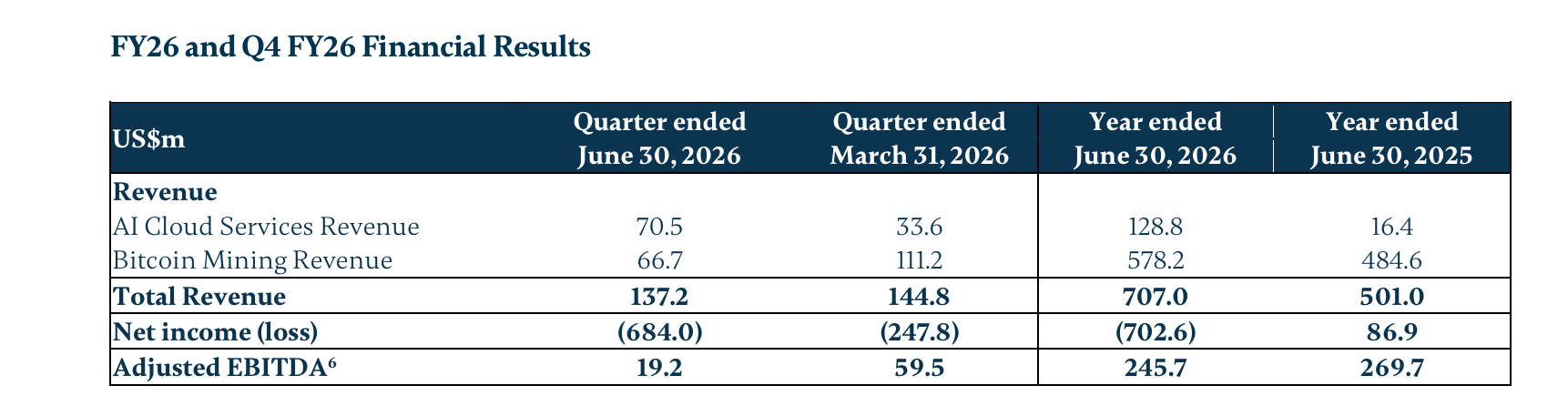
TeraWulf also made $31.9 million through leasing out HPC, illustrating how redirecting use of existing equipment can result in changing the way an operator produces revenue.
As more facilities come online, AI could offset weaker Bitcoin revenue and reduce miners’ dependence on BTC production. Once additional facilities go into operation, AI may provide sufficient alternative sources of revenue.
As such, the effect of lower Bitcoin prices and reduced demand for Bitcoin mining output would have less impact on the financial results of these operators.






Be the first to comment