




TLDR
- European and British wholesale gas futures fell 3.2% on Friday as traders locked in profits.
- Both benchmarks are on pace for their steepest weekly loss since mid-June, down more than 8%.
- Reports of US-Iran talks over reopening the Strait of Hormuz helped ease supply fears.
- EU gas storage sits near 70% full, about 12 percentage points below last year’s level.
- Norway pipeline maintenance is adding further pressure to European gas supply.
European wholesale natural gas prices fell hard on Friday. The Dutch TTF and British NBP contracts each dropped 3.2%.
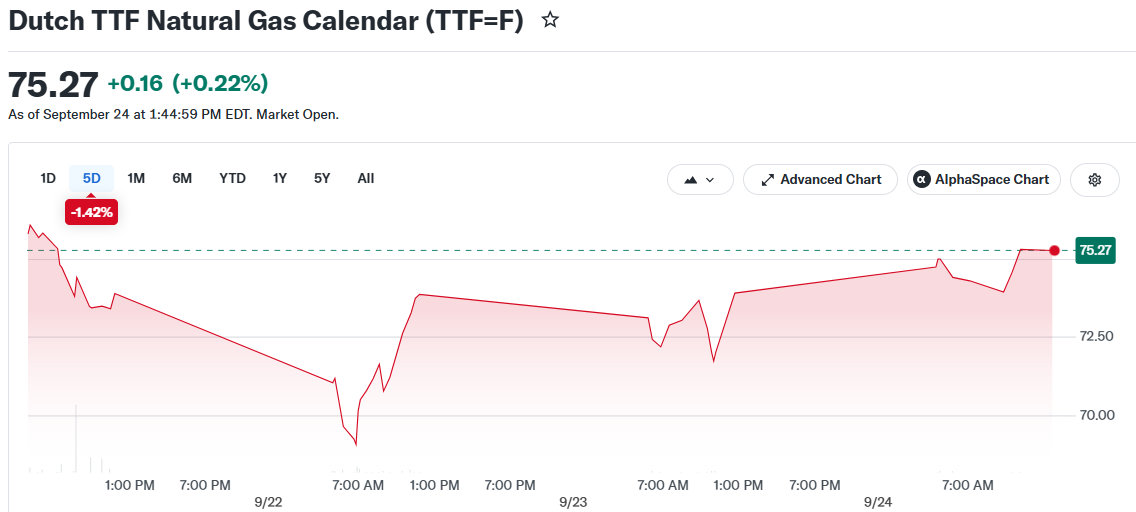
Traders pulled profits after weeks of price gains. The move left both benchmarks on track for their worst weekly performance since mid-June.
Prices for the week are down more than 8%. That marks a sharp reversal from the highs seen earlier in September.
Why Prices Are Falling
The main driver behind the drop is easing tension around the Strait of Hormuz. Reports point to discussions between the United States and Iran over a phased deal to reopen the waterway.
🇺🇸🇮🇷 BREAKING: Iran offers U.S. a 7-DAY plan to reopen the Strait of Hormuz and restart negotiations, per FT.
Iranian Foreign Minister Abbas Araghchi says Hormuz could be reopened by the end of the seventh day if certain conditions are met, with broader talks also set to resume.… pic.twitter.com/TcnmfVrcZY
— Coin Bureau (@coinbureau) September 25, 2026
The strait has been a central issue in a conflict that has lasted nearly seven months. Neither side has agreed to give up control of the passage so far.
Even without a final agreement, markets are pricing in less risk of further military escalation. That shift lowered the premium attached to Persian Gulf energy supplies.

LNG shipping operators are also adjusting. Tankers are reportedly finding alternative routes around the Arabian Peninsula, which has reduced fears of a total halt in physical LNG deliveries.
Traders used the pause in tension to sell positions ahead of the weekend. This profit taking added to the price decline.
Storage Levels Remain Below Normal
European gas storage remains a concern despite the price drop. Data from Gas Infrastructure Europe shows storage caverns across the European Union are about 70% full.
That level is roughly 12 percentage points behind where storage stood at the same point last year. The gap leaves utilities with less cushion heading into winter.
Low storage means the region could face price swings if cold weather arrives early or supply is disrupted again. The European Central Bank has flagged this risk before, warning that gas price swings can spill into retail inflation.
Maintenance work in Norway is adding another layer of pressure. Reduced pipeline flows from Norway are tightening supply into Europe at the same time storage remains below average.
Europe is also competing with Asia for limited LNG cargoes. That competition has intensified as both regions look to secure supply heading into the winter heating season.
Despite Friday’s drop, prices are still elevated compared to earlier in the year. The conflict’s effect on shipping routes and supply chains has not fully resolved.
Market watchers say a lasting resolution between the US and Iran over the strait would likely bring further price relief. Until then, gas prices are expected to remain sensitive to headlines from the talks.
As of Friday, TTF prices had fallen below €73 per megawatt-hour, pulling back from gains recorded in the prior session.
Stop guessing and start investing with confidence. KnockoutStocks gives you the AI insights, market intelligence, and stock research you need to spot opportunities, cut through the noise, and make smarter investment decisions — all in one powerful platform.
Sign up today and get 50% OFF full access to our premium stock picks.
Simply use coupon code SPECIAL50 at checkout to claim your exclusive discount.



Be the first to comment