



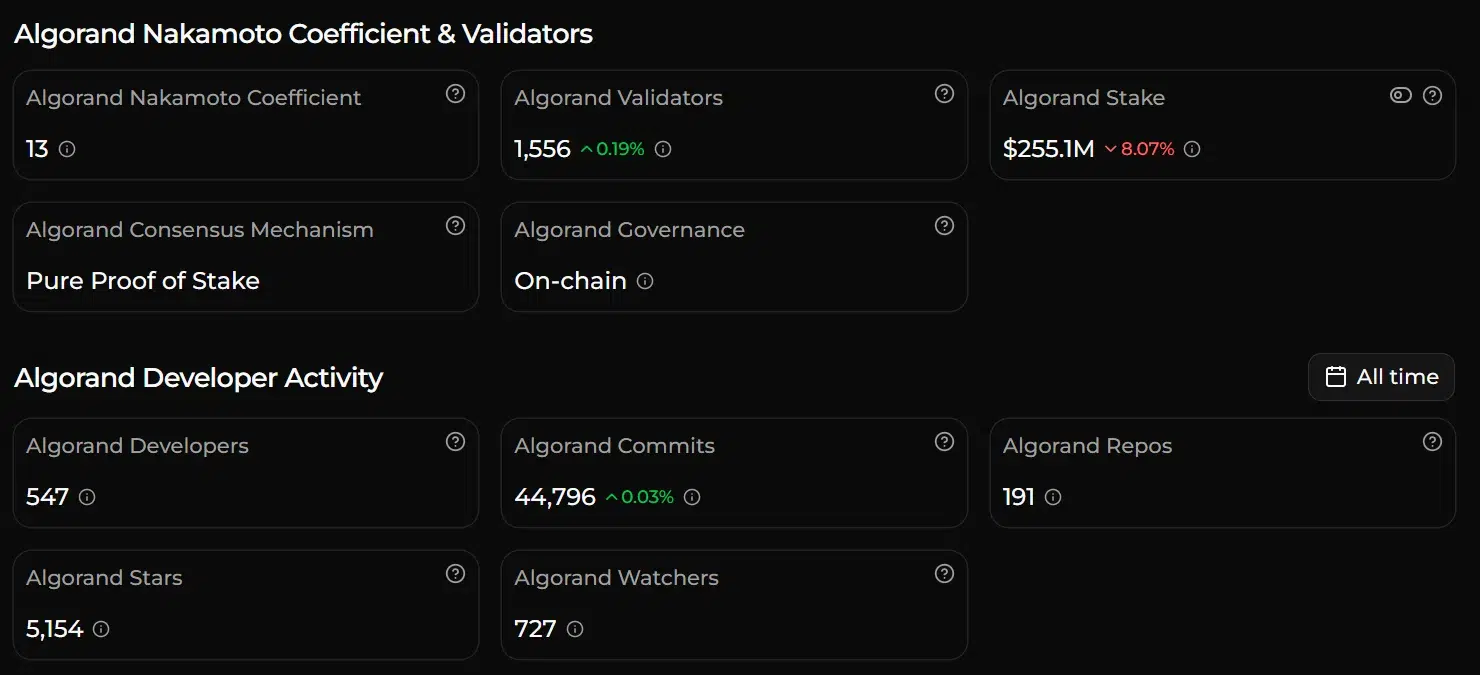
Algorand Decentralization has been steadily growing since the platform achieved its highest weekly number of active validators ever, at 1,556 validators on September 29. According to the data presented in ChainSpeak, there has been an increase in the number of active validators by 0.19%.
The new figure joins the list of other trends associated with Algorand’s increasing number of active validators. The growing number of validators in the network can help to improve the decentralized nature of the blockchain.
Also Read | XRP Ledger Brings Brazilian Fund Shares Onchain With CSD BR
Algorand Decentralization Shows Continued Validator Growth
The most recent validator percentage is yet another sign that there is increasing participation in the Algorand ecosystem. While the 0.19% week-on-week increase may be small, it adds up to the much bigger increase that has been witnessed in the long term.

According to the report released in December 2025 by the Algorand Foundation, the number of validators increased from 897 to 1,726 in 2025. There was also a marked increase in the staking of ALGO tokens within the same time frame.
Although both graphics have different reporting periods, they should not be compared on a month-to-month basis. Nevertheless, they prove that validator participation continues to be one of the crucial aspects of the network’s development.
Why Algorand Decentralization Matters
Validators are an integral part of the Pure Proof-of-Stake consensus mechanism implemented by Algorand. They actively engage in the transaction validation procedure within this network.
The greater number and diversity of validators will mean less reliance on a limited number of stakeholders. The growth of the number of validators is one of the key indicators of the progress of Algorand Decentralization.
The company has been continuously developing its network infrastructure. The blockchain uses peer-to-peer networking for the mainnet, which allows the validation nodes to find out about the repeaters using a peer-to-peer approach instead of having a static list of bootstrap addresses.
The development in the infrastructure is expected to help in making communications more flexible between the network members.
Algorand Changes Leadership as Network Develops
Validator milestone takes place in the midst of a stage of organizational change at the Algorand Foundation. The Algorand Foundation on September 9 appointed William Herkelrath as the new CEO, replacing Staci Warden.
According to the Algorand Foundation, William Herkelrath’s appointment follows the increased focus of Algorand on institutional adoption and quantum readiness. His career experience is characterized by top-level posts in the financial technology and blockchain industry.
The leadership change takes place amidst continuous developments in the technology behind Algorand and its increasing adoption in financial and institutional uses.
Currently, the metrics for existing validators focus on Algorand Decentralization. The number of active validators as of September 29 was 1,556, which is yet another indicator of network involvement and ties in with the overall increase in validators noted by the Algorand Foundation in 2025.
With the development of infrastructure improvements and expansion of its institutional approach, the participation of validators will remain one of the important metrics to measure decentralization development within the network.
Also Read |Binance Pay USDT Enables Payments at PayPay Merchants Across Japan



Be the first to comment