



Aave MiCA rules have emerged as one of the major considerations in light of the fact that Aave Labs has sent its response to the European Commission’s consideration of the Markets in Crypto-Assets Regulations (MiCA). The decentralized finance company wants the regulations to consider intermediaries instead of open-source financial software.
Aave also demands clear guidelines that will enable self-custody and allow people to earn from their crypto investments through lending.
What Happened With Aave?
Aave Labs has submitted recommendations in the review process conducted by the European Commission for MiCA.
It is essential for the company to make the distinction between open-source software and intermediaries or business firms that offer services based on open-source software. The reason is that this difference may be crucial when it comes to the application of existing crypto regulations on decentralized protocols.


The idea of self-custody was also emphasized by Aave in the crypto ecosystem. In accordance with the model, it is possible for users to remain in control of their funds while being provided with access to decentralized loans without having to follow regulations aimed at financial companies.
There is also the question of lending returns and the use of euro stablecoins in Aave’s MiCA Rules proposal. The recommendations seek a regulatory regime that would enable users to access decentralized financial services.
Also Read | AAVE Whale Activity Puts AAVE Price in Focus as Momentum Builds
Why Are Aave MiCA Rules Important?
The discussion on Aave MiCA Rules occurs amid an increased regulatory focus on decentralized financial services in Europe.
On September 30, ESMA stated the need for a more precise approach to DeFi, staking, lending, and borrowing within MiCA. Additionally, ESMA suggested the introduction of a regulated crypto-asset service for companies that give access to DeFi protocols to their users.
From the recommendation, one can tell that the regulators are seeking to establish the location of accountability in cases of interactions involving decentralized protocols. The case of Aave becomes more significant given this fact.
Therefore, the position of Aave may become part of the larger discussion regarding the treatment of decentralized protocols on the same footing as centralized crypto businesses.
What Does the Data Show?
The latest regulatory move by Aave takes place amid the continued mixed performances seen in the broader crypto market. The current regulatory issue seems to carry more weight when it comes to Aave’s future in Europe rather than current market moves.
Unlike the case with the price level to reach, the discussion about Aave MiCA Rules revolves around how the users and the DeFi platform can perform within the changing regulatory landscape of Europe.
Regulatory clarity will also impact the way crypto lending services will be provided to European users. With clear rules and regulations in place that can address the intermediaries and leave the open-source software untouched, DeFi platforms might have an easier way to serve European users.
How Does This Connect With Stablecoins?
Regulation of stablecoins is another key area under the MiCA assessment. Aave has pointed out the need for euro stablecoins to be competitive in Europe.
Stablecoins are popular in the DeFi space since they are digital assets that offer stability in value while being able to operate on blockchain platforms. Therefore, any change to their regulation will have implications for other services such as lending and borrowing.
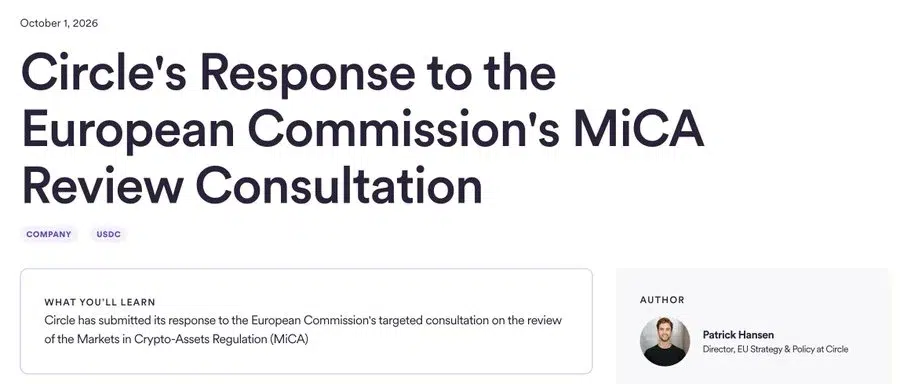
The Circle submission to the MiCA review is also dated October 1. This firm requested certain modifications regarding stablecoin reserves and more flexibility when issuing global stablecoins.
The various submissions clearly indicate that the MiCA review addresses various aspects of the crypto industry, from DeFi protocols and lending services to stablecoin issuers.
What Comes Next for Aave MiCA Rules?
The European Commission will analyze the answers to the consultation before making any decision on whether changes to the MiCA regulations are required. Such an analysis can end up becoming proposals for new legislation, although the consultation process is not the final decision-making process.
As far as Aave is concerned, the result can affect how the protocol for decentralized lending and its intermediaries function in Europe.
Aave’s MiCA Rules discussion will be inseparably intertwined with the general issue of how crypto services could be regulated without imposing the same criteria for completely different business models.
With European agencies considering DeFi, lending, borrowing, staking, and stablecoins, Aave’s position is yet another one in the discussion on the evolution of MiCA in tandem with the crypto industry.
Also Read | Arbitrum Expands RWA Activity as ARB Price Structure Draws Attention



Be the first to comment