

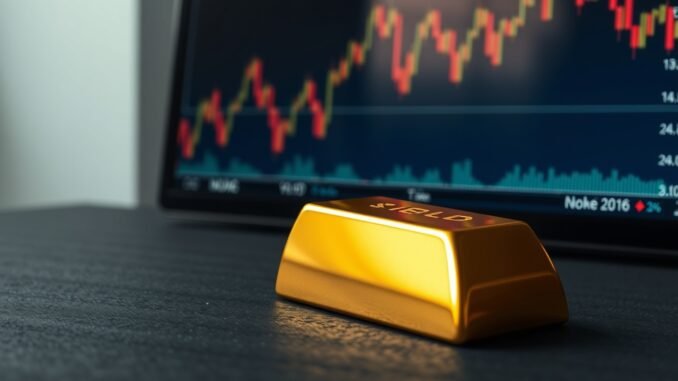

Global gold markets witnessed a significant rally this week as two powerful forces converged: a notable decline in US Treasury yields and escalating geopolitical tensions across the Middle East. This dual-pressure scenario triggered a classic flight to safety among investors, propelling the precious metal to its highest level in several months. Market analysts point to a complex interplay between monetary policy expectations and regional instability as the primary drivers behind this surge.
Gold Price Dynamics and Treasury Yield Correlation
The inverse relationship between gold and US Treasury yields remains a cornerstone of financial market analysis. When bond yields fall, gold—which offers no yield—becomes relatively more attractive. This week, benchmark 10-year Treasury yields retreated from recent highs, dropping below the psychologically significant 4.2% threshold. Consequently, this decline reduced the opportunity cost of holding non-yielding bullion. Several factors contributed to this yield movement, including softer-than-expected economic data and shifting Federal Reserve policy expectations.
Market participants closely monitor real yields—nominal yields adjusted for inflation—as they provide a clearer picture of gold’s appeal. A decline in real yields directly enhances gold’s attractiveness as a store of value. Recent inflation data, while persistent, has shown signs of moderation, influencing bond market sentiment. Furthermore, the Federal Reserve’s latest communications suggest a more cautious approach to further interest rate hikes, easing pressure on the bond market and supporting gold’s upward trajectory.
The Mechanics of Yield-Driven Gold Movements
The financial mechanism behind this correlation is straightforward yet powerful. Lower yields diminish the appeal of interest-bearing assets like government bonds. Investors then reallocate capital to alternative stores of value. Gold, with its millennia-long history as a monetary asset, typically benefits from such shifts. Historical data consistently shows a strong negative correlation between real Treasury yields and gold prices. This relationship has held particularly strong in the post-2008 financial era, where unconventional monetary policy became commonplace.
Geopolitical Tensions Amplify Safe-Haven Demand
Simultaneously, deteriorating security conditions in the Middle East injected fresh uncertainty into global markets. Renewed conflicts and diplomatic stalemates have heightened concerns about regional stability and energy supply security. Historically, gold performs well during periods of geopolitical stress, as investors seek assets perceived as immune to political risk. The current situation has triggered a measurable increase in bullion purchases from both institutional funds and retail investors.
Geopolitical risk premiums often manifest quickly in commodity markets. Gold’s role as a crisis hedge is well-documented across centuries of financial history. During the initial phases of the current tensions, options market activity indicated a sharp rise in demand for protection against further price spikes. The volatility index for gold-related derivatives climbed significantly, reflecting heightened investor anxiety. This fear-driven buying provides a strong secondary support layer beneath the yield-driven momentum.
| Driver | Direction | Impact on Gold | Timeframe |
|---|---|---|---|
| US 10-Year Yield | Down | Strong Positive | Immediate |
| Middle East Tensions | Up | Strong Positive | Short-Term |
| US Dollar Index | Mixed | Moderate Negative | Variable |
| Global ETF Flows | Inflow | Confirming | Lagging |
Historical Context of Crisis-Driven Rallies
Analysts often compare current movements to previous geopolitical crises. The pattern of rapid price appreciation followed by consolidation is common. However, the unique aspect of the current rally is its foundation in both geopolitical and monetary factors. This dual-engine scenario suggests potentially more sustained momentum than rallies driven by a single factor. Past instances where gold rallied on similar dual catalysts include periods surrounding the 2011 debt ceiling crisis and the early 2020 pandemic market turmoil.
Central Bank Activity and Structural Support
Beyond short-term traders, central banks continue to play a crucial role in the gold market. Many nations, particularly in emerging markets, have maintained robust gold purchasing programs throughout 2024 and into 2025. This institutional demand provides a solid foundation for prices, reducing downside volatility. Central banks cite several reasons for accumulating gold reserves:
- Diversification away from US dollar assets
- Hedge against currency depreciation
- Enhancement of national balance sheet stability
- Strategic move amid geopolitical realignments
This structural buying from official institutions differs from speculative flows. It represents long-term strategic positioning rather than short-term profit seeking. Consequently, it adds a layer of demand that is less sensitive to daily yield fluctuations or news headlines. The World Gold Council’s latest report confirms that central bank purchases remain at historically elevated levels, contributing to a tighter physical market.
Market Technicals and Trader Positioning
Technical analysis reveals that gold has broken through several key resistance levels during this move. The $2,150 per ounce level, which previously acted as strong resistance, now serves as support. Trading volumes have expanded significantly, confirming the strength of the breakout. Open interest in gold futures markets has also increased, indicating fresh capital entering the market rather than just short covering.
Commitments of Traders reports from major exchanges show that managed money positions have shifted from net short to net long over recent weeks. This shift in speculative positioning often precedes sustained trends. Meanwhile, physical gold markets report strong premiums in key consumption centers like China and India, suggesting robust retail and jewelry demand alongside investment flows. This broad-based demand across different investor types strengthens the bull case.
The Role of the US Dollar
The US dollar’s performance adds another layer to the analysis. Typically, a stronger dollar pressures gold prices by making it more expensive for foreign buyers. However, in the current environment, gold has rallied despite a relatively stable dollar index. This divergence suggests that the yield and geopolitical factors are overwhelming the usual currency dynamics. Such periods of decoupling often indicate particularly strong underlying momentum in the gold market.
Economic Implications and Future Outlook
The rally in gold carries implications for broader financial markets. Rising gold prices can sometimes signal declining confidence in traditional financial assets or future economic stability. However, analysts caution against overinterpreting a single indicator. The current environment features unique characteristics, including persistent inflation concerns and unusual geopolitical configurations. Monitoring gold’s performance relative to other inflation hedges, like Treasury Inflation-Protected Securities (TIPS), provides additional context.
Looking forward, several factors will determine whether the rally sustains. The Federal Reserve’s policy path remains paramount. Any signals of renewed hawkishness could pressure gold by boosting yields. Conversely, confirmation of a pause or pivot would likely provide further support. On the geopolitical front, de-escalation could trigger profit-taking, while further deterioration would probably extend the safe-haven bid. Market participants should also watch physical market indicators, including central bank buying patterns and ETF flow data, for confirmation of trend strength.
Conclusion
The recent surge in the gold price demonstrates the metal’s enduring role as a dual-purpose asset: a hedge against financial market stress and a safe haven during geopolitical uncertainty. The simultaneous decline in US Treasury yields and escalation of Middle East tensions created a perfect storm for bullish momentum. While short-term volatility is inevitable, the underlying drivers—shifting monetary policy expectations and persistent geopolitical risks—suggest that gold may maintain its elevated position in investor portfolios. The gold price movement serves as a critical barometer of both financial and political risk perceptions in global markets.
FAQs
Q1: Why do falling Treasury yields typically cause gold prices to rise?
Falling yields reduce the opportunity cost of holding gold, which pays no interest. This makes non-yielding bullion relatively more attractive to investors seeking preservation of capital, leading to increased demand and higher prices.
Q2: How significant is the current Middle East tension compared to past events affecting gold?
While serious, current tensions represent one of several factors. The unique combination with monetary policy shifts is creating a stronger effect than geopolitical concerns alone might generate, similar to dual-catalyst events seen in 2011 and 2020.
Q3: Are central banks still buying gold, and does it matter for the price?
Yes, central bank gold purchases remain at historically high levels according to the World Gold Council. This institutional demand provides structural, long-term support to the market, reducing downside volatility and validating gold’s strategic role.
Q4: Could a stronger US dollar stop the gold rally?
Typically, a strong dollar pressures gold. However, the current rally has occurred alongside a stable dollar, indicating that yield and geopolitical factors are currently dominant. A sharply stronger dollar could eventually dampen momentum, especially for foreign buyers.
Q5: What should investors watch to gauge if this gold rally will continue?
Key indicators include the direction of real Treasury yields, developments in Middle East diplomacy, Federal Reserve policy communications, physical gold ETF flow data, and central bank purchasing activity reports from organizations like the World Gold Council.
Disclaimer: The information provided is not trading advice, Bitcoinworld.co.in holds no liability for any investments made based on the information provided on this page. We strongly recommend independent research and/or consultation with a qualified professional before making any investment decisions.



Be the first to comment