



TL;DR:
- During the live demonstration at Sui Basecamp in Singapore, an off-chain tunnel throughput peak of 40,614,180 transactions per second was recorded.
- The technical test ran over 10,000 programmable channels opened on mainnet to simulate payments, gaming, and messaging workloads.
- Cybersecurity firm CertiK was appointed as an independent auditor to verify the execution logs and cryptographic proofs.
The Sui network completed a live technical demonstration processing a peak throughput of 40.6 million transactions with AI agents via off-chain programmable channels. The technical milestone was presented this Wednesday, October 7, by Adeniyi Abiodun, co-founder and Chief Product Officer of Mysten Labs, during the Sui Basecamp conference in Singapore.
Off-Chain Programmable Tunnel Architecture
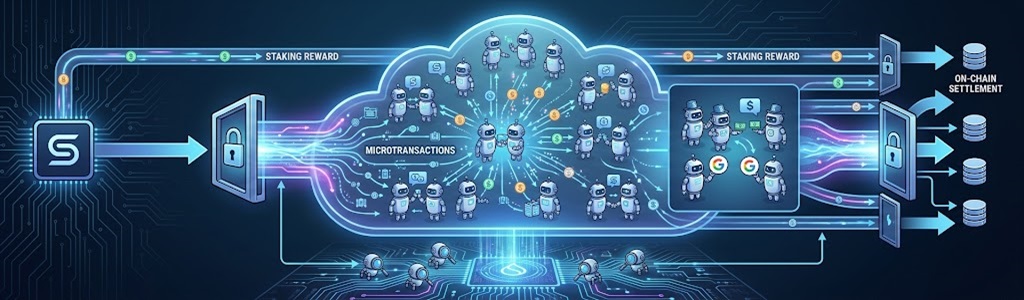
The initial target set by developers for the session of 20 million TPS was doubled. The final tally reached 40,614,180 transactions per second, also shattering the previous benchmark from July, when the protocol clocked approximately 6.1 million TPS under a comparable framework.
The tested infrastructure relied on more than 10,000 tunnels anchored to mainnet. According to technical documentation from the Sui Foundation, each channel requires only one on-chain transaction to open and one to close.
Intermediate interactions between software agents are processed entirely off the primary ledger. The Mysten Labs report indicates that this design enables continuous, high-frequency exchanges without congesting distributed consensus. Upon concluding a session, participants co-sign the final state, which settles definitively on the base layer.
The benchmark simulated operating environments for automated payments, gaming interactions, and instant messaging applications. According to statements by Adeniyi Abiodun, the achieved throughput meets the operational demands of autonomous software, as human end-users do not require such extreme transaction frequencies.
The technical initiative connects back to the network’s prior integration into Google’s Agentic Payments Protocol, announced in September 2025. Through this open-source standard, automated agents can execute scheduled microtransactions on behalf of users to bypass paywalls, acquire digital content licenses, and purchase online services.
Payments Ecosystem, Liquidity, and Technical Audit
The push into agentic infrastructure coexists alongside expanding on-chain network liquidity. On March 4, 2026, the Sui Foundation rolled out its native stablecoin, USDsui, issued via the Open Issuance platform by Stripe subsidiary Bridge.
Foundation metrics show the network processed over $111 billion in stablecoin transfers during January 2026. Unlike monthly settlement volumes on layer 1, the October benchmark evaluated the raw message throughput and micro-exchanges executed per second across parallel channels.
Across U.S. institutional markets, investment products tied to the native token SUI broadened in early 2026. On February 18, trading commenced for Canary Capital’s SUIS fund on the Nasdaq index and Grayscale’s GSUI on NYSE Arca, both structured as spot funds featuring integrated staking rewards. Subsequently, on July 22, cryptocurrency exchange Coinbase enabled staking services for the asset.
The methodological validity of the benchmark test remains subject to third-party review. Cybersecurity auditing firm CertiK initiated a technical inspection of the execution logs, transaction histories, and cryptographic proofs collected during the Singapore demonstration, with the publication of its formal audit report scheduled for the coming days.



Be the first to comment