



AI Summary
- ISDA sees tokenization as a route to faster settlement, stronger liquidity management, and more efficient collateral mobility.
- Ripple’s custody and prime brokerage strategy appears aligned with parts of that institutional agenda.
- The available remarks do not establish that ISDA has selected XRP or the XRP Ledger for derivatives infrastructure.
- Legal certainty, custody rules, collateral haircuts, interoperability, and institutional demand remain decisive adoption tests.
- XRP demand would depend on actual usage within institutional workflows, not alignment between broad market themes alone.
The loudest version of the XRP collateral thesis treats the enormous derivatives market as value waiting to migrate onto blockchain rails. The concrete sourced development is narrower: ISDA has described how digital assets and tokenized collateral could improve settlement, liquidity management, custody, and risk management. Those priorities overlap with parts of Ripple’s institutional strategy, but they do not amount to an endorsement of XRP or the XRP Ledger.
The distinction matters. ISDA’s remarks concern the legal and operational framework needed to use tokenized assets across derivatives markets. The supplied material connects that framework to Ripple through custody, prime brokerage, and collateral services. It does not provide evidence that ISDA members have chosen XRP as their settlement or collateral asset.
Our analysis is therefore conditional. Ripple appears to be building capabilities relevant to institutional markets, while XRP could benefit if those capabilities produce real ledger usage. Alignment with an industry agenda is meaningful context, but demand must still be demonstrated through live workflows, transaction volumes, and clearly defined roles for the asset.
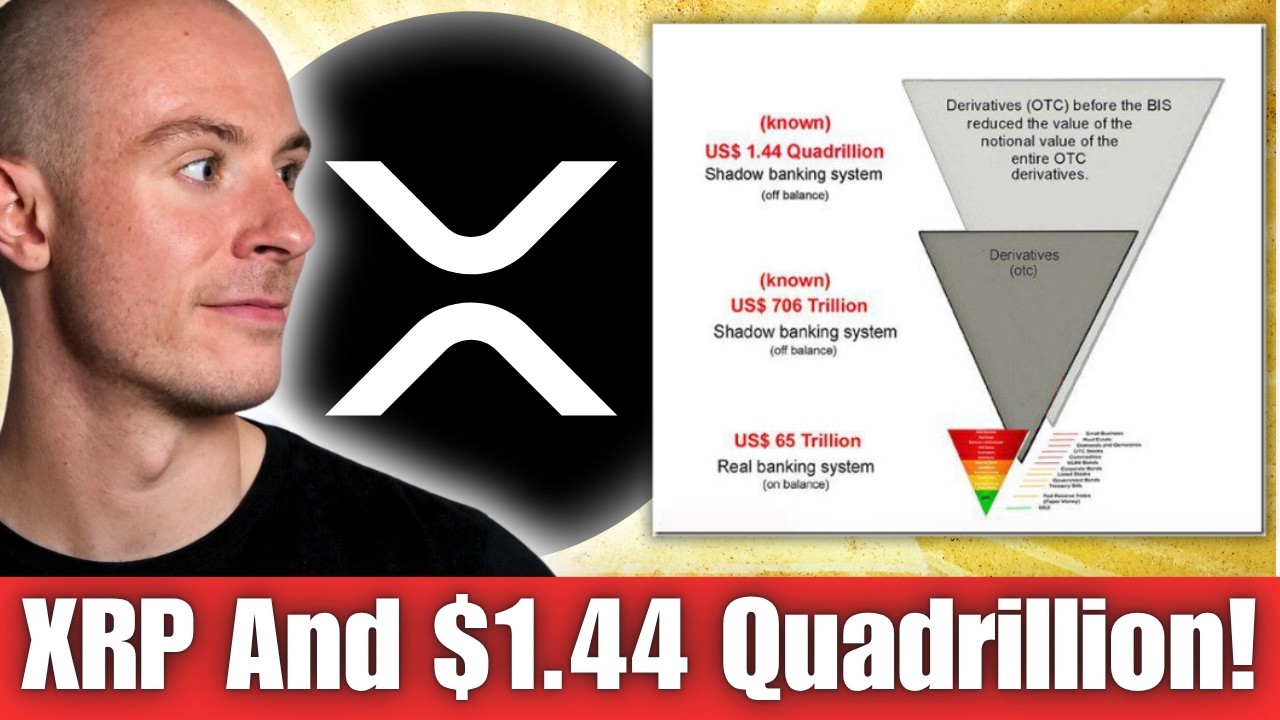
Ripple, XRP, ISDA And The $1.44 Quadrillion Derivatives Market….
ISDA’s agenda starts with market plumbing
ISDA’s case for digital assets begins with operational efficiency rather than token prices. The remarks identify faster settlement, improved intraday liquidity, greater collateral mobility, automation, and lower costs as potential benefits. That places tokenization inside existing financial-market processes instead of treating it as a parallel speculative economy.
“Digital assets such as crypto, stable coins, and tokenized assets can add value in traditional financial markets.”
This framing is important for the XRP thesis because institutional adoption is unlikely to depend on one generic claim that blockchain is faster. A useful system must connect trading, collateral calculations, custody, transfers, default procedures, and reporting. It must also work across regulated entities whose rights and obligations remain enforceable when assets move onchain.
- Settlement: Near instant transfers could reduce the time during which capital remains tied up.
- Liquidity: Better intraday management could help institutions respond to changing collateral requirements.
- Mobility: Cross border collateral could move more efficiently if systems and rules are interoperable.
- Automation: Smart contracts could calculate obligations and initiate transfers within controlled workflows.
These are infrastructure objectives. They do not determine which blockchain, token, custodian, or messaging layer will prevail. Multiple systems could serve different functions, while regulated institutions may retain conventional rails for parts of the process.
Why tokenized collateral attracts institutional attention
Collateral is central to the opportunity because it connects market exposure with liquidity. ISDA’s remarks identify money market funds as a promising source of collateral, while noting that operational workflows have historically prevented them from being posted directly. Tokenization could make those assets easier to transfer and manage, potentially reducing reliance on cash and government securities.
“By enabling near instant settlement, improving intraday liquidity management and enhancing crossber collateral mobility, tokenization has the potential to bring substantial efficiency gains to the derivatives market.”
The potential benefit is not simply speed. If tokenized assets can be mobilized when obligations change, institutions may gain more flexibility in how they meet margin requirements. ISDA also linked this possibility to market resilience, suggesting that broader collateral options could reduce the risk of liquidity squeezes during periods of stress.
However, tokenizing an asset does not automatically make it acceptable collateral. Market participants still need valuation policies, eligible-collateral rules, reliable custody, transfer controls, and enforceable claims. The technology can change the workflow, but it cannot remove the need for governance.
Ripple is assembling an institutional stack
The supplied material cites a 2023 ISDA report that announced Ripple as a new member. Because no primary-document URL was provided, we treat that membership reference as sourced context rather than independently verified documentation. Even with that limitation, Ripple’s stated direction fits several requirements identified in the ISDA remarks.
Ripple’s institutional strategy, as presented in the source material, spans institutional custody, prime brokerage, payments, tokenization, and ledger infrastructure. The transcript also cites Ripple’s April 2025 acquisition of Hidden Road for $1.25 billion as part of that expansion. Brad Garlinghouse connected the acquisition to the ambition of making XRP usable as collateral across institutional platforms.
“making XRP good collateral across uh lots of different institutional platforms is a big deal.”
- Custody capabilities: Institutions need controlled asset storage, segregation, auditing, and compliance processes.
- Prime brokerage: Hidden Road could connect Ripple with trading, financing, and collateral workflows.
- Ledger infrastructure: The XRP Ledger could support tokenized assets if institutions choose it for relevant activity.
- Liquidity asset: XRP could have a role only where counterparties accept it and its use improves a specific workflow.
This creates strategic optionality, not guaranteed XRP adoption. Ripple could win institutional business through custody or brokerage without routing that activity through XRP. Our earlier analysis of Ripple Prime’s expanding services reached the same essential test: corporate growth and ledger utility must be evaluated separately.
Smart contracts need enforceable legal foundations
Automation is only one layer of the system. ISDA expects smart contracts to support collateral calculations and token transfers, but its remarks also emphasize segregation rules, eligible depositaries, custody standards, collateral haircuts, and enforceability across jurisdictions.
“but tokenized collateral won’t move through the system on its own.”
Wallet-based structures can complicate rules designed for conventional accounts. Regulators and market participants must know whether customer assets remain separate from proprietary assets, which custodians may hold them, and what happens if a counterparty defaults. These questions are especially significant when tokenized assets, central bank digital currencies, or foreign stablecoins cross national boundaries.
“Any adjustments should be used to account for increased risks or genuine limits on the legal and economic rights conveyed to the token holders rather than the mere fact the asset has been tokenized.”
That principle supports technology-neutral treatment: a token should not receive an arbitrary penalty merely because of its format, but neither should tokenization obscure additional risks. Appropriate haircuts must reflect liquidity, legal rights, operational controls, and economic exposure. Effective netting must also remain legally enforceable after obligations are represented on digital infrastructure.
- Segregation: Customer assets must remain distinguishable from a firm’s proprietary holdings.
- Eligibility: Rules must establish which regulated custodians can hold tokenized collateral.
- Haircuts: Adjustments should reflect genuine risks and limitations rather than tokenization alone.
- Legal certainty: Ownership, transfer rights, default remedies, and netting must be enforceable.
The XRP utility gap remains the central test
The strongest evidence supports a broad institutional tokenization opportunity. It does not yet close the gap between Ripple’s commercial capabilities and demand for XRP. That gap is the central analytical issue for holders and market observers.
Several distinct outcomes are possible. Institutions could use Ripple custody while holding assets that have no connection to XRP. Ripple Prime could support trading and financing without settling through the XRP Ledger. Tokenized funds could use the ledger while relying on stable-value settlement assets rather than XRP. Alternatively, XRP could gain a defined role in liquidity, bridging, collateral, or settlement where it offers a measurable advantage.
The source material also relays a claim that Ripple touched roughly $16 trillion in transactions during a year while approximately 0.1% took place with XRP on the XRP Ledger. Without a supplied primary source, methodology, or definition of “touched,” we cannot independently validate or compare those figures. Even taken at face value, however, they illustrate why company-level activity cannot be treated as a direct proxy for token usage.
No verified market-size document was supplied for the $1.44 quadrillion figure used in the source title, so our analysis does not rely on it. The investable question is not whether derivatives represent a very large addressable market. It is whether XRP captures a necessary and recurring function within a defined part of that market.
What this means
- Institutional alignment is real but incomplete. Ripple’s custody, brokerage, and tokenization direction overlaps with the infrastructure needs identified by ISDA. That is strategically relevant, but it is not evidence of an ISDA mandate for XRP.
- Regulation may be as important as technology. Custody eligibility, segregation, collateral haircuts, interoperability, and default enforcement will determine whether tokenized assets can operate at scale.
- XRP needs observable utility. The thesis becomes stronger when institutions use XRP repeatedly for liquidity, collateral, bridging, or settlement and when that usage can be separated from Ripple’s broader business activity.
In our view, the measured interpretation is constructive toward Ripple’s positioning but neutral on automatic token demand. The company appears to be assembling services that could participate in institutional digital-asset markets. Whether XRP becomes economically important inside those services remains an outcome to verify, not an assumption to price in.
Bigger picture
The ISDA agenda sits within a broader shift toward regulated tokenized finance. Recent AllinCrypto coverage examined how the IMF mapped the XRP Ledger across tokenized finance, providing institutional context without proving adoption by any particular market participant.
Other developments show that infrastructure choices are becoming concrete. CSD BR’s work involving fund records on the XRP Ledger offers a specific ledger use case, while the SEC tokenization debate tests the XRP infrastructure thesis against regulatory requirements. These examples are more useful than broad market-size comparisons because they expose where a chain is actually being integrated and what remains unresolved.
We see the same pattern across tokenized finance: technical capacity is increasingly available, but institutional adoption depends on legal clarity, custody, interoperability, and credible economic incentives. Ripple may be well positioned to compete across several layers. XRP still needs a clearly evidenced role within the resulting architecture.
FAQ
Has ISDA selected XRP for derivatives settlement?
No such selection is established by the supplied material. ISDA’s quoted remarks address digital assets, tokenized collateral, custody, automation, and legal standards broadly. They do not identify XRP as an adopted settlement asset.
Why could tokenized money market funds matter?
ISDA’s remarks describe money market funds as a promising collateral source whose direct use has been constrained by operational workflows. Tokenization could make those assets easier to mobilize, subject to eligibility, valuation, custody, and legal requirements.
Does Ripple’s institutional growth guarantee XRP demand?
No. Ripple can provide custody, brokerage, payments, or tokenization services without every activity using XRP. Token demand depends on whether XRP performs a necessary role inside real institutional workflows.
What would strengthen the XRP collateral thesis?
Evidence of institutions repeatedly using XRP for collateral, liquidity, bridging, or settlement would strengthen it. Clear transaction data, named workflows, enforceable documentation, and an explanation of why XRP is required would be more persuasive than broad addressable-market estimates.
What could delay institutional tokenization?
Unresolved custody rules, fragmented national approaches, uncertain legal rights, inappropriate collateral treatment, and weak interoperability could all constrain adoption. ISDA’s remarks indicate that these legal and operational issues must be addressed before tokenization can scale.
Sources
This article is for informational purposes only and does not constitute financial advice.



Be the first to comment