



TL;DR
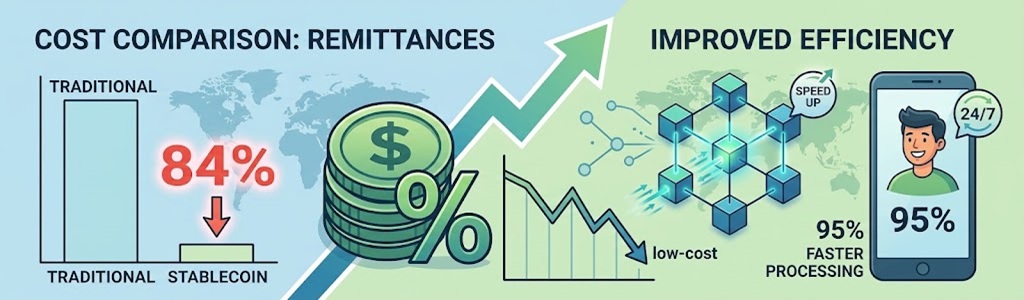
- Stablecoin-funded remittances cost a median of 1%, compared with 6.36% for traditional transfers, according to Borderless.xyz data.
- Cross-border payments using stablecoins can settle in minutes, offering a faster alternative to conventional international bank wires.
- Lower fees and faster settlement strengthen the case for stablecoins as practical financial tools, although payout reliability still varies across markets.
Stablecoins are gaining ground in international payments as new data shows they can significantly reduce the cost of sending money across borders. According to Borderless.xyz’s third-quarter 2026 report, stablecoin-funded remittances cost approximately 84% less than traditional transfers, highlighting their growing potential to improve access to affordable financial services.
Stablecoins Reduce Remittance Costs Across Key Markets
The report compares the cost of sending $200 through stablecoin-funded payment systems with traditional remittance services. Stablecoin transactions carry a median fee of 1%, equivalent to $2, while conventional transfers cost 6.36%, or $12.72, according to World Bank figures from the third quarter of 2025.
Although the figures come from different reporting periods, the comparison illustrates the potential savings offered by blockchain-based payment infrastructure. For families receiving money from relatives abroad, lower transaction costs mean a greater share of each payment reaches its intended destination.

The difference is particularly relevant in emerging economies. In Sub-Saharan Africa, stablecoin-funded remittances cost 2.9%, compared with 8.46% for traditional transfers. Latin America also shows a substantial gap, with costs of 1.25% for stablecoin-funded payments versus 5.64% for conventional alternatives. Both regions show significant potential for more affordable cross-border transfers.
Stablecoins, which typically maintain a value linked to currencies such as the US dollar, allow users to transfer digital representations of money across blockchain networks. Their potential advantage lies in reducing reliance on multiple intermediaries, although conversion fees, liquidity and local payment infrastructure still affect the final cost.
Faster Settlements Strengthen The Case For Stablecoin Payments
Business transactions also benefit from lower fees. Borderless.xyz reports that a $10,000 stablecoin-funded payment to the eurozone can cost as little as $26 through the lowest-cost provider. By comparison, traditional international bank wires cost between $135 and $150, including transfer fees and an assumed 1% foreign-exchange margin.
Settlement speed provides another advantage. During the third quarter, payouts through Brazil’s PIX and Colombia’s PSE networks recorded median settlement times of two minutes, while Mexico’s SPEI averaged three minutes. Traditional SWIFT transfers typically settled on the next business day, with the slowest 10% taking three business days.


Be the first to comment