


Uniswap [UNI] faces renewed selling risk as Binance inflows rise alongside its latest price rebound. At the beginning of 2021, UNI rose beyond $12 and then receded to nearly $3 by July 2022, while other inflow spikes were associated with subsequent fluctuations in the UNI price.
Moreover, the Z-Score rose above 40 by the end of 2025. Simply this indicates an extreme departure from historical average values for inflows as UNI continued to struggle.
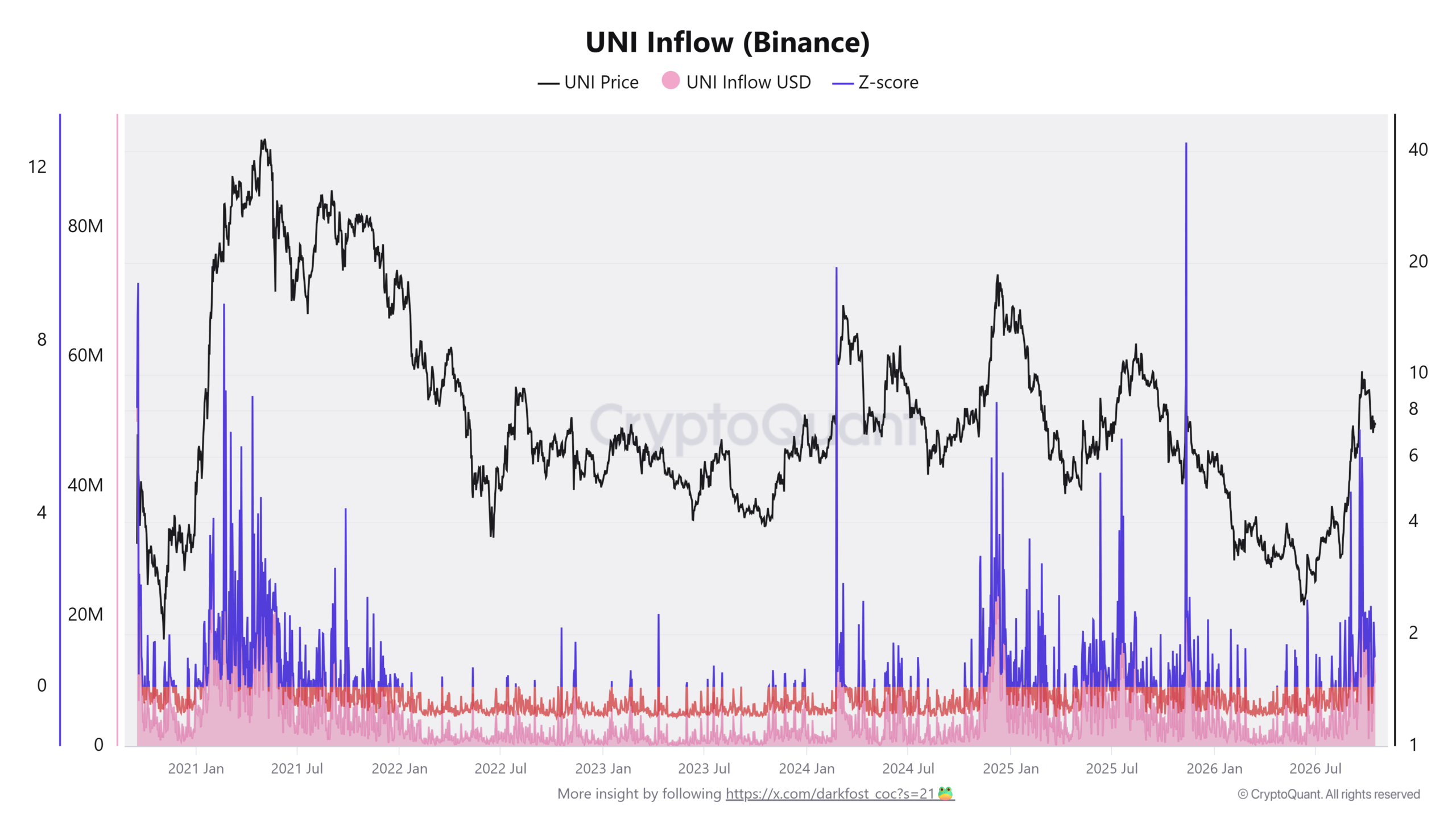
Recently, this metric reached nearly 10 again as UNI rebounded towards $7 and raised new concerns regarding potential distribution. This is important since rising exchange deposits can lead to an increased supply of tokens that are available for immediate sale.
Therefore, increasing selling pressure could limit potential upside momentum. However, if the rate of deposits begins to decline, it implies that distributions are slowing and there is greater support for UNI’s price rebound.

UNI exchange outflows increase
Although rising Binance inflows initially signaled distribution, Uniswap exchange netflows now suggest that selling pressure may be easing.
During the September 2020 inflow spike, Binance recorded net deposits exceeding 2.5 million UNI in a single day. Its reserves also climbed from 66 million to approximately 75 million UNI during this period.
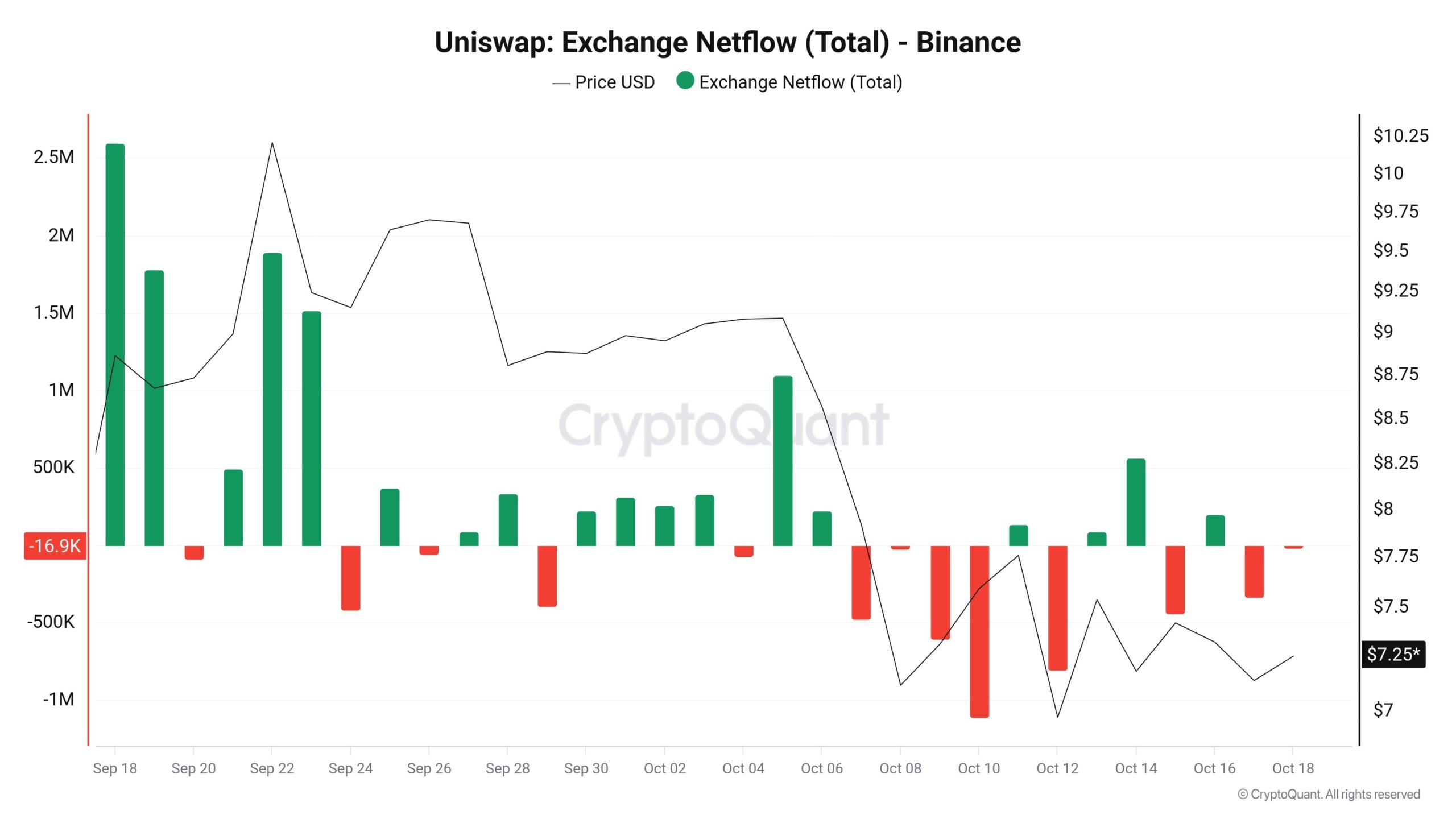
However, since then, exchange flows have since reversed. For instance, Binance flows recorded net withdrawals of roughly 1.1 million UNI in one day, while reserves continued declining after October 10. As a result, the total reserves have now fallen to approximately 72.9 million UNI.
Meanwhile, UNI’s price has dropped below $7.30, trading near $7.25 as of writing time. Continued outflows could reduce the supply available for immediate selling, easing sell-side pressure.
Ultimately, sustained buying demand remains essential for this reduced liquidity to support a lasting price recovery.
Grayscale increases UNI exposure
While Binance trends suggest decreasing selling pressure, Grayscale’s DeFi Fund presents an additional view as to how much institutions are exposed to DeFi.
Accordingly, as of the 16th of October, Uniswap was allocated to the fund in the largest amount at 38.15%. This represents a 4% increase compared to the fund’s 34% allocation in August.
Aave [AAVE] represented the second largest holding in the fund at 20.17%, followed by Ondo [ONDO] at 18.53% and then Ethena [ENA] at 15.90%.
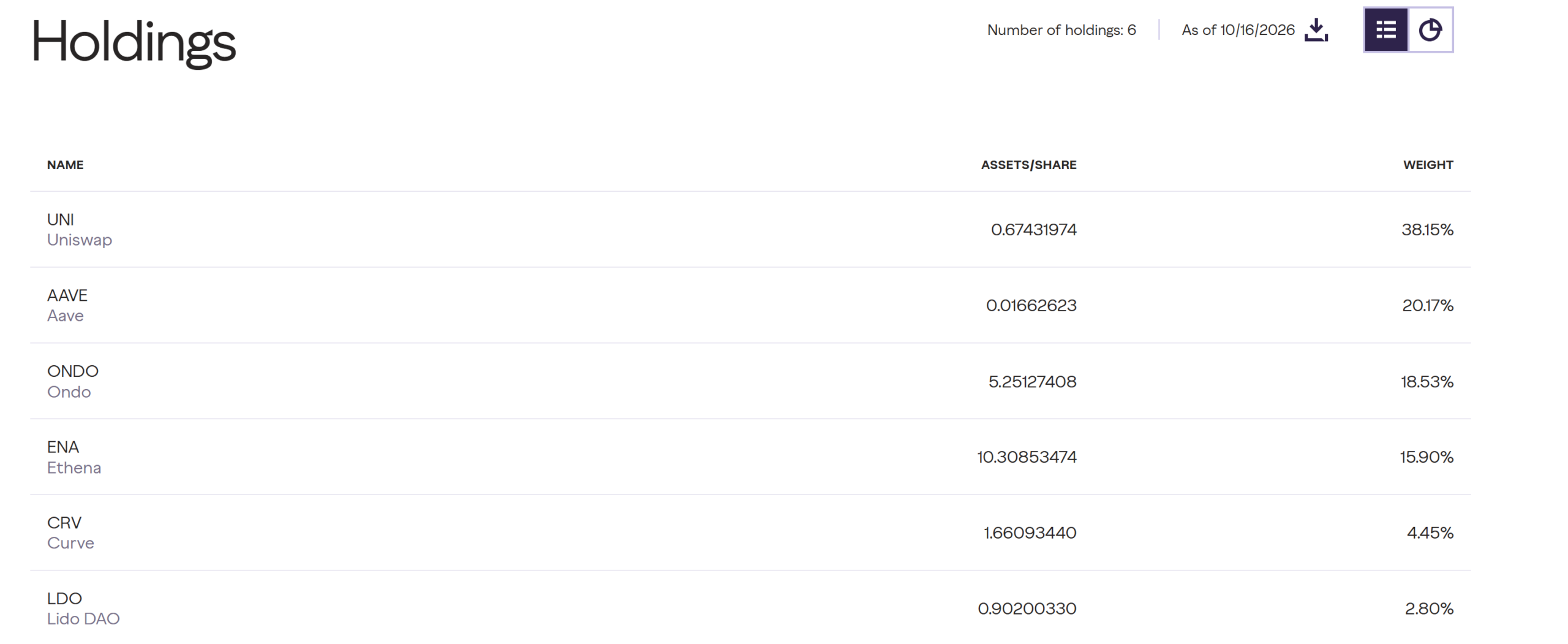
Since UNI represents the majority of the fund, it will have greater impact on the fund’s overall performance.
The declining percentage allocations of AAVE and ONDO indicate a shift in their relative exposures. Despite that, it does not necessarily indicate evidence of new institutional investors entering into either asset.
Final Summary
-
Uniswap [UNI] selling pressure may be easing, as Binance outflows reduce immediately available sell-side supply.
-
UNI’s recovery still needs sustained demand, since Grayscale’s large portfolio allocation does not confirm fresh institutional buying.





Be the first to comment