



Key Takeaways
- The Dow plunged 22.6% on Oct. 19, 1987, and its 39th anniversary falls on another Monday.
- Oil above $100, AI stock losses and inflation have revived Black Monday fears across Wall Street.
- Bitcoin has held near $82,000, while U.S. stock market circuit breakers provide safeguards absent in 1987.
Wall Street’s Black Monday Ghost Returns as Oil, AI, and Inflation Rattle Markets
Wall Street has a date with an old nightmare. On Monday, Oct. 19, 2026, the 39th anniversary of the infamous 1987 Black Monday crash arrives with stocks battered, oil above $100 a barrel and investors increasingly nervous about the artificial intelligence (AI) boom.
The original catastrophe erased 22.6% from the Dow Jones Industrial Average in a single trading session, a record that still stands. Now, with technology shares taking a beating and inflation refusing to cooperate, social media is drawing comparisons to that historic financial calamity. But does the market actually resemble 1987, or is Wall Street chasing ghosts?
“Calls for a ‘Black Monday’ are spreading rapidly across social media right now,” The Kobeissi Letter wrote on X on Saturday. “If history is any guide, this means the S&P 500 should hit 8,000 soon. Ignore the noise.”
The 1987 Anniversary Meets a Bruised Stock Market
The coincidence is enough to raise eyebrows. On Oct. 19, 1987, the Dow suffered its worst one-day percentage decline, wiping approximately $500 billion from U.S. equity valuations. Automated trading and portfolio insurance strategies amplified the selling, transforming market weakness into a full-blown rout. Thirty-nine years later, the anniversary falls on precisely the same weekday.

“Black Monday is tomorrow,” the X account known as MBAeconomics told his 18,700 followers. “Stocks will crash. Hopefully, you have dry powder ready to buy the dip in precious metals and mining stocks. In environments like this, gold outperforms everything.”
Friday’s trading provided fresh ammunition for the doomsayers. The S&P 500 finished Oct. 16 at 7,659.44, down 1.09%, while the Nasdaq Composite lost approximately 2.2%. Artificial intelligence-related companies bore much of the punishment. Coreweave dropped nearly 12% in Friday’s session as investors questioned the economics of enormous AI infrastructure commitments.
“WARNING: TOMORROW WILL BE THE WORST BLACK MONDAY IN HISTORY,” the social media account Cryptonobler said to his 389,800 X followers. “98% of people will lose everything. Markets have officially entered panic mode.” Cryptonobler added:
“For the first time EVER, something just broke in the economy. If you hold any assets today, you MUST read this before October 19: When markets open on Monday, this won’t be just a routine correction. What is happening right now is anything BUT normal.”
Oil Above $100 and Inflation Put the Fed in a Bind
Energy markets have thrown another wrench into Wall Street’s calculations. Brent crude approached $110 a barrel, while West Texas Intermediate traded above $100 amid geopolitical tensions involving Iran, the Strait of Hormuz, and attacks on energy infrastructure. Higher energy costs threaten to complicate inflation further. September’s consumer price index reportedly reached 3.7% annually, while the Federal Reserve’s September rate increase placed its benchmark target between 3.75% and 4%.
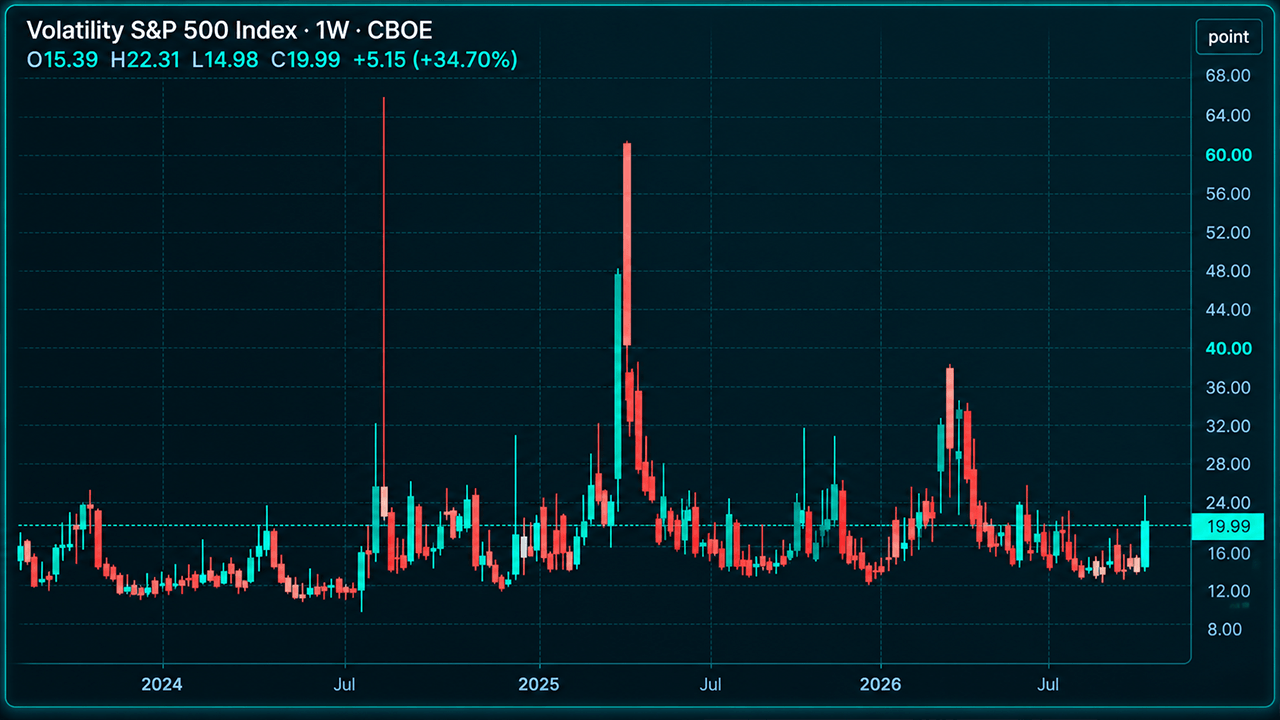
Meanwhile, the Cboe Volatility Index, commonly called the VIX, climbed toward 20 as investors paid more for protection against market turbulence. The combination recalls some of 1987’s underlying pressures, particularly elevated valuations, interest-rate anxiety and concerns about excessive financial leverage.
AI Stocks Take a Beating as Gold and Bitcoin Hold Their Ground
AI, previously a principal engine of stock market enthusiasm, has become a source of financial unease. Coreweave’s recent weakness reflects mounting questions about borrowing costs, infrastructure spending, and whether future AI revenues can justify today’s enormous investments. Some of the company’s debt reportedly approached yields of 15%, reflecting heightened concerns about financing risks.
Elsewhere, gold traded around $4,150 to $4,200 per ounce, while silver hovered near $56 to $58. Bitcoin’s price, meanwhile, changed hands around $80,400 to $81,000 over the weekend, displaying relative stability compared with Friday’s technology-sector losses. The broader cryptocurrency market stood near $2.7 trillion. That resilience offers little guarantee against a wider liquidation event, particularly if investors begin selling liquid assets to cover losses elsewhere.
Wall Street Has Safeguards That Didn’t Exist in 1987
Here’s where the Black Monday comparison runs into trouble. Modern U.S. stock exchanges operate market-wide circuit breakers that interrupt trading when the S&P 500 falls 7% or 13%. A 20% decline triggers a trading halt for the remainder of the session. Those protections emerged from the lessons of 1987 and subsequent market disruptions.
Today’s selling also remains concentrated in technology rather than spreading uniformly across the financial system. Still, elevated borrowing costs, expensive energy and heavily financed AI projects represent genuine vulnerabilities. Still, not everyone is buying the bearish rumors. For instance, one individual on X wrote:
“Black Monday never happens when 99% of people expect it.”
The anniversary itself predicts nothing. Yet Wall Street enters Monday facing an uncomfortable question. If the AI investment boom starts losing its financial footing, who gets stuck footing the bill?


Be the first to comment