


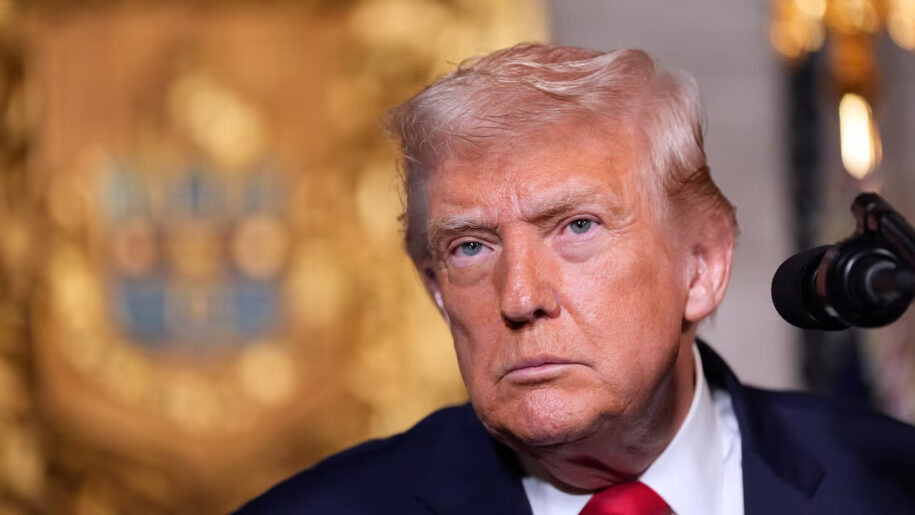
Donald Trump is set to spotlight overseas crypto scams at a White House event on Wednesday, as Americans filed more than a million scam complaints with the FBI last year.
Key Takeaways
- Crypto-related losses reported to FBI: $11.4 billion
- Xinbi action: $52 million restrained, $12 million seized
- Strike Force has restrained about $938 million
- OneCoin victims waited until 2026 to file claims
Trump is expected to be joined by FBI Director Kash Patel, Attorney General Todd Blanche, Homeland Security Secretary Markwayne Mullin and Defense Secretary Pete Hegseth, a White House official told Reuters, with seizures of fraudulent crypto investment websites and action against impersonation scams on the agenda.
The event follows a March 6 executive order directing federal agencies to prioritize cyber-enabled fraud. One of the main enforcement vehicles is the Scam Center Strike Force, launched by U.S. Attorney Jeanine Pirro in Washington in November 2025, which had restrained about $938 million as of September. For anyone who lost money, the figure that matters is a different one: how much of it reaches victims.
The investment can be fake even when the crypto is real
To see why that number lags, start with where a victim’s money goes. The FBI’s 2025 Internet Crime Report describes how these schemes typically unfold: contact through a text, an ad, social media or a dating app, a move to a messaging service, investment guidance from a new acquaintance and, finally, a platform where the balance climbs day after day.
The deposits are real cryptocurrency, often bought on a legitimate exchange. The exchange did its job: the purchase cleared and the coins went to an address the scammers control. From that point, the growing balance on screen is invented, and getting the money back depends on someone freezing or seizing it before it moves again.
The warning sign often comes at withdrawal. The platform announces a tax, a fee or a verification deposit that must be paid before funds are released. A platform actually holding your money could deduct a fee from the balance. Demanding new money is how the scheme collects one more payment before going silent.
Crypto-related losses reported to the FBI reached about $11.4 billion in 2025. Investment fraud accounted for $7.2 billion of that, up 24% on the year, and crypto schemes made up 72% of the 72,984 investment-scam complaints. The Justice Department says the real figures are likely higher because many victims never report.
Scam operators rent the website and the laundering
Some of these operations are assembled from bought parts. On September 9, the Strike Force announced action against Xinbi Guarantee, which an unsealed seizure warrant describes as a Chinese-language Telegram marketplace where vendors sold custom scam investment websites, money laundering and recruitment of workers for scam compounds. Pirro likened it to buying a website and a laundering service “the way you order takeout.”
Xinbi also acted as guarantor. When a scam operator bought a service, Xinbi held the payment until the vendor delivered, which gave buyers confidence and left those payments in wallets Xinbi controlled. Investigators seized two of them, holding about $12 million, and sought restraints on 47 more tied to laundering vendors. More than $52 million was restrained across the network, and the Treasury Department sanctioned Xinbi the same day.
The DOJ credited Tether with proactive help. Tether can block USDT held at a specific address, while bitcoin has no issuer with that power and has to be seized from whoever controls the keys or from a custodian such as an exchange. For victims, that means stablecoin proceeds are generally easier for authorities to stop before they disappear.
Arrests follow a separate track. In the same announcement, the DOJ said a Strike Force team helped authorities in Madagascar take down 13 Chinese-run compounds, where nearly 400 people were arrested. At least 30 of them, identified as compound leaders, were repatriated to China by the Chinese government. Many people inside such compounds are trafficking victims themselves, so arrest totals can include the coerced as well as the organizers.
Frozen is not forfeited, and forfeited is not paid
For victims, the practical question about any enforcement headline is which stage it describes. The October 13 results from a joint operation focused on West Africa show how easily the numbers blur.
The DOJ reported 28 arrests and said companies including Meta, Google, Binance and Coinbase had removed more than 3.7 million accounts, Pages and Groups. Those accounts were linked to law enforcement impersonation, digital arrest extortion and other schemes as well as crypto investment fraud, so the total doesn’t tell you how many fake crypto platforms went offline.
The dollar figure needs the same care. Private-sector partners identified more than $11 million in potentially freezable funds, meaning money flagged for possible action. In Ghana, authorities identified 89 victims with losses of about $8.3 million. The release does not report any money returned to victims.
- 1
Removed. Websites, accounts or channels are taken offline. That stops new victims but returns nothing. Example: the October account removals.
- 2
Restrained or seized. Funds are frozen or moved into government custody, where owners and claimants can still contest them. Example: the Xinbi wallets.
- 3
Forfeited. A court gives the government final title to the assets. What to look for: a forfeiture notice published on forfeiture.gov.
- 4
Paid. Forfeited money is distributed to eligible victims through a remission process. What to look for: a petition form, eligibility rules and a filing deadline.
Money can make it through all four stages. The DOJ’s Money Laundering, Narcotics and Forfeiture Section says it has returned more than $12.5 billion in forfeited assets to crime victims since 2000. The process is slow, though. Investors in Ruja Ignatova’s OneCoin, which sold a fake cryptocurrency between 2014 and 2019, could only file remission petitions in 2026, with a June 30 deadline, after prosecutors in New York pursued forfeiture of the scheme’s proceeds.
Britain’s largest crypto seizure shows the same delay under different law. London police seized about 61,000 bitcoin linked to Zhimin Qian’s fraud in 2018, and the fight over who gets it was still unresolved in 2026, with investors in China challenging how compensation should work.
For Xinbi-linked funds, one concrete sign to watch is a forfeiture notice on forfeiture.gov. Without one, the restrained money is still a long way from victims.
The next message promising your money back
Enforcement announcements also give recovery scammers material. A White House event that names real seizures hands them a ready-made story: your funds were among those recovered, and a small fee will release them. The FBI warns that investment fraud victims can be targeted again by people offering to retrieve their losses.
Such messages may claim to come from the FBI, a law firm working with investigators or a blockchain tracing company, and may name a real case. A case the victim can look up makes the rest of the message easier to believe.
How a real DOJ claims process works
- It can be checked on official DOJ websites
- You file the petition yourself, no lawyer needed
- There is no fee to file or take part
- Filing does not guarantee payment
Signs of a recovery scam
- Unsolicited contact saying your funds were found
- An upfront fee, tax or release deposit
- Claims of working with the FBI or IC3
- Pressure to act fast or keep it private
The FBI’s Internet Crime Complaint Center says it does not work with private law firms or crypto recovery services, and its staff will never contact anyone directly to ask for information or money. Impersonation attempts can be reported on the IC3 website, including the address of any fake site. IC3 cannot respond to every complaint, and a report gives investigators evidence without any promise of a refund.
If a message tied to today’s crackdown says your money has been found, check the case on justice.gov before replying, and treat any request for payment as a reason to stop.

Alex is Editor-in-Chief of Coindoo and co-founder of Millennial Media Group, with nearly a decade of experience covering financial markets – crypto first, then everything else.
It started in 2016 with Bitcoin. Like most people at the time, he didn’t fully understand it – so he kept digging. Blockchain, tokenomics, the projects, the cycles. That curiosity never stopped, and eventually pulled him into traditional markets too: equities, commodities, macro. Not because he left crypto behind, but because you can’t properly understand one without the other.
What drives him is straightforward: he wants to know why something is happening, not just that it’s happening. Most market coverage stops at the headline – price up, price down, here’s a chart. Alex finds that kind of reporting actively unhelpful. If you walk away from an article without understanding the mechanism behind the move, what did you actually learn?
He holds a degree in Tourism from New Bulgarian University – not the most obvious path into financial markets, but markets have a way of pulling in people who are simply too curious to stay out. He has authored over 200 in-depth analyses and more than 10,000 articles across crypto and traditional finance. He still thinks every day in markets teaches him something new. That’s probably why he hasn’t stopped.



Be the first to comment