



TL;DR: On Day 1 of DigiCon 2026 in Manila, speakers framed interoperability as the key to using artificial intelligence (AI) effectively. Rep. Javi Benitez said the Philippine creative economy is worth PHP 2.12 trillion ($33 billion). DoubleVerify’s Tinee Cruz said AI brings scale while humans bring judgment. FEATR founder Erwan Heussaff said that culture needs stories to survive and that humanity will remain central to what attracts people to it.
Key Takeaways:
- Interoperability is the ability of systems, devices, or organizations to connect and exchange data in a coordinated manner, and it was the central theme of DigiCon 2026.
- Dr. Christian Busch says interoperability creates unexpected opportunities in chance moments between people.
- The Philippine creative economy reached PHP 2.12 trillion, or 7.6% of GDP, by 2025.
- An interoperable creative economy runs on five rails: rights, money, data, skills and credentials, and stages.
- AI brings scale, while humans bring judgment and nuance.
- Culture that lives online will disappear, so it must attach to physical spaces and products.
How can interoperability between organizations happen?
On Day 1 of Digicon 2026, culture, AI, and content creation were at the center stage, explaining how tech and humans can still collaborate in this digital era.
The day started with opening remarks for DMAP’s co-chairs, Shayne Madamba and Raymund Sison, also hosts of the conference. Welcoming remarks were also heard from Miko David, DMAP’s President. By mid-morning, we heard from Dr. Christian Busch, Rep. Javi Benitez, and Tinee Cruz about the convergence of AI in our daily lives, the government, and even in the media. Then, by afternoon, impactful discussions about culture, hospitality, and collaboration concluded the day.
From entertainment to government to media, here’s how the day’s speakers made the case for interoperability as the defining idea of our digital moment.

Connecting the dots in AI via government, media, and culture
Before we get into the happenings of Day 1, let’s tackle what interoperability is, since this was the key message of DigiCon 2026.
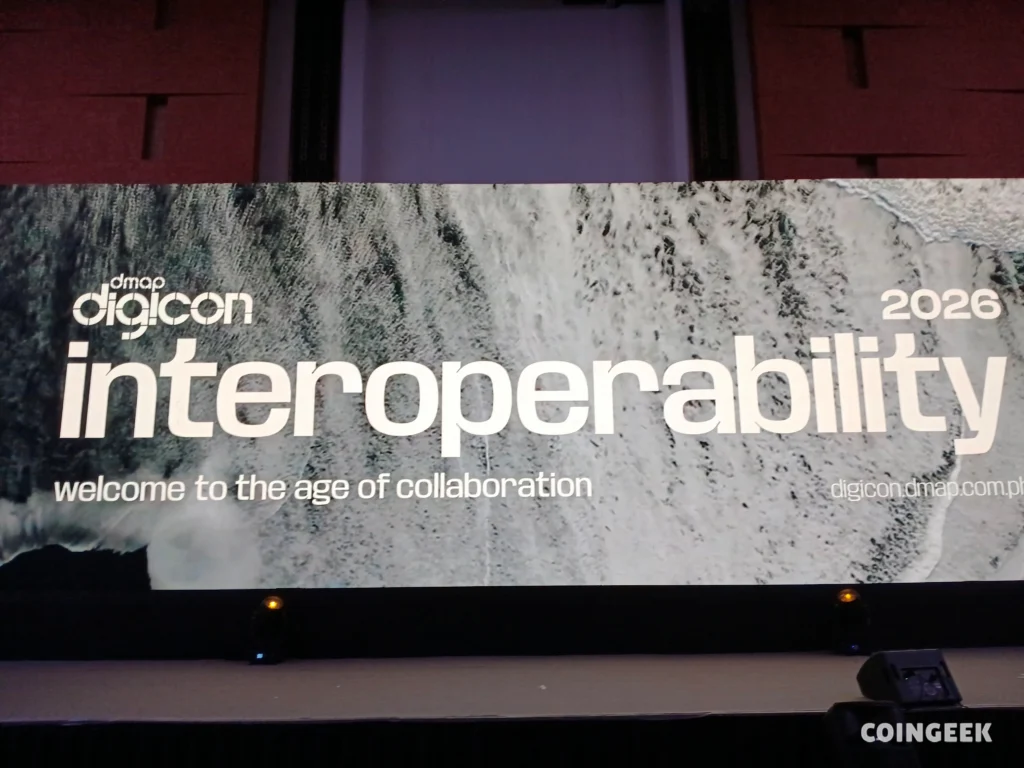
A quick Google search shows that interoperability is the ability of different systems, devices, applications, or organizations to connect, communicate, and exchange data or services in a coordinated way. This theme was very apparent on Day 1, with three keynote speeches by Dr. Busch, Benitez, and Cruz kicking off the conference.
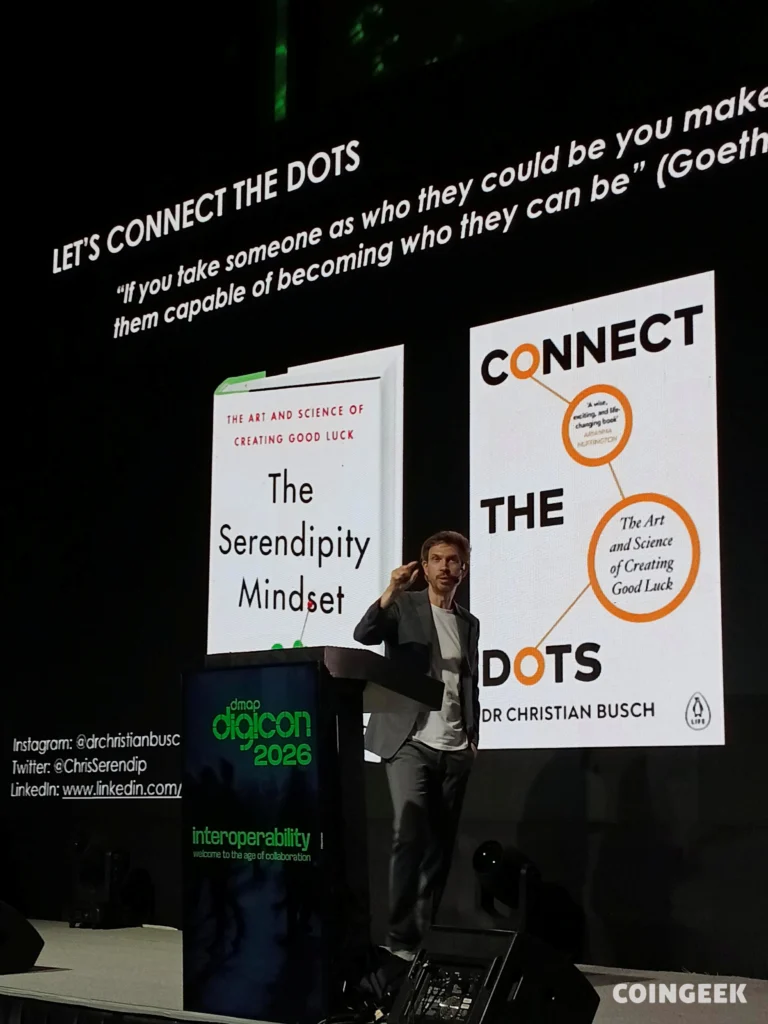
Dr. Busch—the international bestselling author of “Connect the Dots”—explained that “the power of interoperability is that there are always unexpected opportunities in chance moments between people.”
His core idea centered on luck and the power of bringing new ideas to the table, even in the age of AI.
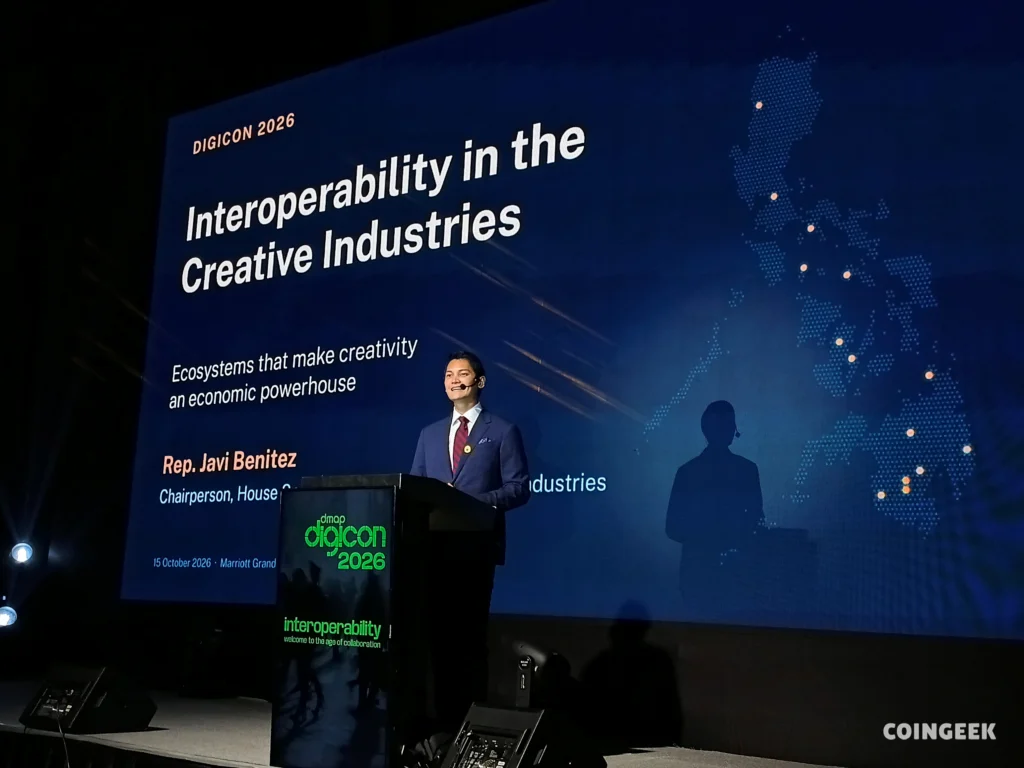
It was different, though, for Benitez—Representative of the Third District of Negros Occidental—who treated interoperability in the creative industry as the theme of his whole talk.
As the chairperson of the Philippine House Special Committee on Creative Industries and also a former actor, Benitez said he has experienced how creatives are often belittled by society. However, in contrast to the statements creatives often hear, Benitez revealed that in 2025, the creative economy has reached PHP 2.12 trillion ($33 billion), or 7.6% of the country’s GDP, according to the Philippine Statistics Authority’s March data. It currently employs 8.7 million of the Philippines’ 118 million people.
“You’re not next to the creative economy. You are one of its engines,” Benitez said.
Benitez also described an interoperable creative economy having five rails: Rights, Money, Data, Skills, and Credentials, and stages, while also explaining the progress of AI in the industry and how an AI bill he helps draft can restore artists’ voices.
Speaking of AI, Tinee Cruz, Senior Business Director – Philippines at DoubleVerify, shared that almost everyone in the country is already using AI. In her research, she found that 77% of people in the Philippines already “love AI tools,” compared to 45% who feel negatively about them.
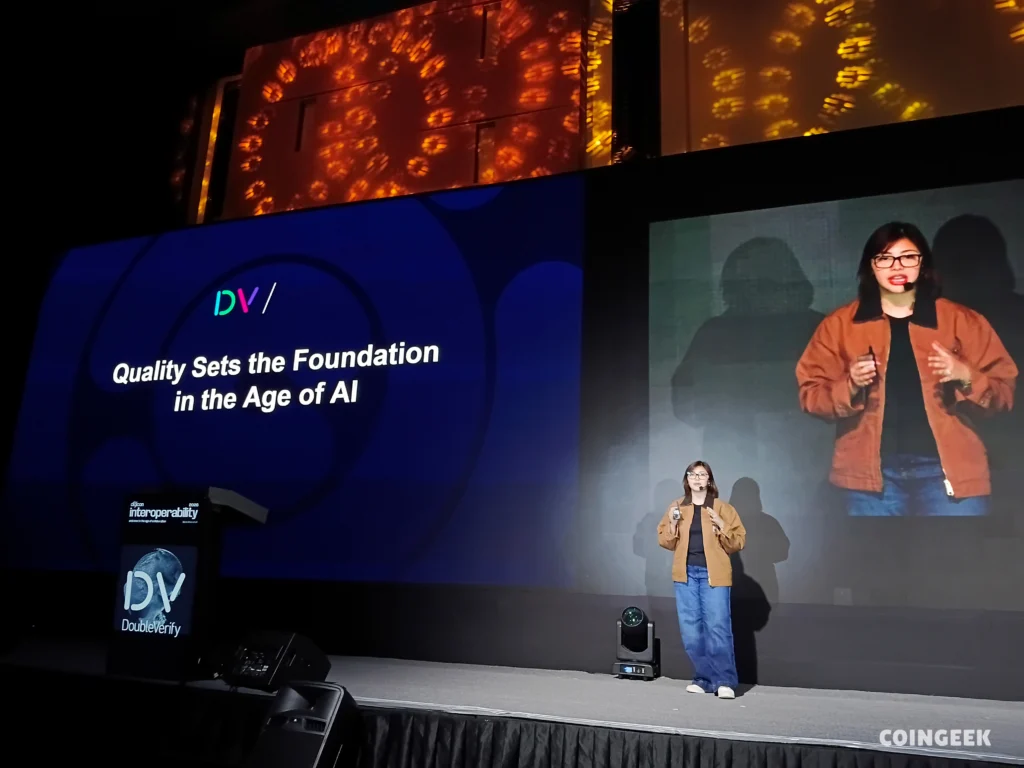
She explained that despite the positive sentiment toward adopting the tech, quality still matters in this day and age. “Real ROI is measured in two layers: Media quality and brand trust,” Cruz said, quoting the CEO of WBP Media Philippines.
“AI brings scale, and then humans bring judgment. We also bring in the nuances.”
“There’s always a good and a bad with AI—you always have to find what’s bad and then you battle [it] out with the good. That’s how I always see it.” – Tinee Cruz, Senior Business Director – Philippines at DoubleVerify.
We can still build businesses and creativity while also resisting norms
In the afternoon on Day 1 of Digicon 2026, the event was divided into three tracks: Innovation, Integrated, and Interactive.
As we have more conversations about AI, as Cruz has coined it, with every technology comes the stripping out of the bad. That is what Ali Rez, Regional Chief Creative Officer (CCO) of the IMPACT BBDO Group, has highlighted by tackling resistance as a culture in Lebanon and how it can support “contrarianism.”
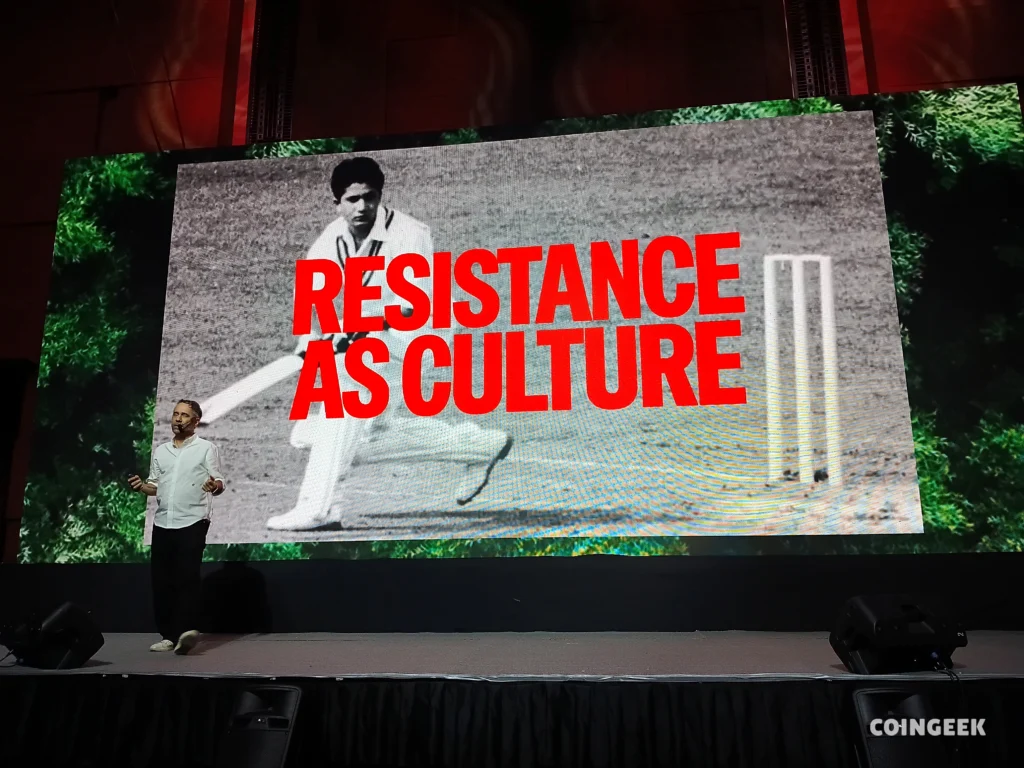
And one who probably embodies contrarianism in the Philippines’ digital-first ecosystem is Erwan Heussaff, founder of the popular video channel FEATR.
Heussaff appeared in a fireside chat with Bryan Yap, CEO and Founder of RGC, discussing the steps he had taken to build his digital media company, FEATR.
Heussaff mentioned that launching a digital-first company was challenging, despite the increase in digital content creation. He was starting from scratch, having transitioned from a background in hospitality management between 2009 and 2010.
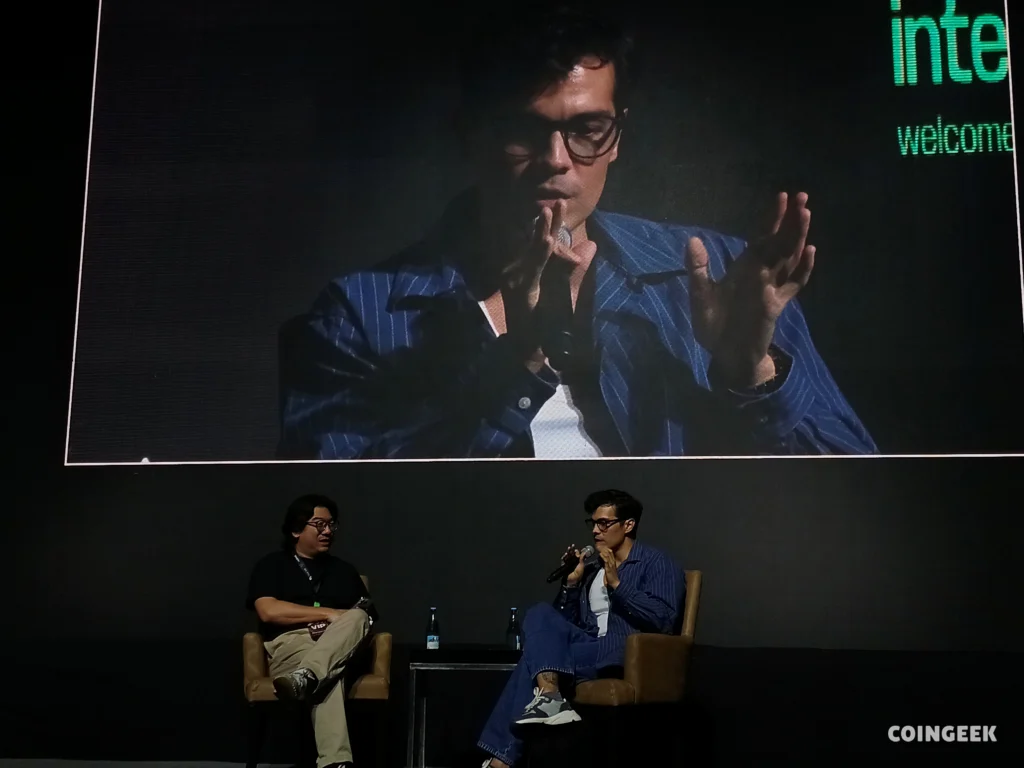
However, Heussaff admitted that it was never his plan to start a media company. Still, his passion for food has driven him to want people to learn more about the industry and how hospitality can go hand in hand with media.
“I think anyone who started in 2010 – 2012 that tells you that they were starting a digital media company was lying to you,” he said. “I don’t think anyone at that point could have planned that out because it was a very nascent technology. It was a nascent way of sharing and producing information. And only a few years in, I’d say maybe 2014, 2015, did you really start seeing it as a separate industry.”
Heussaff explained that consumers now have many fragmented ways of consuming information. In the past, we primarily gathered information from a few broadcast channels. However, he views this change not as a bottleneck but as an opportunity to provide more positive and uplifting storytelling that showcases Filipino culture.
“Now [that] we’ve become part of this ecosystem—we’re part of this fragmented information—we are just trying to make people care about certain things, and we’re trying to reach them where they are,” Heussaff explained. “Before, I think, because of these large media companies, there’s a lot of distrust due to the single information source. What we did was start creating videos that clearly have no bias, clearly have no intention, just pure information showcasing the beauty of the country.”
“What we realized 1792652646 is people just don’t care. So how do you make people care? You kind of have to make stories and noise about it, right? So people understand the value of it,” he added.
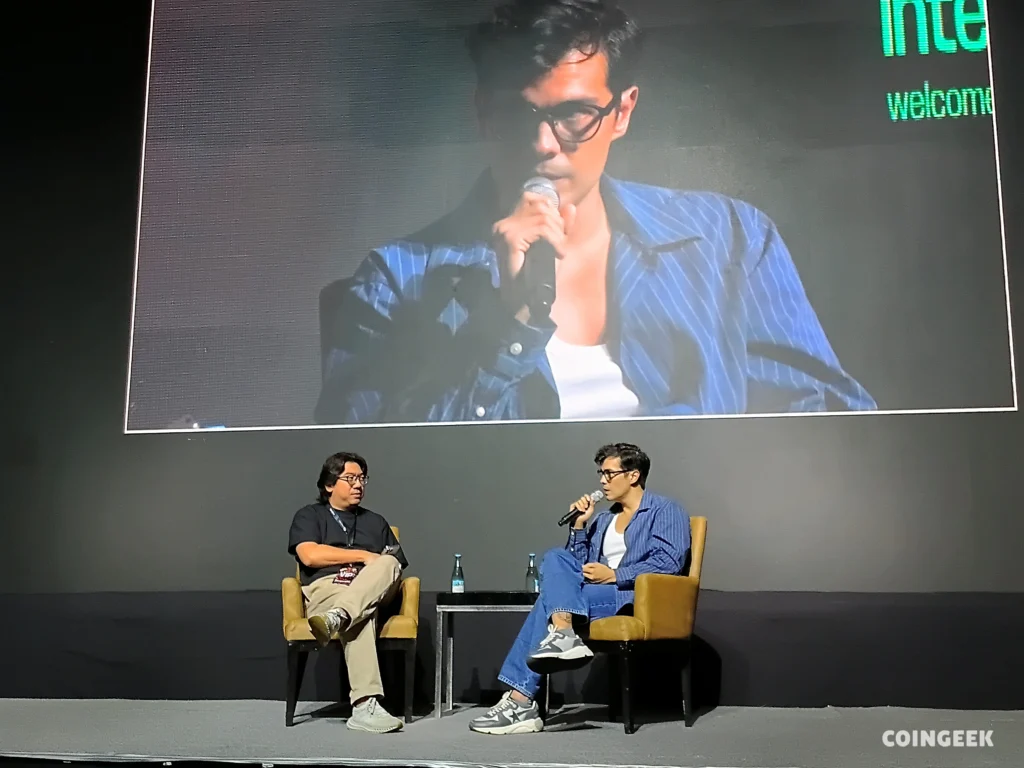
His last lesson is that culture won’t survive if it’s anchored on the internet. Heussaff realized the ironic positioning in culture now. If in the past we only had a single source of truth, now there’s way too much information.
“How do you retain information is you have to attach that information or that cultural value to a physical space and physical product,” he noted. “If culture just lives on the internet, it will eventually disappear…if it’s to be carried forth, you need to try to incentivize the business aspect of things. You need to inspire other businesses.”
Talking about his advice to any business without an obvious story, Heussaff said to show the process, including the struggles and imperfections, because as AI spreads, humanity will remain what draws people in.
“As AI becomes way more popular, humanity will still be the core of what attracts people to a certain story or to a certain product,” he said.
After Heussaff’s fireside chat, a debate broke out between representatives from the University of the Philippines (UP) and De La Salle University (DLSU) over whether AI still needs a human touch. Dogshow Diva’s Macoy Dubs and Baus Rufo also attended Digicon, comparing life as content creators with working at agencies. Meanwhile, Day 1 of the Integrated track finishes with a panel discussion on AI collaboration and inclusive marketing.
Day 1 of Digicon 2026 made one thing clear: interoperability isn’t just a technical term. Busch found it in the chance of connections between people; Benitez built it into the rails of the growing creative economy in the Philippines, while Cruz and Heussaff showed that even as AI brings scale, humans still bring judgment, nuance, and stories that make people care.
If Day 1 is any sign, it signals that the future won’t be built by technology of people alone, but by how well we connect and collaborate. And with Day 2 still ahead, we’re just getting started.
FAQs:
What is DigiCon 2026?
DMAP’s flagship digital marketing conference, held October 15–16 at the Manila Marriott Hotel under the theme “Interoperability: Welcome to the Age of Collaboration.”
What is interoperability?
It’s the ability of systems, devices, or organizations to connect and exchange data or services in a coordinated way. It was DigiCon 2026’s central theme.
How big is the Philippine creative economy?
It reached PHP 2.12 trillion ($33 billion), or 7.6% of the country’s GDP, by 2025, and employs 8.7 million people, per PSA’s March 2026 data.
Do Filipinos like AI tools?
A DoubleVerify study cited by Tinee Cruz found 77% of Filipinos are “loving AI tools,” while 45% feel negatively about them.
Can culture survive on the internet alone?
Not according to Erwan Heussaff. He said culture must be tied to physical spaces and products to endure.
What are the five rails of an interoperable creative economy?
Rights, money, data, skills and credentials, and stages, according to Rep. Javi Benitez.
In order for artificial intelligence (AI) to work right within the law and thrive in the face of growing challenges, it needs to integrate an enterprise blockchain system that ensures data input quality and ownership—allowing it to keep data safe while also guaranteeing the immutability of data. Check out CoinGeek’s coverage on this emerging tech to learn more why Enterprise blockchain will be the backbone of AI.
Watch: AI and Blockchain Transform Philippine Finance




Be the first to comment