



What to know:
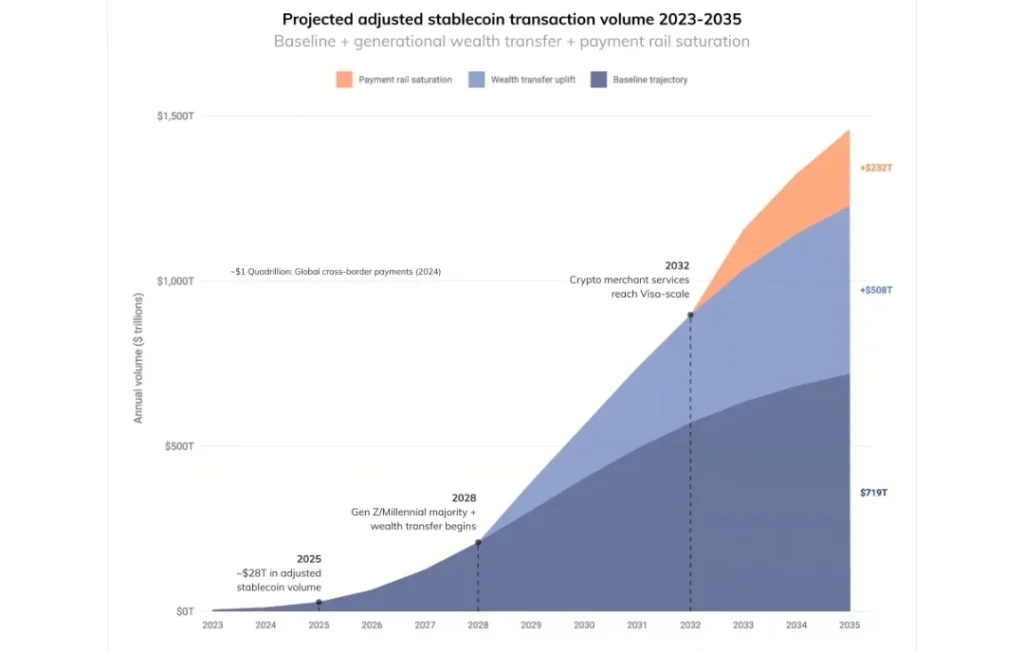
- Stablecoin usage has been projected to hit about $1.5 quadrillion by 2035, with most of its activities driven by faster, cheaper, and borderless payments.
- As adoption increases, stablecoins are closing in on traditional networks like Visa and Mastercard.

Overtime, Stablecoins have emerged as a serious challenge to the global and traditional payments system. A new report by Chainalysis shows that stablecoin usage is growing at an extraordinary pace. This new and in-depth data by Chainlysis suggests that these digital USDT payment systems and assets could soon compete with traditional payment giants.
In 2025, stablecoins processed about $28 trillion and most of these funds were used in real economic transactions. This number shows that many users made use of it for payments and remittances rather than just inflated on-chain activity.
Source: Chainlysis

If current growth continues, that number could rise to hundreds of trillions by 2035, with projections reaching as high as $1.5 quadrillion under favorable conditions.
Also Read: Crypto Market Shifts in 2026: Regulatory Clarity and Market Volatility Ahead
This surge is being driven by the core advantages of stablecoins: faster settlement, lower costs, and the ability to operate globally without intermediaries. Unlike traditional systems that take days to settle transactions, digital USDT can complete transfers in seconds and run continuously without downtime.
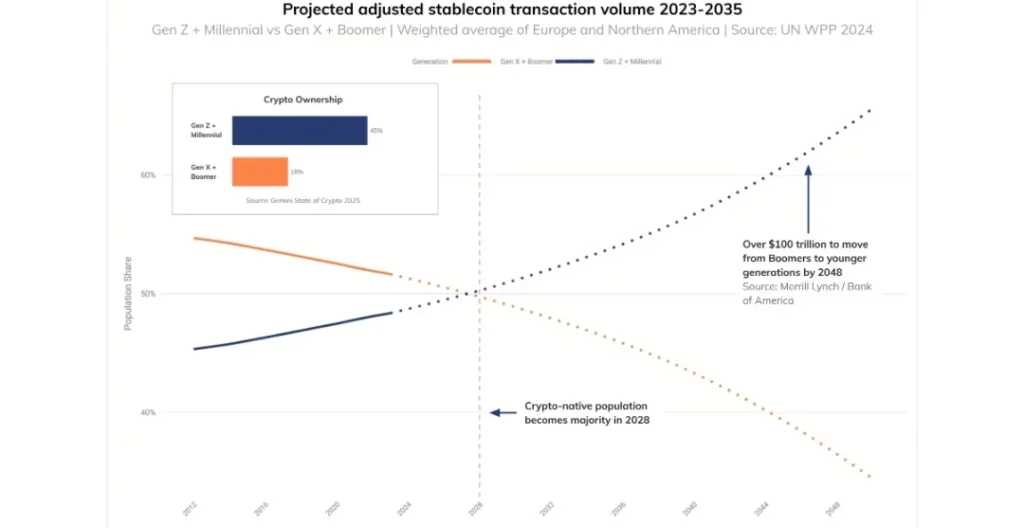
Another major factor is the changing financial landscape. Over the next two decades, up to $100 trillion is expected to pass from older generations to younger ones, particularly Millennials and Gen Z, who are more comfortable using digital assets. This shift alone could significantly boost crypto adoption and transaction volumes.
Source: Chainlysis
At the same time, digital USDT are beginning to move into everyday payments. What is now a deliberate choice paying with crypto could soon become automatic as merchants increasingly accept digital USDT at checkout. As this happens, using crypto may feel no different from using a debit or credit card.
Stablecoin Race Against Traditional Payment Networks
Stablecoins are not just growing, they are slowly approaching the scale of major card networks like Visa and Mastercard.
Current projections suggest that digital-pegged transaction volumes could match these networks sometime between 2031 and 2039. If adoption accelerates faster than expected, that crossover point could come even earlier, putting real pressure on traditional financial systems.
Many huge financial firms have started to position themselves for the shift, companies like Stripe and Mastercard have tried to integrate stablecoins into their infrastructure.
Also Read: Circle Expands Stablecoin Payment Service in Asia with Circle Mint Singapore in 2026



Be the first to comment