

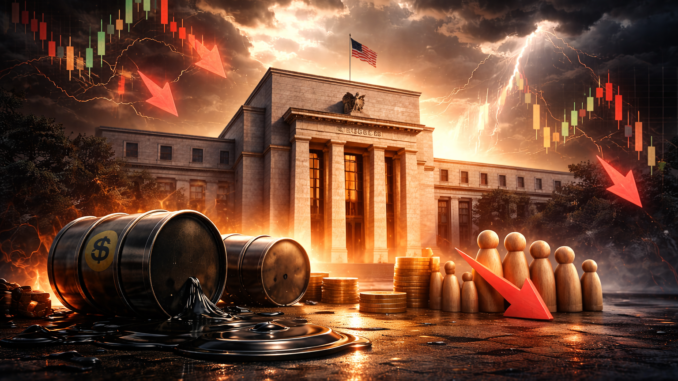

Interest rate expectations remain steady as the Federal Reserve holds its benchmark rate between 3.5% and 3.75% following its March meeting. Policymakers signal patience, yet they continue to lean toward easing later this year. Markets now track every signal closely. So, what could push the Fed to act?
Fed Keeps Rate Cut Outlook Intact
Federal Reserve officials maintained their expectation for a rate cut in 2026, even as geopolitical tensions and tariffs cloud the outlook. Meeting minutes reveal that most policymakers still anticipate lowering borrowing costs if inflation moves closer to the 2% target.
This stance reflects a balancing act. On one hand, officials see progress in inflation trends. On the other hand, they face new risks tied to global conflict and energy price volatility. These opposing forces complicate decision-making.
The Federal Open Market Committee voted 11-1 to keep rates unchanged. This decision signals a wait-and-see approach rather than immediate action. Policymakers want more clarity before adjusting policy. Yet they leave the door open. Could incoming data accelerate that timeline?

War And Oil Prices Complicate Policy Path
Geopolitical tensions, especially those tied to the Middle East, have introduced fresh uncertainty. Rising oil prices have the potential to push inflation higher while also reducing consumer purchasing power. This combination creates a difficult scenario for policymakers.
Many officials noted that higher energy costs could weaken economic growth. If households spend more on fuel, they may cut back elsewhere. That shift could slow hiring and business activity.
At the same time, some policymakers warned about the opposite risk. If inflation stays elevated due to sustained supply shocks, the Fed may need to consider tightening instead of easing. This possibility highlights the narrow path the central bank must navigate.
Officials emphasized the need to remain flexible. They described their approach as “nimble,” reflecting the unpredictable nature of current conditions. With so many moving parts, how can the Fed strike the right balance?
Labor Market Concerns Come Into Focus
Beyond inflation, the labor market plays a central role in the Fed’s outlook. Job growth has remained steady enough to hold unemployment levels in place. However, the composition of that growth raises concerns.
Recent gains have concentrated heavily in healthcare-related sectors. This trend suggests limited expansion across other parts of the economy. Policymakers worry that such imbalance could expose the labor market to shocks.
Minutes show that most officials see downside risks to employment. Weak job creation could worsen quickly if external pressures increase. This vulnerability strengthens the case for rate cuts if conditions deteriorate.
Meanwhile, economic growth shows signs of slowing. Gross domestic product expanded at a 0.7% pace in the fourth quarter of 2025. Early estimates point to a modest 1.3% growth rate for the first quarter of 2026. These figures indicate a cooling economy.
Market expectations reflect this cautious outlook. Traders largely expect the Fed to hold rates steady in the near term. However, recent developments, including a temporary ceasefire in the Middle East, have slightly increased the odds of a rate cut.
Chair Jerome Powell has also highlighted the risks of acting too quickly. He noted that rate changes take time to affect the economy. A premature move could create unintended consequences down the line.



Be the first to comment