


Key Takeaways:
- Trump told Fox News on April 12 that China faces a 50% tariff if Beijing supplies weapons to Iran during the ceasefire.
- U.S. intelligence reported April 11 that China may deliver MANPADS to Iran within weeks, threatening low-flying U.S. aircraft.
- Trump’s planned Beijing summit with Xi Jinping next month adds pressure as Supreme Court limits his IEEPA tariff authority.
U.S. Intel Says China Preparing Iran Arms Delivery as Trump Threatens 50% Tariffs
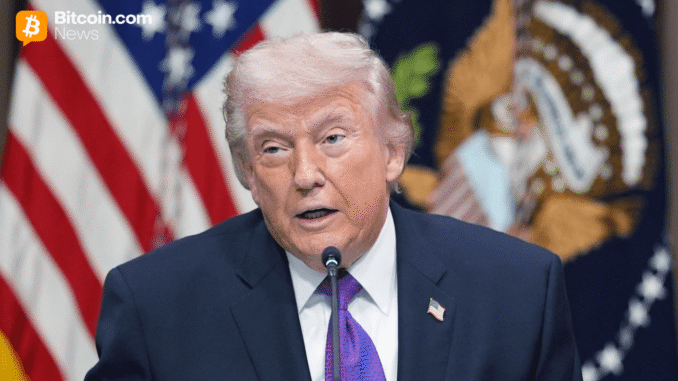
Speaking on Fox News’ “Sunday Morning Futures with Maria Bartiromo” on April 12, Trump addressed China directly after days of escalating intelligence reports. “If we catch them doing that, they get a 50 percent tariff, which is a staggering amount,” Trump said, adding he doubted Beijing would follow through on any arms transfer.
The statement came one day after CNN reported, citing U.S. intelligence sources, that China was preparing to deliver new air-defense systems to Iran, including shoulder-fired anti-aircraft missiles known as MANPADS. Officials said the shipments could be routed through third countries to obscure their origin. If fighting resumes, those weapons could threaten low-flying U.S. aircraft operating in the region.
Trump also announced a U.S. naval blockade of the Strait of Hormuz on April 12, citing stalled peace talks in Islamabad and the need to prevent Iran from restocking its arsenal weakened by weeks of U.S. and Israeli strikes.

The tariff threat itself dates to April 8, when Trump posted on Truth Social hours after agreeing to the two-week ceasefire. “A Country supplying Military Weapons to Iran will be immediately tariffed, on any and all goods sold to the United States of America, 50%, effective immediately. There will be no exclusions or exemptions!” That post did not name specific countries, but officials and analysts read it as aimed at China and Russia.
China’s Foreign Ministry denied the arms transfer claims. Spokesperson Mao Ning said on April 9 that Beijing “has never provided weapons to any party to the conflict” and called for restraint, pointing to China‘s stated role in brokering the ceasefire and reopening the Strait of Hormuz.
Reuters had previously reported that Iran was nearing a deal for Chinese supersonic anti-ship cruise missiles and that Iranian entities received chipmaking equipment from China’s SMIC in March 2026. U.S. officials have repeatedly flagged Chinese entities for supplying dual-use goods, including drone components, chemicals, and technology that Iran converts for its missile and drone programs.
Enforcing a blanket 50% tariff carries legal complications. In February 2026, the U.S. Supreme Court narrowed presidential authority under the International Emergency Economic Powers Act, the tool Trump relied on for previous global tariffs. Legal experts say alternative mechanisms, including Section 338 of the Tariff Act of 1930, Section 301, and Section 232, remain available but require formal investigations before any duties could take effect.
As of April 12, no tariffs have been formally enacted. The statements function as deterrence during the ceasefire window and as leverage ahead of Trump‘s planned visit to Beijing next month to meet President Xi Jinping, a trip delayed by the Iran conflict.
A 50% tariff on Chinese goods, many of which already carry existing duties, would further disrupt bilateral trade, raise consumer prices for American households, and add volatility to oil markets tied to Strait of Hormuz flows.
Trump also floated selling cheaper U.S. and Venezuelan oil to China as an alternative incentive to discourage arms transfers, though no formal offer has been made. The ceasefire holds through late April. Officials say the situation could shift quickly depending on Chinese decisions and any new intelligence disclosures.



Be the first to comment