


What to know:
- Chainlink enables use of $20B in RWAs as DeFi collateral
- Hastra tokenizes HELOC and auto loans for onchain use
- Integration brings real-world credit markets to Solana
- Chainlink provides pricing, data, and interoperability infrastructure

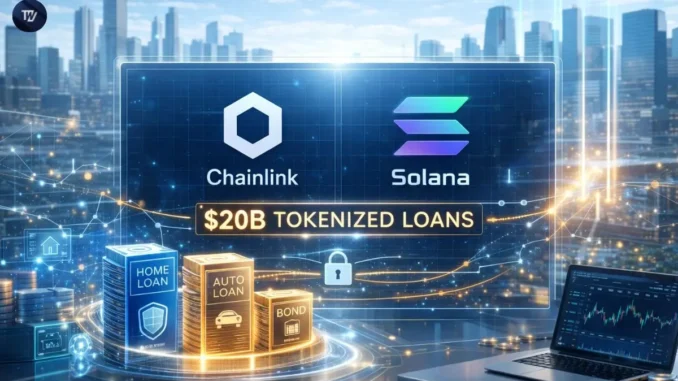
Chainlink Labs is powering a new phase of real-world asset (RWA) adoption as Hastra brings up to $20 billion in tokenized loans onchain. The integration allows these assets to be used as collateral within the Solana DeFi ecosystem, marking a significant step in bridging traditional finance with decentralized markets.
$20B in Tokenized Loans Enters DeFi
Tokenization of HELOCs and auto loans is now offered by Hastra for blockchain-powered trading platforms, amounting to as much as $20 billion in tangible assets.
Such assets will be arranged to work as part of a DeFi system, allowing users to take advantage of their use as collateral. The process underscores the increasing importance of RWAs as part of decentralized finance.
Also Read: Chainlink Holds $8.80 as Bulls Eye $28 Breakout After Coinbase Integration Boost
Chainlink Provides Oracle and Interoperability Infrastructure
The Chainlink protocol forms the backbone layer of this integration, delivering:
- Robust price feeds for proper asset valuation
- Data security between off-chain and on-chain solutions
- Interoperability protocols for cross-platform integration
Such an implementation ensures the precise valuation of the tokens representing the RWAs.
Integration with Solana DeFi Ecosystem
Assets are being put to use within Solana’s DeFi ecosystem, characterized by high throughput and low cost of transactions. Such platforms as Kamino Finance should allow the use of these assets as collateral. It allows users to use tokenized assets to borrow, liquify underlying assets without selling them, and use DeFi services with traditional assets.
Expanding Onchain Private Credit Markets
It also marks the advent of on-chain private credit markets where, through the tokenization of assets such as loans, platforms can provide transparent yield generation, programmable financial products, and access to credit markets. This reflects the broader theme of incorporating existing financial instruments into blockchain ecosystems.
Implications for DeFi and Traditional Finance
The capacity to collateralize RWAs can greatly increase DeFi’s total addressable market. It opens up new sources of liquidity and allows the use of other forms of collateral aside from digital assets.
In the realm of conventional finance, it means higher asset efficiency, additional channels for credit products, and improved transparency due to blockchain technology.
Also Read: Chainlink Tokenization Drives $400M Growth for Amundi Fund in Three Weeks


Be the first to comment