


What to know:
- Crypto asset ownership in Denmark stays at 4%, with most holdings under DKK 10,000.
- Indirect crypto exposure rises via ETFs and notes, but overall value remains limited.
- The central bank sees low systemic risk as institutions keep minimal crypto involvement.

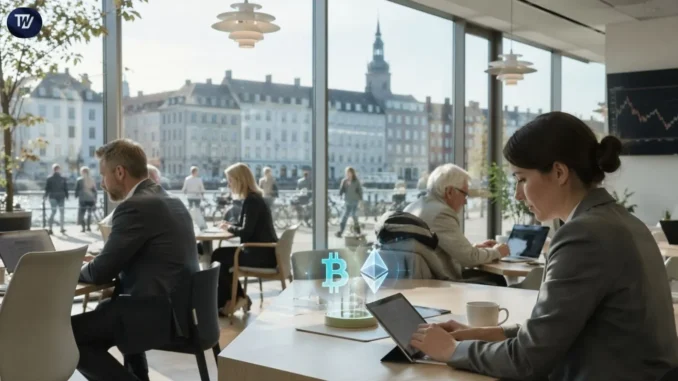
According to a report from Danmarks Nationalbank, only 4% of Danish citizens own crypto assets. Most balance holders have less than DKK 10,000. Very little change since 2023 is reflected in the data.
Citizens’ exposure to crypto-assets remains low, the report announced while detailing current ownership trends. It explains that crypto assets are still not a significant portion of household wealth. Adoption is still behind other European markets.
The results demonstrate that direct ownership has remained fairly consistent over time. Booming global crypto markets did not spur broader domestic adoption. Household participation in the sector remains muted.
Also Read: Bitwise Launches Avalanche ETF with 5.4% Staking Yield
Crypto Assets Shift to Indirect Investment Channels
The report points out an increase in indirect exposure since 2023. Investors are accessing crypto assets through financial products rather than owning them directly. Those include exchange-traded funds and structured notes.
These products track the assets Bitcoin and Ethereum. They provide access to the market without requiring wallets or exchanges. This setup minimizes operational steps for investors.
However, indirect investments are smaller than direct holdings in value. Households’ overall exposure to crypto assets remains relatively small. This trend extends into 2025, according to the report.

Danmarks Nationalbank said such unbacked crypto assets are highly volatile. It also underscored speculative risks for people. The bank said it is monitoring developments in the sector.
Crypto Assets Adoption Remains Low in Denmark
The results align with the 2023 household survey. Ownership levels also showed less than 4% in that study. Crypto assets were at that point characterized as having low systemic impact.
The report attributes low adoption to structural factors. Denmark has high trust in regulated services and a solid financial system. This scenario might diminish appetite for alternative assets.
Retail investors have been wary of price swings. Reports note that participation remains measured. There is a lack of exposure across income groups.
Ownership is higher among young people. Participation is relatively high for men aged 18 to 39. This trend mirrors that of other Nordic countries.
Meanwhile, the growth of crypto-linked securities indicates slow but steady institutional participation. Financial products are becoming more accessible. This change does not yet show widespread retail demand.
Low Crypto Risk as Banks Expand Regulated Access
Current exposure levels pose no threat to financial stability, according to the central bank. There is little direct involvement on the part of banks and institutions. This limits the potential for more widespread market impacts.
In February 2026, Danske Bank launched crypto-linked exchange-traded products. These have allowed customers to get exposure to Bitcoin and Ethereum. It enables trading through its digital platforms.
This move is a step towards regulated access points. That broadens choices for people looking for market access. Nonetheless, the overall adoption of crypto-assets is low in Denmark.
Also Read: Altcoins Make Up 85% of Korea’s $26B Weekly Volume



Be the first to comment