


What to know:
- iOS 27 lets users run Claude and Gemini on-device, opening Apple’s AI ecosystem.
- Easier AI integration for wallets, DeFi, and dApps, but raises key management and enclave access questions.
- External AI servers may expose crypto metadata, and provider policies could restrict blockchain activity.
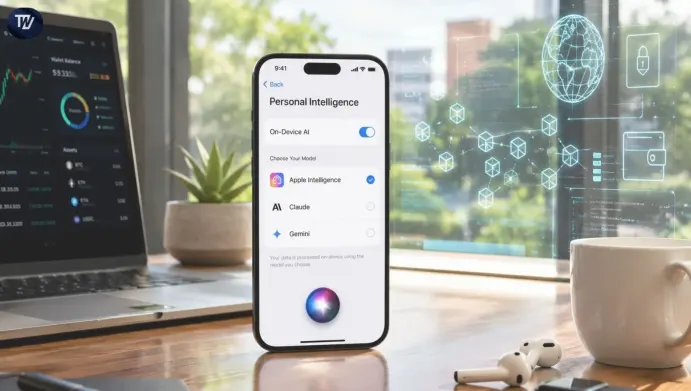
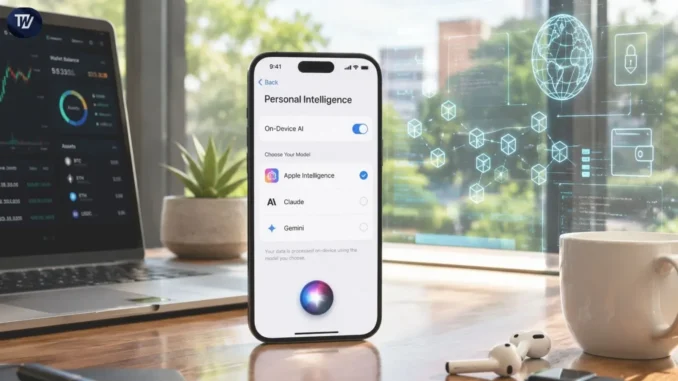
One of the major changes coming with Apple’s iOS 27 is that it will allow users to select third-party AI models, such as Anthropic’s Claude or Google’s Gemini, to run on-device features. This is a big step towards opening up Apple’s AI ecosystem, as it will allow buyers to use external large language models to perform tasks like text generation, smart assistants, and automation instead of being fully dependent on proprietary systems.
In the case of the cryptocurrency and blockchain industry, the decision brings along new interoperability questions, privacy issues, and new infrastructure opportunities as AI and Web3 technologies are increasingly intertwined.
Giving Users More Options for On-Device AI
With the inclusion of support for third-party models in iOS 27, users will be able to decide exactly which AI will process their data and requests on Apple devices. Having Claude and Gemini as options means that features like Mail, Messages, Safari, and Siri could potentially use different model architectures depending on the user’s choice.

This kind of modular approach is quite different from the traditional closed AI stacks and, at the same time, addresses the increasing demand for algorithmic transparency. Decentralized application developers might find this change very helpful because now their task of integrating AI-driven wallets, smart contract interfaces, and blockchain analytics tools could become easier as they would have access to the familiar models without platform restrictions.
Also Read: Dogecoin in 2026: Apple Unlocks iOS Ban on In-App Crypto Payments
Implications for Web3 and Crypto Infrastructure
The authorization of third-party AI models on iOS is one step further towards integrating Web3 at the core of an operating system. Therefore, crypto wallets, DeFi platforms, and NFT marketplaces could leverage user-chosen AI characters to convey general transaction information, check smart contracts, or carry out investment portfolio operations, all while the user’s data remains within the device.
Web3 developers could use Claude or Gemini to develop dApps that carry out private operations within the iPhone and iPad hardware. Yet the whole idea poses several important questions about accessing the enclave, managing API keys, and the way AI model providers deal with sensitive user prompts related to private keys or transaction signing.
Also Read: Fake Ledger App on Apple Store Wipes Out 5.92 Bitcoin Retirement Savings
Privacy, Security, and Decentralization Challenges
Giving users the option definitely opens up further possibilities, but at the same time, utilizing third-party AI involves exposing user data to new threats, which concerns the crypto community. AI models such as Claude and Gemini are being run via servers that are external, and the user prompts could also reveal metadata about wallet transactions, usage of DeFi, and other trading strategies.
Apple’s Private Cloud Compute Framework can be helpful to a certain extent; however, factors such as jurisdictional data policies and model training practices are very much in the spotlight for privacy-centric users. Additionally, there are factors linked to censorship resistance: third-party providers impose their content policies, and as a result, some blockchain interactions might not be allowed.
Also Read: South Korea Moves to Tighten Crypto Transfers With No Threshold



Be the first to comment