

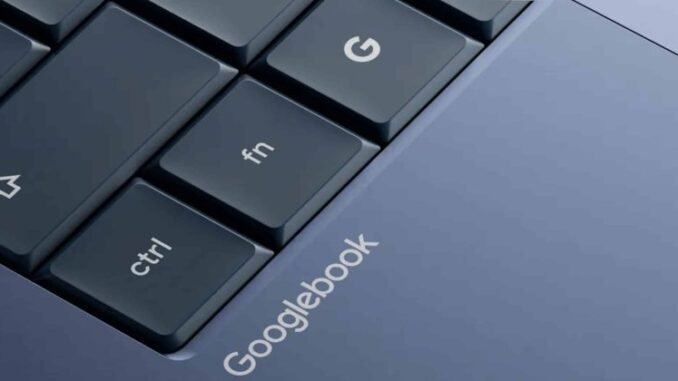

Google just killed the Chromebook. Or, more precisely, it evolved the Chromebook into something it’s calling the Googlebook, a new laptop category built around Android, Gemini AI, and the kind of phone-laptop integration that Apple has spent a decade perfecting. The announcement dropped on May 12, 2026, and it signals Google’s most aggressive move into personal computing since ChromeOS first appeared in 2011.
Five major hardware manufacturers, Acer, ASUS, Dell, HP, and Lenovo, are already lined up to build these machines. Intel is supplying the silicon. Devices are expected to ship in fall 2026.
What a Googlebook actually is
Think of it as a laptop that runs Android natively but behaves like a full desktop operating system. Google has effectively merged its Android and ChromeOS platforms into a single experience, which means Googlebook laptops can run Android apps directly without the awkward compatibility layer that Chromebooks relied on.
The real pitch here is Gemini. Google’s AI models are woven deeply into the operating system, not bolted on as a chatbot sidebar. One feature called Magic Pointer lets users hover over content like emails to get contextual suggestions. Hovering over a flight confirmation, for instance, could surface an option to create a calendar event automatically.

There’s also a “Create your Widget” feature that lets users build custom widgets pulling data from Gmail, Calendar, and Drive. In English: instead of toggling between five tabs to see your schedule, unread emails, and shared documents, you design a single dashboard widget that shows everything in one place.
Perhaps the most practical feature is seamless phone integration. Googlebook devices can access an Android phone’s file system directly, no cable, no cloud upload, no AirDrop equivalent needed. Files just appear as if the phone were an external drive.


Be the first to comment