

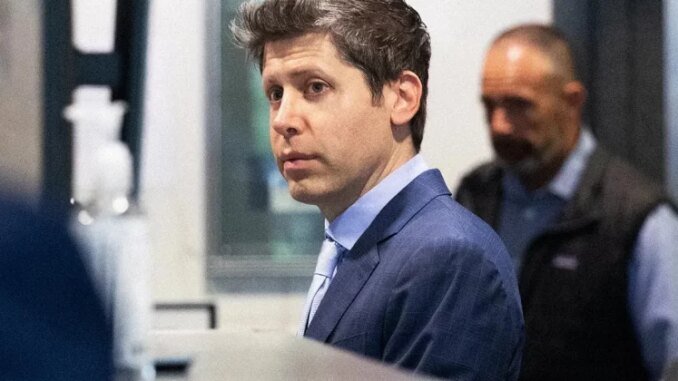

Sam Altman took the stand in a federal courtroom and told a story that reads like a Silicon Valley succession drama. During discussions about restructuring OpenAI in 2017, Elon Musk didn’t just want a seat at the table. He wanted to own the table, the chairs, and pass them down to his kids.
Altman testified that Musk insisted on “total control” over a proposed for-profit subsidiary of OpenAI, going so far as to suggest that leadership of the entity should transfer to his children after his death. Altman said he found the demand uncomfortable, and more importantly, fundamentally at odds with how OpenAI was designed to operate.
The founding principle that started the fight
Here’s the thing about OpenAI’s origin story: it was built around the idea that artificial general intelligence, the kind of AI that could match or exceed human-level reasoning, should never be controlled by a single person. That wasn’t just a nice sentiment on a pitch deck. It was a foundational principle, one that Altman referenced directly as the reason he pushed back against Musk’s demands.
Musk departed OpenAI’s board in 2018, and the relationship between the two tech moguls has been deteriorating ever since. Musk went on to found xAI, his own artificial intelligence company, positioning it as a competitor to the very organization he helped create.

The split wasn’t quiet. Musk has publicly and repeatedly criticized OpenAI’s direction, particularly after the company formed a deep partnership with Microsoft that brought billions in investment and, critics argue, fundamentally changed OpenAI’s character from nonprofit research lab to commercial juggernaut.
A $130 billion grudge match
The courtroom drama is the culmination of a civil lawsuit filed by Musk against Altman and OpenAI. The core allegation: OpenAI betrayed its founding nonprofit mission when it pivoted toward commercial operations and cozied up to Microsoft.
The damages Musk is seeking tell you everything about the scale of this fight. Up to $130 billion. For context, that’s more than the entire market capitalization of most publicly traded companies. It’s roughly the GDP of Morocco.
Altman’s testimony offers the other side of the ledger. In his telling, it was Musk who wanted to concentrate power, not distribute it. The implication is that Musk’s current crusade against OpenAI’s commercialization rings hollow when, years earlier, he was allegedly trying to secure personal dynastic control over the organization’s most valuable asset.



Be the first to comment