



Key Takeaways
- This week, Clem Chambers told Kitco that the Nasdaq two-year bubble will be driven by AI spending and U.S. deficit money printing.
- Gold at $4,700 acts as the key signal for Trump’s Beijing summit outcome and Taiwan risk. Following the interview with Chambers, gold traded at $4,540 per ounce on May 17.
- Copper, industrial batteries, and grid capacity are the primary choke points investors should watch now, according to the Online Blockchain CEO.
Clem Chambers Calls 2-Year Nasdaq Bubble as AI Spending and U.S. Deficits Drive Rally
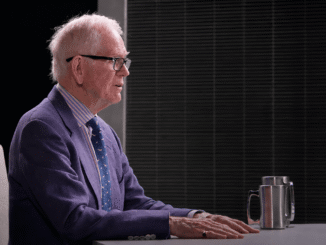
Chambers spoke with Kitco News anchor Jeremy Szafron this week during an interview that touched upon global assets and the economy. Gold held near $4,700 an ounce during the discussion, while silver fell more than 3%, platinum dropped more than 3%, and palladium declined nearly 4%. Chambers said the divergence matters because gold functions as a real-time signal for geopolitical risk, particularly around the U.S.-China relationship.
“ Gold is like a thermostat,” Chambers remarked. If President Trump‘s visit to Beijing produced meaningful private agreements, gold will drift lower in the days and weeks ahead. If talks broke down behind closed doors, gold will move higher. A flat price, he said, means little was resolved. So far, since the interview with Chambers, gold has drifted lower, dipping three percentage points over the last week of trading sessions.
Chambers pushed back on the view that gold rising alongside equities signals a contradiction. He said gold rises in the lead-up to conflict because nations accumulate it in anticipation, and a reduction in conflict risk is what causes it to fall. Trump’s Beijing visit, he added, is the inverse of Nixon’s 1972 opening to China, where the U.S. sought to bring China into global trade. Trump is now trying to reset the terms of that relationship.
Treasury Secretary Scott Bessent announced in Beijing that the two countries are discussing an investment mechanism to fast-track deals and reduce tariffs on non-critical goods. Chambers called that framing transactional, not adversarial, and said China’s interest in stable commerce makes a deal possible if both sides avoid escalation. The Taiwan question, he noted, remains the central unresolved variable.

On the AI trade, Chambers told Szafron that investors are still focused too heavily on semiconductors and software while ignoring the physical supply chain holding the whole build-out together. He identified electricity capacity as the primary bottleneck, followed by copper, industrial batteries, grid infrastructure, and backup power systems.
“There’s simply not enough copper to go around,” he said. He pointed to Caterpillar’s share price climb as evidence that backup generator demand has already outpaced supply, with delivery queues stretching far out. Cisco, which he flagged publicly before the stock climbed 20% overnight, is another example of a company being pulled up by AI infrastructure demand.
He also highlighted Nokia, now contracted by Nvidia to embed AI into the backend of 6G networks, as the kind of overlooked company that benefits when the physical supply chain tightens.
Chambers described the current moment as the transition from boom to bubble. He said history shows that people who exit at the start of a bubble miss most of the gains. The right move, in his view, is to stay positioned and rotate toward companies that make the build-out physically possible, such as cable manufacturers, silicon wafer producers, and energy storage firms like Enersys.
The inflation risk is real, he stated during the conversation, but productive asset investment generates economic activity, taxes, and jobs in a way that consumer transfers do not. That distinction keeps this round of money printing from becoming hyperinflationary, though it will push prices higher across the board.
On liquidity, Chambers said the Federal Reserve has been managing the market by watching the S&P 500 and pulling levers when the index approaches systemic risk levels. The bazooka deployed during the Iran-related market drop and the Silicon Valley Bank collapse both followed that pattern. That management approach, he said, is what gives the current bubble room to run.
The U.S. fiscal deficit remains the long-term risk Chambers is watching most closely. He said the deficit is growing faster than any credible offset, and while it will not kill the dollar, it will keep inflation elevated and reward investors positioned in hard assets and productive infrastructure names.
Chambers closed by telling investors that the next two years carry real opportunity, but only for those who understand that the AI trade runs through copper mines, power grids, and cable factories as much as it runs through chip designers.




Be the first to comment