


China just posted its weakest retail sales growth since December 2022, and the rest of April’s economic data wasn’t much cheerier. Retail sales rose a mere 0.2% year-over-year, industrial output came in well below expectations, and fixed-asset investment actually contracted.
The numbers matter well beyond Beijing. China is the world’s second-largest economy and a major driver of global commodity demand, trade flows, and, increasingly, risk sentiment across financial markets including crypto.
The numbers, in context
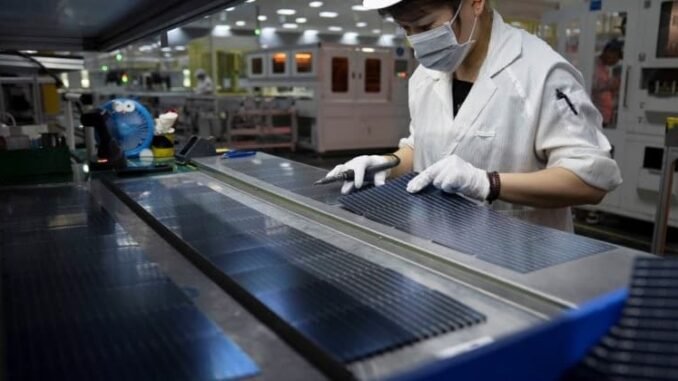
Industrial output grew 4.1% year-over-year. Forecasters had penciled in 5.9%, and March had already delivered 5.7%. A miss of nearly two full percentage points signals that factory activity is cooling meaningfully.
Retail sales were even more striking. A 0.2% annual increase is essentially flat. For a country that has been trying to pivot from an export-and-investment-led growth model toward domestic consumption, that number is a cold shower.

Urban fixed-asset investment contracted 1.6% in the January-through-April period. Analysts had expected 1.6% growth.
The one genuine bright spot was trade. Exports surged 14.1% year-over-year in April, blowing past the 7.9% consensus forecast.
Urban unemployment did tick down from 5.4% in March to 5.2% in April.
Why domestic demand keeps disappointing
China’s consumption problem is not new. The post-COVID reopening in early 2023 was supposed to unleash a wave of pent-up spending. It did, briefly, and then it fizzled.
Property market weakness is a huge part of the equation. Real estate has historically accounted for a massive share of Chinese household wealth. When property values decline or stagnate, the wealth effect works in reverse. The fact that exports are carrying so much of the load introduces its own risks, as trade performance can swing sharply depending on global demand conditions, tariff developments, and currency movements.
What this means for investors and risk assets
For crypto investors, China’s slowdown matters more than it might seem. Weaker Chinese growth tends to put downward pressure on commodity prices, which in turn can influence inflation expectations globally. Disappointing data increases the probability of additional stimulus, whether through rate cuts, targeted lending programs, or fiscal spending.



Be the first to comment